
Commentary
The Chinese regime’s growing aggression in the Indo–Pacific has led the Philippines to forge stronger global partnerships rooted in shared interests and values.
The Philippines and Germany on May 14 signed a defense cooperation agreement aimed at strengthening joint operations in the region. The following day, Manila announced that the third Philippines–Germany Security and Defense Staff Talks would convene soon to finalize joint activities planned for next year.
The agreement had been reached as early as August 2024, when Germany’s defense minister visited Manila and said the 2016 ruling by the Permanent Court of Arbitration in the Hague “remains valid, without any exceptions.”
In September 2024, two German warships made a rare transit through the international waters of the Taiwan Strait—the first time German military vessels had done so in 22 years—signaling Berlin’s commitment to freedom of navigation.
The latest developments are another milestone in Manila’s growing military diplomacy. Since taking office in 2022, President Ferdinand Marcos Jr. has actively expanded the country’s international partnerships, producing impressive results.
Reinvigorating the US–Philippines Alliance
In May 2023, Marcos paid an official visit to the United States, the first visit by a Filipino president in more than a decade, securing a clear American security commitment. The two sides also released the first-ever Bilateral Defense Guidelines.
Since then, joint military exercises have expanded, and South China Sea patrols have resumed, reversing former President Rodrigo Duterte’s anti-U.S. and pro-China stance. Duterte himself now faces charges of crimes against humanity and was arrested by Philippine authorities in March. He was transferred to The Hague to await trial at the International Criminal Court.
The reaffirmed Manila–Washington alliance has laid a strong foundation for Philippine foreign and strategic policy. The United States, in turn, sees the Philippines as a key pillar in its Indo-Pacific strategy. Joint drills near Scarborough Shoal, forward deployments of the U.S. Nimitz Carrier Strike Group, and plans to base the U.S. Typhon missile system in the Philippines all point to deepening cooperation.
U.S. Defense Secretary Pete Hegseth chose the Philippines as his first stop on his inaugural Asia tour in March. He reaffirmed Washington’s “ironclad” commitment to the mutual defense treaty and pledged to deploy advanced weaponry to bolster regional deterrence against external threats, including those from the Chinese Communist Party (CCP). This was shortly followed by joint drills conducted by the United States, Japan, and the Philippines in the South China Sea.
Boosting Defense Ties With Japan
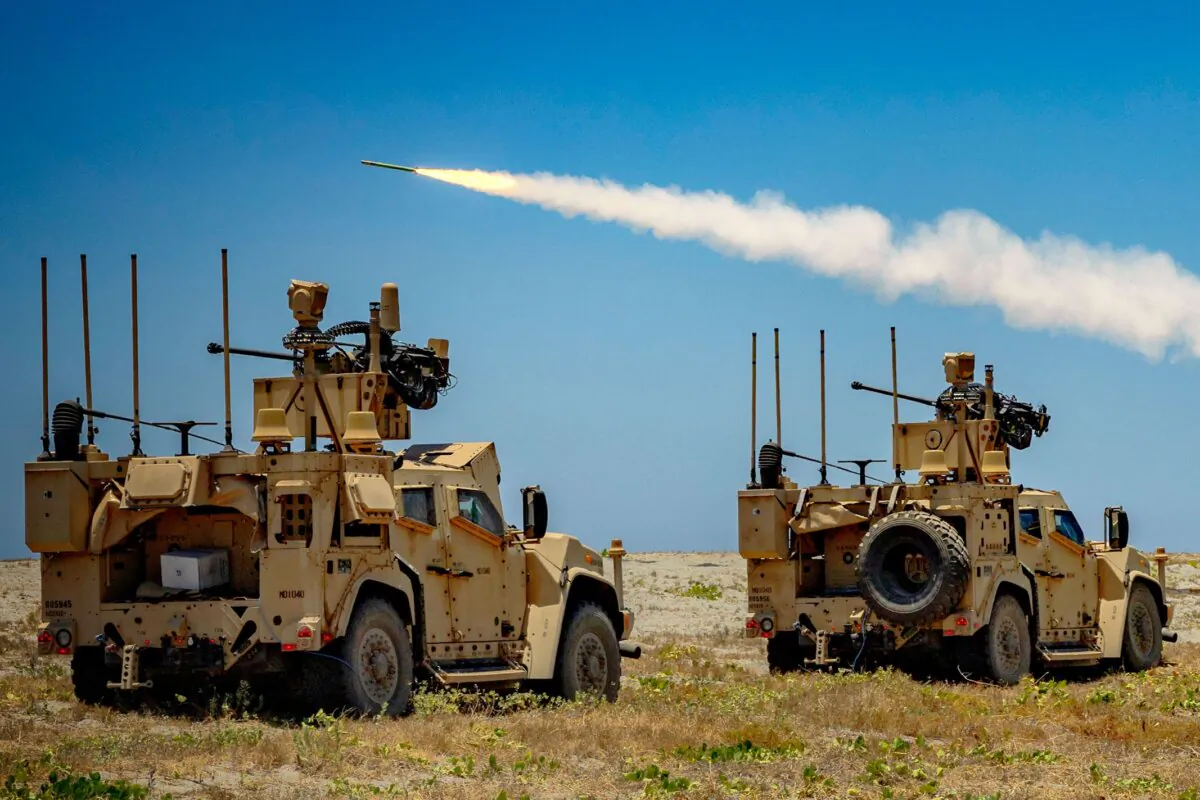
Philippine–Japanese military cooperation is also advancing rapidly. On Feb. 24, the defense ministers of both countries announced plans to deepen ties, which include Japanese exports of radar systems and high-mobility vehicles to boost Manila’s surveillance and rapid response capabilities in contested waters. They are also exploring a joint development project of destroyers.
The two countries signed a Reciprocal Access Agreement, which has already been ratified by Manila and was recently approved by Japan’s lower house.
During a high-profile visit to Manila in April, Japanese Prime Minister Shigeru Ishiba and Marcos agreed to expand security cooperation and initiate talks on a future intelligence-sharing pact and an acquisition and cross-services agreement that will allow Japanese and Philippine forces to share fuel, food, and logistical support services.
Both sides also expressed strong opposition to any unilateral changes to the status quo in the East and South China seas. Following his meeting with Marcos on April 30, Ishiba said that the two countries are “now partners that are almost like allies.”
Fostering Trilateral Ties
The Philippines is also developing a trilateral framework with the United States and Japan. In December 2022, the three nations held the first Japan–Philippines–United States Land Forces Chiefs Meeting in Japan. In June 2023, a trilateral meeting of the national security advisers of the three countries was held in Japan, emphasizing the importance of enhancing trilateral cooperation and response capabilities. In April 2024, the state leaders of the United States, Japan, and the Philippines met for the first summit in Washington.
The trilateral cooperation focuses on three key areas:
- Integrated response across the East China Sea, Taiwan Strait, and South China Sea.
- Expanded defense collaboration, including more joint naval exercises, forward basing, and logistics support.
- Cybersecurity coordination, highlighted by the first joint cyber defense drill in 2023 between the Armed Forces of the Philippines and the U.S. military, a cyber-digital policy dialogue in July 2024 between the United States and the Philippines, and a U.S.–Japan Security Consultative Committee meeting in July 2024.
Beyond security, the trio is advancing cooperation in infrastructure, semiconductors, clean energy, and supply chain resilience.
In January, just before the end of his term, then-President Joe Biden held an online summit with his Japanese and Philippine counterparts to deepen trilateral economic and technological collaboration. The leaders condemned the Chinese regime’s “dangerous and unlawful behavior” in the South China Sea and agreed to maintain strategic coordination across the Indo-Pacific.
Expanding Western Engagement
The Philippines is also expanding ties with other Western nations.
Australia and New Zealand, both of which are increasingly concerned about Beijing’s military pressure, have stepped up engagement with Manila.
In September 2023, Australian Prime Minister Anthony Albanese visited the Philippines—the first visit by an Australian prime minister in 20 years—and elevated bilateral ties to a strategic partnership. Annual defense minister meetings were agreed upon to address regional security challenges, including in the South China Sea.
Last month, defense leaders of New Zealand and the Philippines signed a Status of Visiting Forces Agreement in Manila, with both sides aiming to build a “comprehensive partnership” by 2026.
In March, the Philippines signed an agreement with the UK to enhance defense, regional security, and climate collaboration.
Canada is nearing final negotiations on a defense pact with the Philippines, enabling broader participation in joint exercises. In August 2024, Canada joined the United States, Australia, and the Philippines in air and naval drills in the South China Sea.
In December 2023, France and the Philippines signed a letter of intent on defense cooperation. Negotiations are underway for troop visits and joint training. In February this year, France led joint naval exercises with Japan and the United States in Philippine waters, the French carrier group’s first Indo-Pacific deployment in 60 years.
Conclusion
The Philippines, although a small country compared with China, is playing an outsized diplomatic role. Manila is currently campaigning for a non-permanent seat on the U.N. Security Council.
From my point of view, three key factors explain its growing influence.
First, the Marcos administration has taken a firm stance against the CCP and is no longer fearful or naive but instead rational and assertive.
Second, Manila has aligned itself with the global shift under a U.S.-led strategy to counter Beijing.
Lastly, the CCP’s aggressive “wolf warrior” diplomacy has backfired, driving countries such as the Philippines to boost global partnerships based on common interests.
In a sense, Beijing’s coercive policies are fueling Manila’s rising diplomatic momentum.
Views expressed in this article are the opinions of the author and do not necessarily reflect the views of The Epoch Times.
 Friends Read Free
Copy
Facebook
Tweet
Friends Read Free
Copy
Facebook
Tweet