Commentary
Someday, Gabriel—or Rumi, as his biological parents call him—will Google his own name.
Maybe he will be 12. Maybe 15. Maybe children won’t Google anything by then. Maybe he’ll simply say to whatever artificial intelligence has replaced today’s search engines, “Tell me about my birth.”
And it will tell him.
I wrote about his story last week, while he was still in the womb and the adults responsible for bringing him into the world were fighting over whether he should be born.
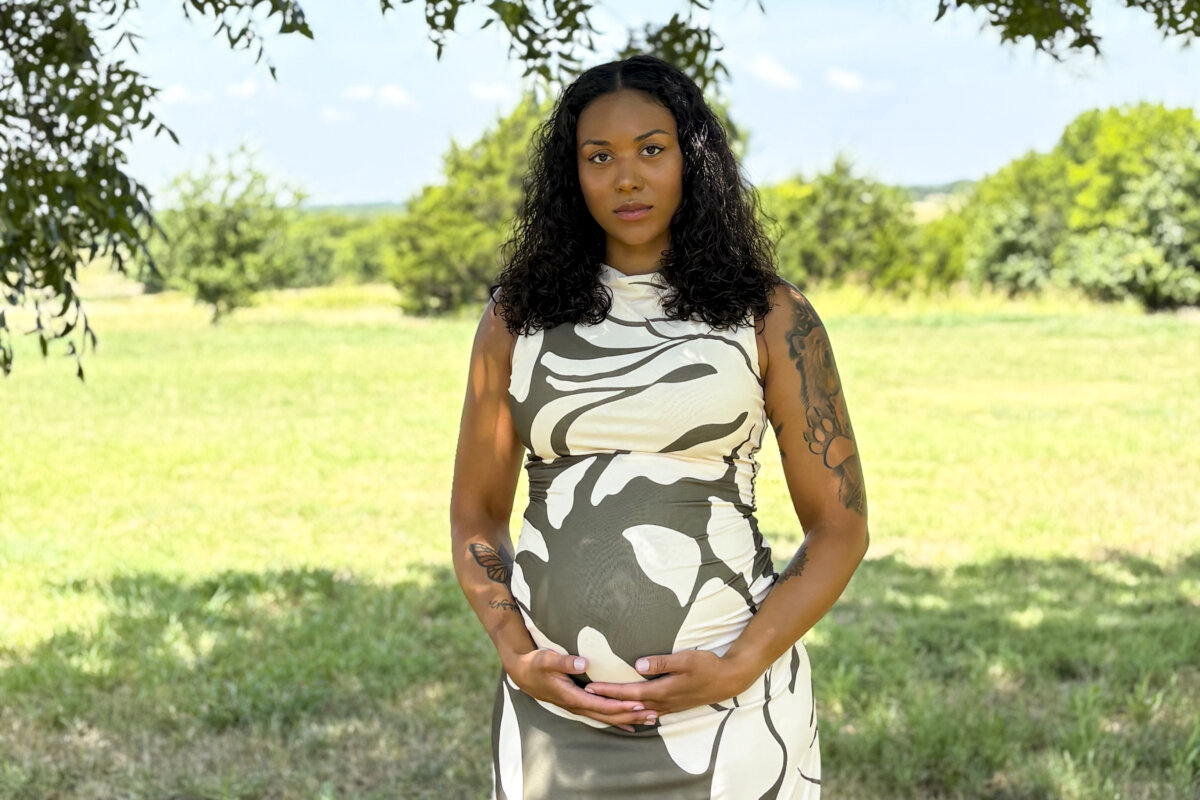
McKenna West was carrying a baby through a surrogacy arrangement for biological parents Nausheen Gilkar and Omar Ahmed when doctors diagnosed the baby with hypoplastic left heart syndrome, a serious congenital condition in which the left side of the heart is severely underdeveloped.
The biological parents wanted West to terminate the pregnancy. They have said they made that decision after consulting doctors and considering the surgeries, suffering, and uncertain future their child could face. According to their account, West initially agreed to an abortion appointment but ultimately refused to go through with it.
West left California for Texas and fought to continue the pregnancy. The biological parents fought to maintain their legal rights as the child’s parents. They also filed counterclaims seeking more than $100,000 in damages from West, alleging, among other things, breach of contract and emotional distress.
When I wrote about the case last week, it was a collision of abortion, surrogacy, contract law, bodily autonomy, and parental rights.
Then the theoretical child at the center of all those arguments became a baby.
He was born in Dallas on Aug. 12. West calls him Gabriel. His biological parents call him Rumi. His parents now have custody and control of his medical decisions. After doctors determined that he was eligible for treatment, they authorized the Norwood procedure, the first of a series of major surgeries commonly used to treat hypoplastic left heart syndrome. He underwent that surgery on Aug. 17.
Since then, his condition has reportedly become critical. At an Aug. 25 court hearing, his biological mother testified about watching her son struggle after surgery. According to court reporting, he required re-intubation and a blood transfusion.
She also made two statements that are difficult to hold together but perhaps essential to understanding this story: She described her son as the love of their lives, while testifying that she does not regret the decision she and her husband made during the pregnancy to seek an abortion.
Those two things can both be true.
His parents also dispute the suggestion that they intended to withhold medical care after birth. Their attorney says that once doctors determined he was eligible for surgery, they consented to it. West testified that if she were assured the biological parents would pursue the surgeries and medical care he needs, she would drop her custody claim.
Their counterclaims seeking more than $100,000 from West also remain part of that battle.
There is an almost impossible contradiction contained in those facts. The parents who wanted the pregnancy terminated are now parenting the child, describing him as the love of their lives, and authorizing extraordinary medical intervention intended to keep him alive, while continuing a legal battle in which they seek damages from the woman who refused to terminate the pregnancy.
But since writing about this story last week, I have found myself thinking less about the adults and more about him.
Because someday he will know all of this.
He will be able to learn that doctors discovered his heart had not developed normally, that his biological parents wanted the pregnancy terminated, that the woman carrying him refused, and that adults went to court over him before he had ever taken a breath.
He may also discover testimony from his own mother saying both that he became the love of their lives and that she does not regret having wanted to end the pregnancy that became him.
I keep wondering what it will feel like to be that child reading those words, because in a very small way, I know.
When I was about 12 years old, I overheard a conversation between my parents and learned something I had never known: When my mother was pregnant with me, my father’s parents had encouraged my parents to have an abortion.
I was a precocious kid, and I didn’t sit quietly with information for very long. Not long afterward, I was playing cards with my grandfather. I remember sitting across from a man who had loved me for my entire life, and I just blurted it out.
“You wanted Mom and Dad to abort me.”
I can still see his face. There was pain, discomfort, regret—almost horror that I knew.
My grandmother came into the room, and they tried to explain. My parents were young. My grandparents probably thought they weren’t ready. Perhaps they believed they were protecting their son. Adults make complicated calculations about circumstances that children experience much more simply.
But strangely, I didn’t really need their explanation. Their faces told me everything.
They were horrified that their granddaughter—the child they knew and loved—had discovered there had once been a moment when they believed the world might be better if she had never arrived in it.
By then, I knew how much they loved me. I had 12 years of evidence. That knowledge didn’t erase the sting, but it gave me somewhere to put it.
I wonder where Gabriel/Rumi will put his.
His story isn’t a whispered family secret overheard by a curious child. It is a public record: lawsuits, sworn testimony, interviews, headlines, court documents, social media posts, and articles—including mine. Long after the adults involved have stopped arguing about surrogacy contracts, parental rights, abortion law, and medical prognosis, the internet will remember all of it.
Eventually, the baby at the center of the argument will become a boy who can read, then a teenager, then a man.
I don’t pretend to know what he will think. Perhaps his parents will give him a childhood so filled with love that he will understand their decision as one made by terrified parents facing an awful diagnosis. Perhaps they will explain that they believed termination was the most compassionate option because they feared he would suffer. Perhaps he will completely understand.
But perhaps he won’t.
That’s the part of this story I don’t think we are talking about enough. We discuss what the surrogate wanted, what the biological parents wanted, what their contract required, what California and Texas law say, who gets to name him, who gets custody, and who owes whom money.
Almost every argument begins with the rights of adults. Yet another human being is involved who currently cannot tell us what he thinks about any of it.
Someday he will be able to.
Unlike me, he won’t necessarily confront a grandfather across a card table and watch regret wash over his face. He may first encounter his story through a screen, stripped of facial expressions, context, and the complicated ways human beings can change once an abstract pregnancy becomes a child they know and love.
That is something entirely new about childhood.
Previous generations could have family secrets. Today’s children have search results. Tomorrow’s children will have artificial intelligence capable of assembling every forgotten article, court filing, interview, and social media post into a coherent account of their lives before they were old enough to remember them.
What responsibility does that place on us as parents?
I think it is enormous.
I am a parent. There are things my children will someday learn about me that may disappoint them, and mistakes I will have to explain. That is unavoidable. Parenthood doesn’t require perfection.
But I cannot imagine knowingly constructing a public record that my child might someday interpret as evidence that I fought for a world in which he did not exist.
That doesn’t mean Gabriel/Rumi’s parents don’t love him now. In fact, his mother’s testimony suggests precisely the opposite. My grandparents loved me enormously. Human beings are capable of believing one thing about an unborn child and feeling something entirely different about the living child sitting across the table. I know that firsthand.
Perhaps that is exactly what is happening here.
My grandparents, however, had the gift of being able to look me in the eyes. When I confronted my grandfather, his face communicated something words couldn’t. Whatever he had believed before I existed as the granddaughter he knew, he could no longer imagine wanting a world without me in it.
I hope Gabriel/Rumi gets that same gift.
Because someday this story won’t belong to McKenna West, his biological parents, their lawyers, journalists, judges, activists, or people arguing about abortion on the internet.
It will belong to him.
And when he finally asks what happened before he was born, I hope the people who love him are sitting across the table when he hears the answer.
Views expressed in this article are the opinions of the author and do not necessarily reflect the views of The Epoch Times.
 Friends Read Free
Copy
Facebook
Tweet
Friends Read Free
Copy
Facebook
Tweet