
Commentary
The market’s reaction to the Supreme Court’s ruling on the Liberation Day tariffs exaggerates the negatives and ignores the options available to the Trump administration.
Markets are overreacting to headlines about a $175 billion to $200 billion financial hole from a tariff refund. However, the Supreme Court ruling opens a long, narrow, and manageable process, not an imminent fiscal crisis.
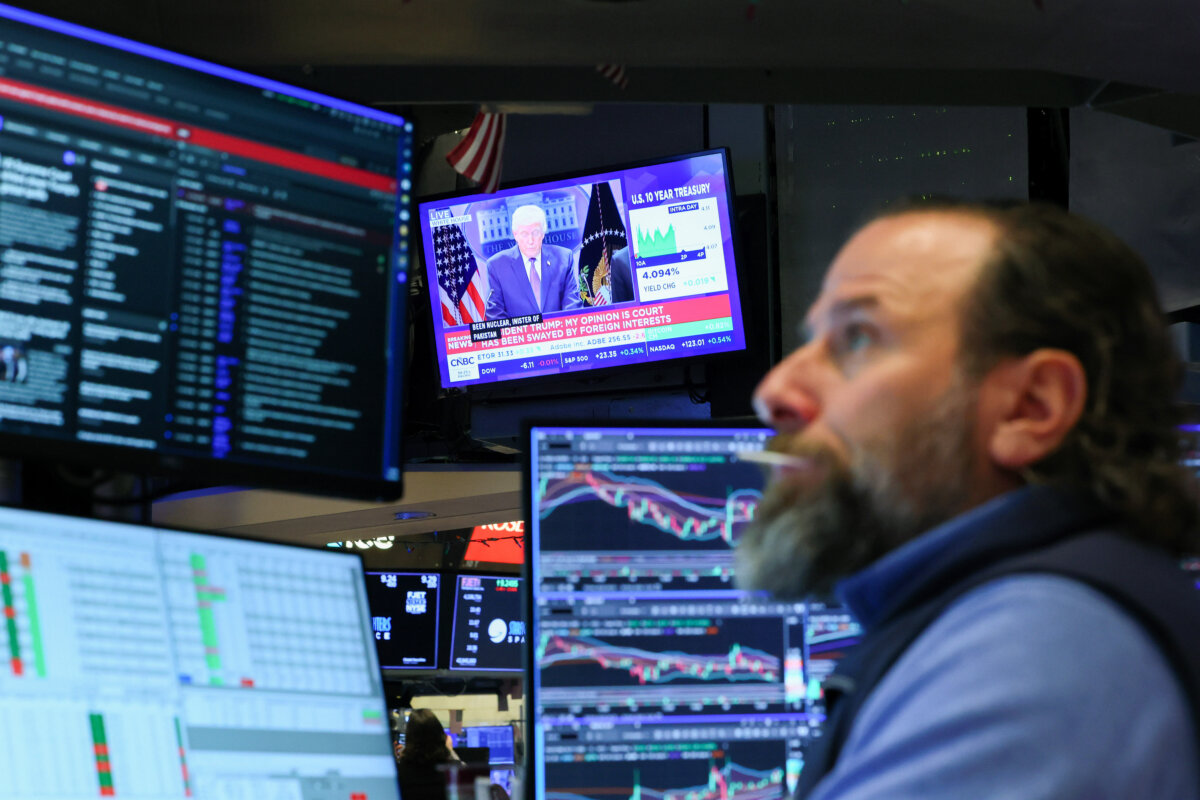
In the days after the Supreme Court struck down President Donald Trump’s Liberation Day tariffs, many sell-side analysts turned a complex legal ruling into a simple story, stating that Washington would soon have to repay up to $200 billion. Risk premiums in Treasurys ticked higher, gold and silver soared, and some commentators warned of a looming refund shock to the U.S. budget that would push government debt higher.
Does the Supreme Court ruling really mean that the Treasury must repay every dollar collected since these tariffs were introduced?
The reality is far more complex.
The Trump administration has many options to maintain its trade policy.
The Supreme Court did not rule any of the agreed-upon trade deals or tariff mechanisms illegal. The Biden, Obama, Bush, and Clinton administrations have all implemented tariffs.
Furthermore, if any country decided to reject the deals that have been signed, which is unlikely, the Trump administration can use Section 122 of the 1974 Trade Act to impose 10 percent tariffs for 150 days, which is what was announced on Feb. 20. This allows tariffs or import surcharges when there is a balance-of-payments-related emergency.
Furthermore, Section 338 of the 1930 Tariff Act allows tariffs as high as 50 percent on countries that discriminate against U.S. commerce, while Section 232 uses Commerce Department investigations to impose duties on specific products and Section 301 targets countries and sectors after U.S. trade representative investigations into unreasonable practices.
These mechanisms have been used by all administrations in the past. In fact, the Biden administration kept all the tariffs imposed by the first Trump administration.
When we look at the Supreme Court decision, it is more about how tariffs were announced, not the mechanics of trade litigation and tariffs.
The risk of repaying collected tariffs exists, but the timeline is long, the effective amount is likely much smaller than $200 billion, and the U.S. economy can easily absorb it. In fact, the Supreme Court’s decision may result in no change to the existing trade deals.
Those who represent the mainstream consensus have written extensively complaining about Trump’s tariffs. However, I have read nothing about the European Union’s Carbon Border Adjustment Mechanism, a massive tariff scheme designed only to raise prices. The Carbon Border Adjustment Mechanism is the most protectionist scheme seen in global trade in years, hidden under the “carbon” excuse to impose a monster tax system.
Tariffs are not Trump’s invention; they are the norm in global trade. The current trade deals have proven to be positive for global trade, growth, and all parties involved. Canceling these deals would be exceedingly negative for all exporting nations. Furthermore, a global 10 percent tariff under Section 122 could yield $300 billion to $400 billion per year, compared with the current customs revenue of more than $200 billion in 2025 and $77 billion in 2024.
Countries that have signed trade deals with the United States should know better than to break the existing agreements, as the new tariffs post-Supreme Court ruling would rise, and no new administration would change that, as happened with former President Joe Biden.
The Supreme Court ruled that the specific use of emergency powers—the International Emergency Economic Powers Act—to impose certain tariffs is unlawful but did not issue an order to refund collected duties.
The ruling creates a pathway for challenges, according to trade lawyers, but it does not mean that the government must return every dollar. There is a huge difference between finding that a measure was unlawful and an enforceable ruling for every affected importer to receive a refund.
Only exporters that have preserved their rights, including through protests, suspensions of liquidation, and timely filings, can realistically claim refunds. Most businesses will likely choose not to litigate. Furthermore, as the cost of tariffs has been absorbed by most of the value chain, they have little incentive to fight.
In previous trade disputes, only a small fraction of companies pursued claims, and an even smaller group recovered the full amount of what was paid. This is not a universal tax rebate. It is a complex, legally intensive process that many companies have already missed the window to access.
There is an enormous difference between the total amount of tariffs collected, about $200 billion, the legally claimable and filed amounts, and the refunds after litigation, settlements, and denials.
For exporters, claiming the collected duties would be a legal nightmare and commercial suicide, with the risk of losing more than they can claim.
Cases will now go back to the Court of International Trade and lower courts. Each claim must be processed, argued, and decided, and there will be appeals. Trade and customs disputes can take years. What some banks treat as a headline figure—a $200 billion refund—is likely to end as a much smaller, probably nonexistent, netted-out fiscal cost. Furthermore, many of these businesses will likely face the risk of losing access to the lucrative U.S. market during the lengthy and complex litigation process.
Even if the net refund ended up at $100 billion to $150 billion, divided over three to five years, it would average $20 billion to $50 billion annually—insignificant in budget terms.
At more than $30 trillion in gross domestic product (GDP), even a $150 billion refund amounts to barely 0.5 percent of U.S. output. Furthermore, the imposition of a 10 percent global tariff would generate more than $300 billion per year, according to estimates, which is 50 percent more than the amount claimed by headlines as a possible refund.
Meanwhile, the U.S. economy is strengthening, with fourth-quarter private sector GDP rising by 2.4 percent thanks to robust consumption and investment, while government spending is falling, which deducts a percentage point from GDP but is a policy decision to control debt and deficits. Inflation is declining, job creation is accelerating, and the manufacturing sector is expanding.
Investors may fear legal uncertainty around trade policy, but not a one-time refund. For all the talk of a $200 billion black hole, the true risk is a prolonged period of legal wrangling, shifting tariff measures, and noise in trade data, not a fiscal cliff. That is why I believe that trade partners will prefer to maintain existing deals rather than enter a lengthy, painful litigation process that may result in a higher tariff bill for exporters.
Views expressed in this article are the opinions of the author and do not necessarily reflect the views of The Epoch Times.
 Friends Read Free
Copy
Facebook
Tweet
Friends Read Free
Copy
Facebook
Tweet