
Commentary
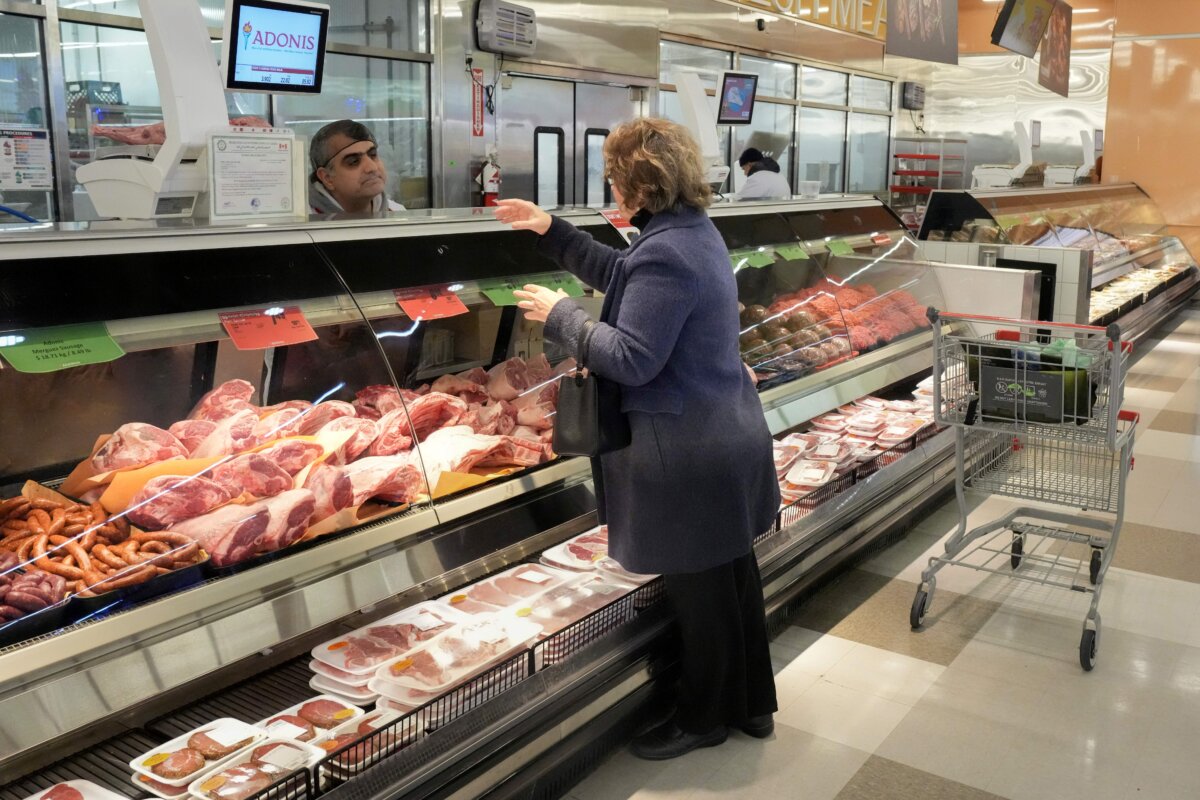
With summer weather settling in, Canadians are returning to a familiar ritual—firing up the barbecue. But as they approach the meat counter, many are faced with shockingly high prices. This year, the meat aisle has become a case study in supply-side economics and market dysfunction, leaving consumers to wonder how this all came to be.
Since January, according to Statistics Canada, beef prices have surged dramatically. Striploin is up 34.2 percent, top sirloin 33.7 percent, and rib cuts nearly 12 percent. Pork rib cuts and chicken breasts have each risen 5.9 percent, while even meatless burger patties are 6.8 percent more expensive. Beef has led the way in these increases, and its dominance in the price hikes is striking. What’s particularly concerning is that it’s not just one cut of beef—virtually every option has seen a dramatic jump, putting pressure on Canadian consumers who were already grappling with rising food costs.
The cause behind these increases lies in Canada’s shrinking beef cow inventory, now at just 3.38 million head—the lowest since 1989. This represents a 1.2 percent drop from last year, but it signals much more than a cyclical decline. Many cattle producers, facing an increasingly volatile market, are choosing to exit the industry while prices are favourable. Others are opting to reinvest in less risky sectors or even shift entirely to crop production, leaving the beef industry in a precarious state. In short, Canada’s beef industry is retreating, and with that retreat comes rising prices, fewer available cattle, and growing uncertainty.
South of the border, the United States is seeing a similar trend, but far less severe. According to the U.S. Department of Agriculture, the American beef cow herd declined by just 0.5 percent to 27.9 million head. This relatively modest drop, coupled with less disruption in their production practices, has resulted in more stable prices. Over the past year, U.S. boneless sirloin steak rose 5.7 percent, compared to a staggering 22 percent in Canada. Ground beef saw a 10.8 percent increase in the United States, but 23 percent in Canada. The price difference between the two countries is stark, and Canadians are feeling the inflationary pressure much more acutely.
There are several factors contributing to the price hikes: Canada’s vast geography, high transportation costs, a limited number of federally licensed beef processors, carbon pricing, and higher labour costs. Carbon pricing, in particular, has added a burden to sectors like beef production, where transportation costs are high. Regulations and logistical inefficiencies add to the costs, driving up prices for retailers and, ultimately, consumers. This combination of factors is having a compounding effect on the price of beef, making it increasingly out of reach for many.
But there’s another possibility we can’t ignore: potential collusion within the industry. In Canada, a small number of large processors control much of the beef supply, which gives them significant influence over prices. The U.S. government has taken strong action against price-fixing among major meat packers like JBS, Tyson Foods, Cargill, and National Beef, leading to multimillion-dollar settlements. In Canada, however, the Competition Bureau has remained largely silent on similar concerns, allowing the possibility of price-fixing to persist unchecked. Perhaps it’s time for Canada to follow the U.S. lead and ensure the beef industry is held accountable for its actions.
The consequences of these rising costs are already evident. According to IBISWorld, Canadian per capita beef consumption fell by 7.1 percent in 2023 and is expected to drop another 2.1 percent in 2024. This isn’t merely a shift in dietary preferences—it’s a structural change in consumer behaviour. Beef is becoming increasingly viewed as a luxury item, with many budget-conscious households turning to ground beef as a more affordable option. For many Canadians, beef is no longer a staple food but rather an occasional indulgence, reserved for special occasions or holiday meals.
This shift is unfortunate. Beef remains one of the most natural, sustainable sources of protein available to Canadians. Ranchers and processors have made significant strides in improving environmental stewardship, animal welfare, and food safety, often without recognition. Beef is not only nutritionally dense but also supports rural economies and provides a level of traceability that few other protein sources can offer.
For many Canadian families, a summer steak on the grill is becoming more of a splurge than a staple. While Canadians will continue to enjoy beef, the frequency and volume of consumption will likely diminish.
Barbecue season hasn’t disappeared, but for many, it’s starting to look a little different: more sausages, more chicken, and fewer striploins. A shame, really, for a product that offers so much more than just taste.
Views expressed in this article are the opinions of the author and do not necessarily reflect the views of The Epoch Times.
 Friends Read Free
Copy
Facebook
Tweet
Friends Read Free
Copy
Facebook
Tweet