Commentary
For more than three decades, Hong Kong stood as the lone guardian of a memory that the Chinese communist regime tried relentlessly to suppress.
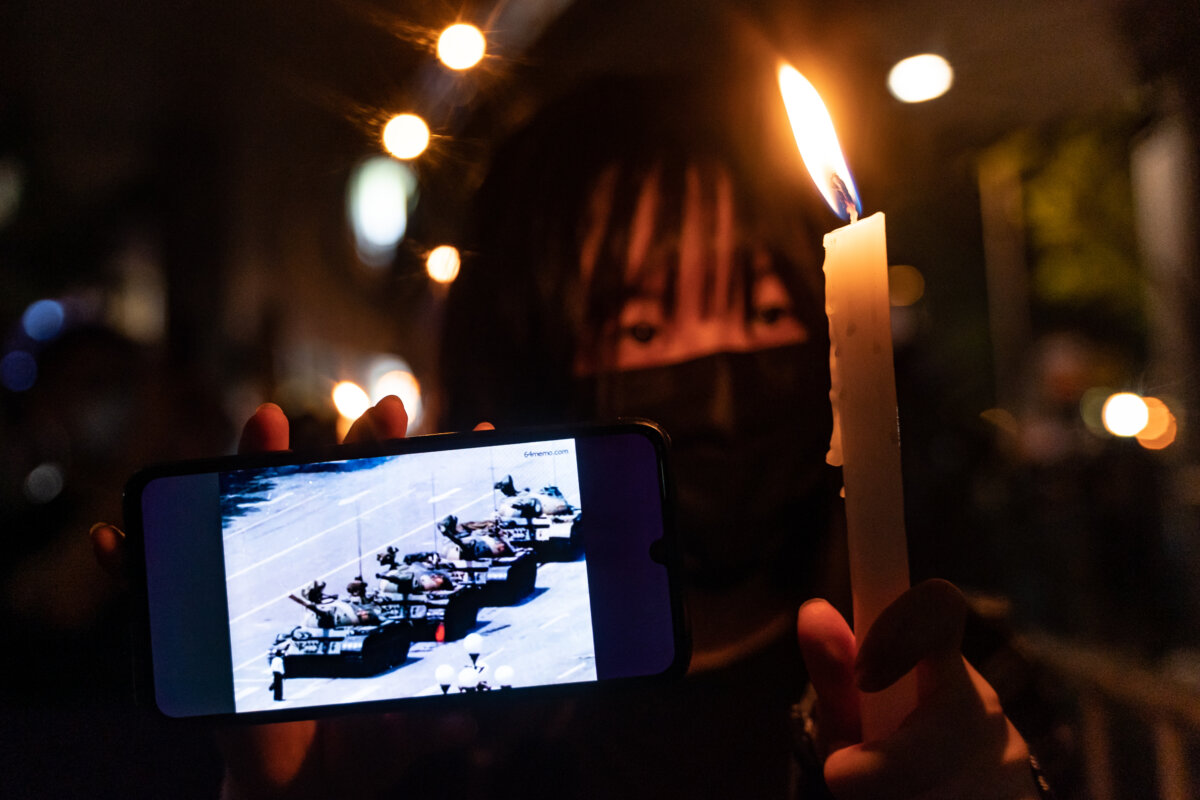
Each year on June Fourth, Victoria Park shimmered with tens of thousands of candles—quiet, unwavering flames held by a cross-section of the city’s people. Students, retirees, workers, pastors, journalists, and families gathered in solemn remembrance of the 1989 Tiananmen Square massacre. It was peaceful, dignified, deeply human. And it was uniquely Hong Kong.
That era is now over. Or, at least, it is being forced into darkness.
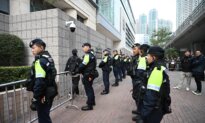
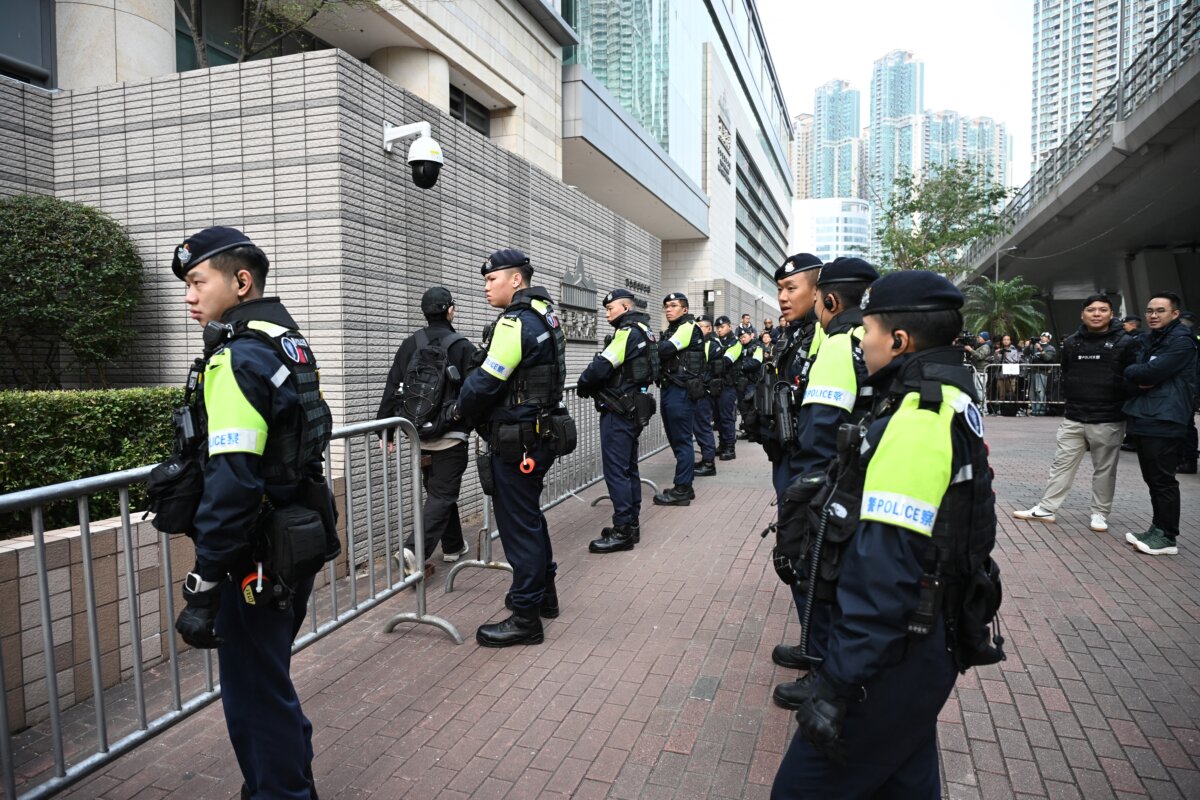
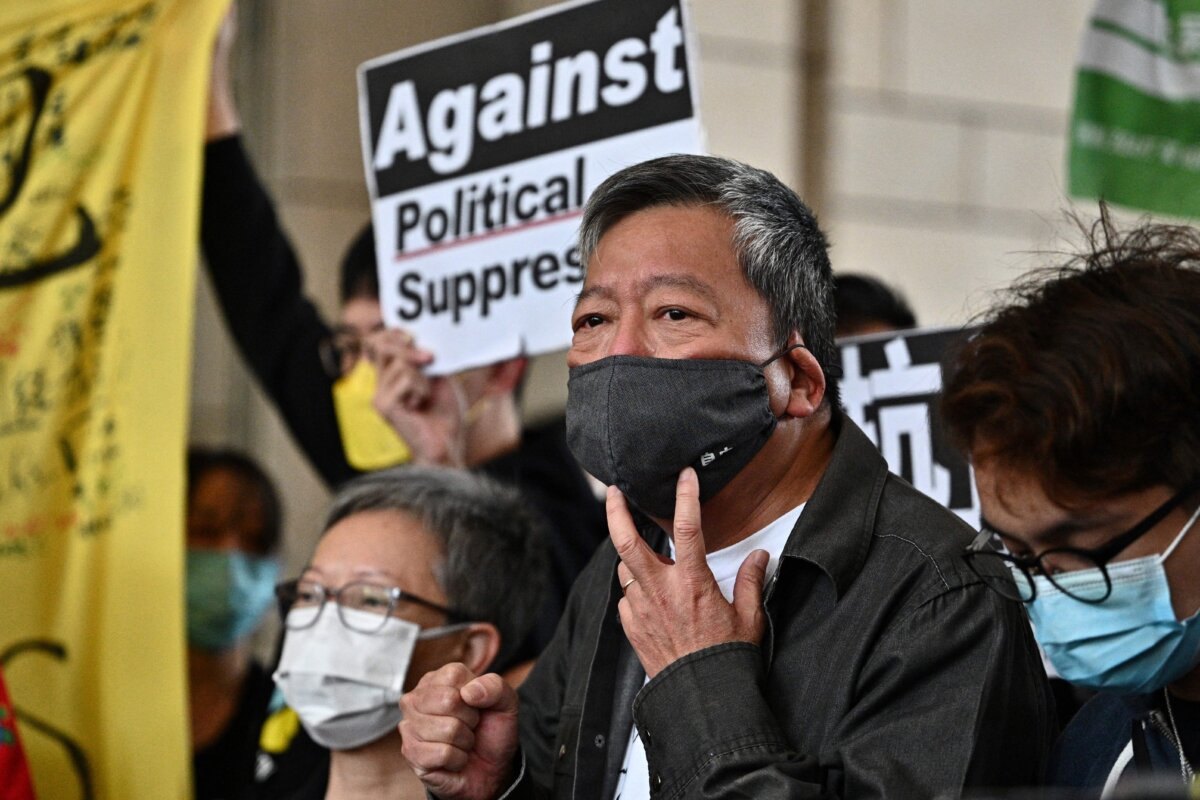
On Jan. 22, in a courtroom where proceedings were held in Cantonese, the long-delayed trial of the Hong Kong Alliance in Support of Patriotic Democratic Movements of China (the Alliance) began. The defendants—Albert Ho, Chow Hang-tung, and Lee Cheuk-yan—face charges of “inciting subversion” under the National Security Law (NSL), an offense carrying a maximum penalty of 10 years.
Their trial feels less like a legal proceeding and more like a political ritual, the culmination of a systematic effort to extinguish not only a civil society organization but also a moral tradition that defined the city for a generation.
A Judiciary Unraveling
The transformation of Hong Kong’s legal system into what many now describe as a kangaroo court—especially in national security trials—did not occur silently. It was foreseen, documented, and lamented by those who once believed in the integrity of Hong Kong’s judicial tradition. Among them is Lord Jonathan Sumption, former Justice of the United Kingdom Supreme Court and a nonpermanent judge on Hong Kong’s Court of Final Appeal.
His resignation in June 2024 marked a turning point. He spoke with extraordinary clarity: Hong Kong, he warned, was “slowly becoming a totalitarian state,” and the “rule of law is profoundly compromised in any area about which the government feels strongly.”
His words, unusually stark for a jurist of his stature, now serve as a prophetic frame for the Alliance trial. Although Cantonese echoes through the courtroom, the spirit of Hong Kong’s legal system—its independence, its dignity, its integrity—feels absent. What remains is a carefully choreographed legal theater in which arguments are heard but outcomes appear predetermined.
Ho’s guilty plea is emblematic of this new landscape. In a functioning legal system, a guilty plea might signal negotiation or a hope for leniency. Under the NSL, it reflects the grim reality that justice is no longer a matter of law but one of political calculation. Some speculate Ho may be released earlier than expected—not as an act of mercy, but as a decision rooted in expedience, signaling that he is no longer seen as a threat.
Meanwhile, Chow’s decision to defend herself reflects a defiance grounded in principle rather than strategy. Her reasoning is elegant and incisive: Lighting a candle cannot amount to subversion, and mourning the dead is not a crime. Her confidence unsettles the very system that seeks to silence her, for she reveals the contradictions within the prosecution with the precision of a barrister and the courage of a moral witness.
Then there is Lee, whose life story is inextricably woven into the fabric of June Fourth. Lee lived the history that authorities now demand the public forget. He traveled to Beijing in 1989 to support the pro-democracy student protesters; he returned to Hong Kong determined that their memory would not be lost. His prosecution is not about the law; it is about erasing a living testament to conscience.
The Erasure of a City’s Conscience
To understand why this trial is so significant, one must understand what the vigil represented. For more than 30 years, Hong Kong preserved a truth that Beijing could not tolerate. The vigil reminded the world that the “one country, two systems” framework once meant something tangible. It gave Hong Kong a moral core shared across generations and backgrounds. And it kept the memory of Tiananmen alive in a region where the state enforces silence.
Because of this, the vigil had to be dismantled. Its organizers had to be prosecuted. Its symbolism had to be extinguished.
Since 2020, Victoria Park has been sealed off on June Fourth. Police barricades block every entrance. Candles, banners, and even T-shirts bearing dates or numbers are treated as evidence of potential crimes. Hong Kong, once a city of remembrance, has become a city of enforced amnesia. Yet memory has a stubborn way of surviving, even under siege.
The Last Light of June Fourth
In the years since the vigil was banned, as Hong Kong residents have been threatened with arrest simply for holding candles, a quiet but moving gesture has persisted. The U.S. Consulate in Hong Kong has illuminated electric candles in its windows on June Fourth—an understated tribute requiring no crowd, no slogan, no banner. Yet its symbolism is unmistakable. For many Hongkongers, it is the last visible candlelight vigil on Hong Kong soil.
That soft glow on Garden Road has become a silent act of remembrance that no ban can fully extinguish. It tells the city: The world remembers what Hong Kong is no longer permitted to recall. It stands as a reminder that memory may be pushed to the margins, but it cannot be legislated out of existence. Those electric candles—still and small, but defiantly present—represent the final spark of June Fourth within Hong Kong’s borders.
Their glow, faint but persistent, has become a stand-in for the extinguished sea of candles that once illuminated Victoria Park. The transformation of a mass gathering into a solitary row of lights in a consular window captures the essence of Hong Kong’s current moment: a transition from openness to constraint, from civic courage to enforced stillness, from collective memory to isolated flickers. Yet light, once lit, has a way of enduring in unexpected places.
A Final Reflection
The Alliance trial reveals that Hong Kong’s legal system—once trusted throughout the world—now operates according to political imperatives rather than judicial principles. The National Security Law has become a tool not of justice but of erasure, rewriting the boundaries of what can be remembered, spoken, or mourned.
Still, the memory of June Fourth persists, not only abroad in London, Toronto, Sydney, and Taipei, Taiwan, but also in the quiet resilience of those who continue to hold it close. It persists in the glow of electric candles in a consular window. And it persists in the courage of those who, even under threat, refuse to surrender their conscience.
I write this as someone who has known Ho, Chow, and Lee for a considerable period of time. I admire their dignity, their integrity, and their unwavering commitment to truth. I wish each of them well. And I pray for their safety as they walk through a courtroom that no longer resembles the rule of law they once defended.
Victoria Park may be dark, but memory is not. And as long as even one small light endures, June Fourth cannot be forgotten.
Views expressed in this article are the opinions of the author and do not necessarily reflect the views of The Epoch Times.
 Friends Read Free
Copy
Facebook
Tweet
Friends Read Free
Copy
Facebook
Tweet