
Commentary
California is an economic powerhouse and has been for a long time. The real question is this: Who is that economy actually working for?
I say this as someone who loves California. The weather is beautiful, the land is abundant, and the farm I sold still holds my heart. For years, I believed I would die there. But over time, the conditions required to support my family became impossible to ignore.
When I first opened my restaurants, people could live in the neighborhoods where they worked. My staff could afford rent, take vacations, and build a life. There was a sense that hard work led somewhere.
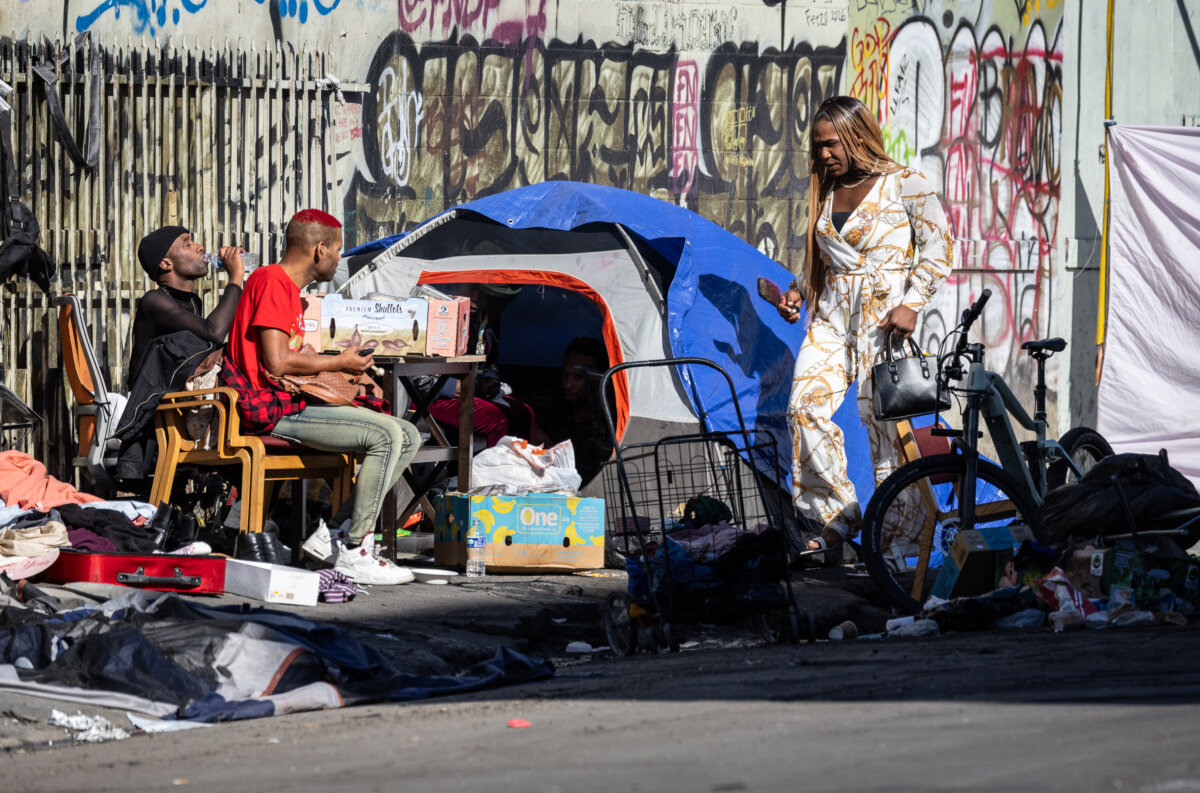
Today, that sense has eroded. People are struggling to hold onto their homes, let alone buy one. Young adults are delaying independence because they cannot afford to launch into their own lives. Business owners are closing or leaving, and in many places, the breakdown is visible. Homelessness is no longer abstract. It is present in daily life, on streets, in front of businesses, and on restaurant patios.
At the same time, we are told that this is one of the most successful economies in the world. Over the past two decades, California’s economy has more than doubled in size, growing from roughly to $4 trillion today $1.7 trillion in the early 2000s.
But that growth has not been evenly distributed. Manufacturing employment has declined over that same period, and industries like film and television have increasingly shifted to other states offering more competitive conditions, while a larger share of economic gains has been concentrated in technology and related sectors.
These businesses generate enormous economic output while employing relatively small numbers of people compared to the scale of their revenue. A handful of companies can move the gross domestic product (GDP) of an entire state, but they can’t replace the thousands of small businesses, restaurants, and trades that actually hold a community together.
At the same time, the cost of living, especially housing, has surged. While median home prices across California now approach or exceed $800,000, in Los Angeles, they are often closer to $1 million or more. At that level, homeownership is no longer a stepping stone. It is a barrier. Even when accounting for inflation, housing costs have outpaced both wage growth and overall price increases, leaving many families feeling further behind despite broader economic expansion.
California did not always feel this way. It was once a far more diversified economy, in which film and television production anchored communities, manufacturing provided stable middle-income jobs, and agriculture connected people to the land in a tangible way. Small businesses were not just surviving; they were part of the fabric of everyday life. Over time, many of these industries have declined or been pushed out, reshaping not only the economy but the experience of living within it.
What remains is an economy that is incredibly productive on paper but increasingly concentrated in practice. As someone who has moved to Texas for many of these reasons, I believe states like Florida, Idaho, and Texas should look at California as a cautionary tale. In truth, the entire country should.
We are moving toward an economy that is increasingly driven by technology, in which human beings are becoming less necessary to production, and that should force us to ask a harder question about who this system ultimately serves.
States like Texas, Florida, and Idaho are currently growing faster than California by percentage, and that growth is still tied to industries that require people. There are more jobs per dollar of GDP and more pathways for people to participate. But as technology continues to move into these states, they could easily follow the same trajectory. We are already seeing it in housing, in which the same pressures that reshaped California are beginning to take hold.
So who does this actually serve?
Has food gotten meaningfully cheaper at the grocery store because we now have self-checkout aisles?
Has your car insurance gone down because you can purchase it instantly through an app?
Has your ability to support your family become more abundant because of all this technology, or do prices continue to rise year after year regardless of how efficient everything becomes?
We are told that efficiency should improve our lives, yet for many people, the experience feels very different. We are more efficient than ever and yet still have less time, less margin, and less stability.
At some point, we have to ask whether the benefits of that efficiency are being distributed or concentrated. We have to ask whether the systems we are building are designed to serve people or whether people are being asked to serve the systems. Because if everything is getting faster, smarter, and more efficient, but life is not becoming more livable, then something deeper is shaping the outcome.
Even in the response to this conversation, I hear the criticism. People call me a champagne liberal or say that I ran from conditions I helped create. There is some truth in that, because we are all responsible, to some degree, for the lives we experience. But we are also responsible for recognizing when something is no longer working and having the courage to respond.
Migration is not failure. It is one of the most human instincts there is. Almost all of our ancestors left something behind when it no longer supported their survival or their future. They moved toward opportunity, toward land, and toward the possibility of building something better. That is not weakness; it is adaptation.
I don’t want to live in the greatest economy in the world if that greatness is measured only by the top line. I want to live in an economy that is measured not just by how it serves corporations or governments but by how it serves the people who live within it. An economy should not only be judged by how much it produces but by how many people it actually works for.
Views expressed in this article are the opinions of the author and do not necessarily reflect the views of The Epoch Times.
 Friends Read Free
Copy
Facebook
Tweet
Friends Read Free
Copy
Facebook
Tweet