Commentary
My employee called me from the Costco checkout. They wouldn’t let him buy the groceries. He was using my membership, and now, apparently, that’s no longer allowed. Not because of the card itself, but because of facial recognition. The person at the register told him they verify who you are when you walk in.
It used to be normal to send a friend or an employee with your card. That small flexibility is gone now, replaced by something far more precise.
This isn’t just a Costco phenomenon. At Whole Foods, you can now pay with your hand. I haven’t signed up, and I don’t plan to, but I watch people do it all the time, eager and excited to participate.
The amount of data being gathered at all times is staggering.
My children’s Pokémon GO app was once able to generate enormous value simply by encouraging people to walk around with it open, mapping the world in the process. That same principle has scaled into nearly every corner of our lives. We are constantly giving away information, exchanging privacy for convenience, one small decision at a time.
The layers of convenience are hard to resist.
Whole Foods knows what you buy to eat, which is connected to Amazon, which knows what supplements you buy and what you order for your home, which is connected to countless other systems, all feeding into a growing web of information built quietly around each of us. It used to feel unsettling when you talked about something near your phone and then saw an ad for it later. Now, we accept it as part of life.
Not that long ago, we would have been appalled at the idea of a store using facial recognition while we shop. Today, we barely notice.
What struck me most was my employee’s question. If the system knew he wasn’t me when he walked in, why let him fill two carts before stopping him at checkout? The response he got was simple. Maybe the cardholder was in the car. Maybe I was going to meet him at the register.
Even the system has to leave room for human behavior.
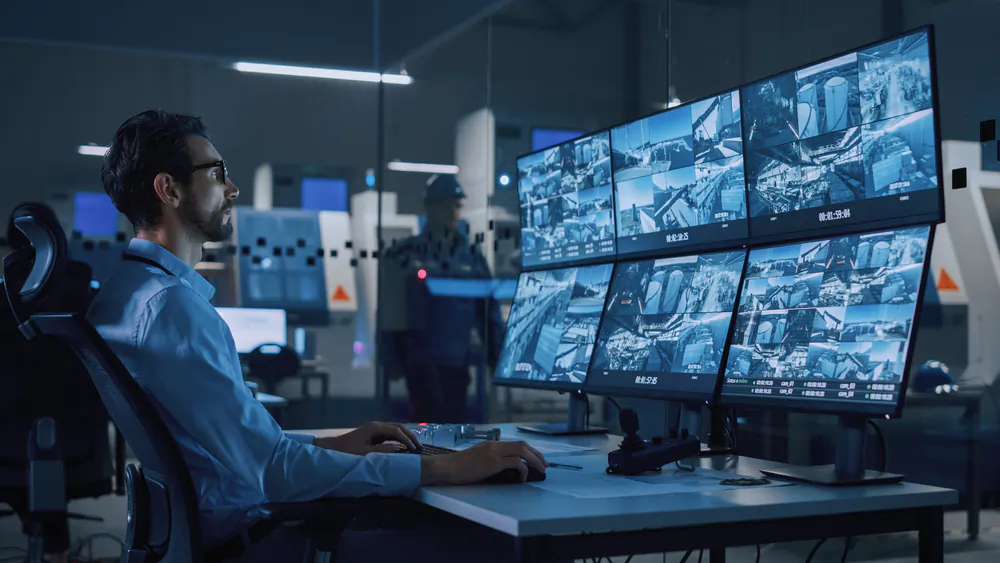
Even in the small town I live in, a new layer of surveillance is being introduced. Recently, the city council approved a contract with Flock cameras, installing license plate-tracking technology throughout town. These systems are not exclusively for law enforcement. They are available for purchase, for monitoring, and for data collection.
The commitment was about $17,000.
People noticed. In a place where news travels fast and people like to talk, it didn’t take long for the backlash to begin. Some residents have already taken matters into their own hands, cutting down cameras. Others showed up at the city council meeting to voice their concerns.
People move to small towns for a lot of reasons, but being tracked every time they drive to the grocery store, hardware store, or feed store is not one of them.
A few days later, I was at the airport and chose to opt out of the facial scan, as I always do. The employee rolled their eyes and said, “Do you know how many other cameras have already captured you walking through here?”
I told them I didn’t know, but this was the only one giving me the option to opt out. So I was opting out.
It is getting harder and harder to opt out.
The idea of privacy feels like it may be slipping away entirely. By the time my children are adults, it may be gone in any meaningful sense. We are standing at a strange intersection between the old world and the new one. The world I grew up in, without the internet, is fundamentally different from the world my children are inheriting.
Maybe every generation feels that divide. But this one feels different in scale.
In big cities, you can still feel anonymous in a crowd, yet your data are constantly tracked, stored, and sold. In small towns, there has never been anonymity. Everyone knows everyone, and news travels fast. Now, even there, your data are still being collected and sold in the background.
There is no longer a place where you are unseen.
The camera knows you belong.
Views expressed in this article are the opinions of the author and do not necessarily reflect the views of The Epoch Times.
 Friends Read Free
Copy
Facebook
Tweet
Friends Read Free
Copy
Facebook
Tweet