
Commentary
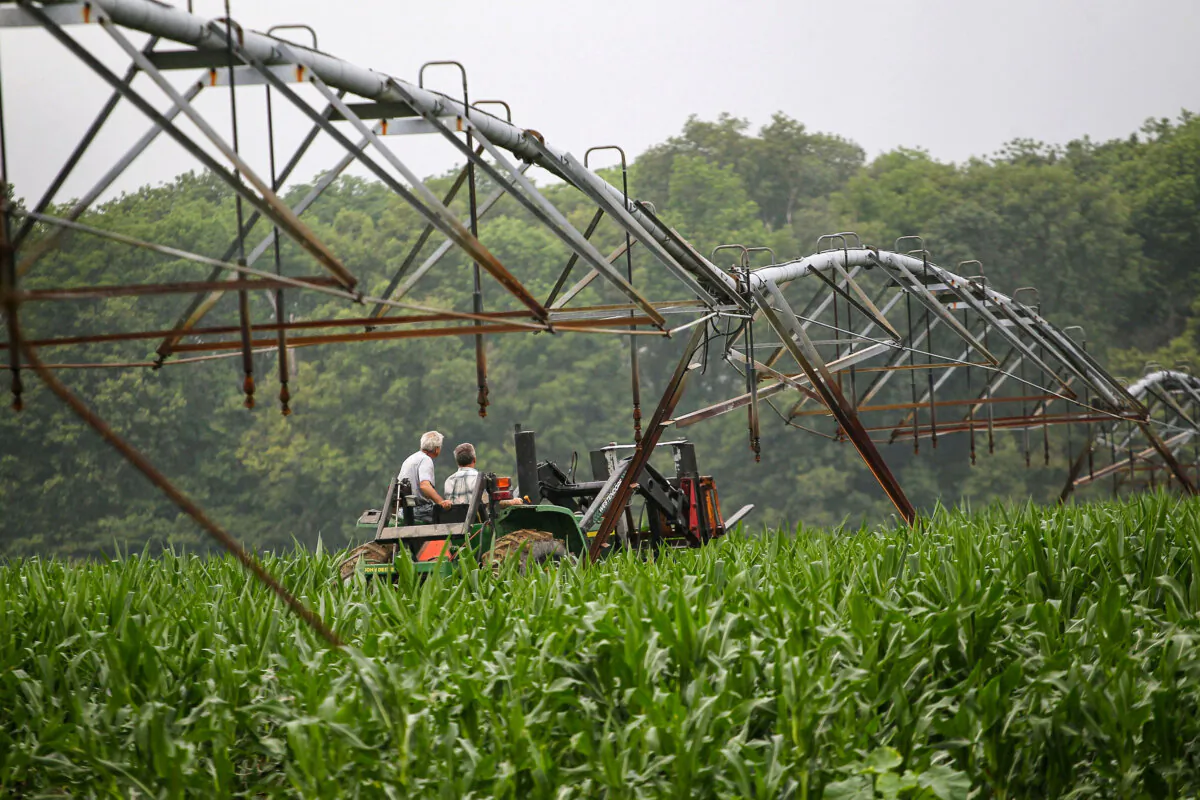
I walked the fields this week with Washington on my mind, which is not where I prefer to keep it. The cover crop is coming in after three good rains, and I find myself kneeling down, pulling back leaves, and identifying what is actually growing.
The soil does not spin. It does not lie. The plants are responding to what is actually happening, and there is honesty in that.
It has been a long time since we have had a new Farm Bill. It has been extended and stretched, held together in pieces while the system it governs keeps moving forward. For farmers, that means continuing to operate inside the same incentives, the same pressures, and the same constraints.
Last week, there was movement, not a finished bill and not a resolution, but pressure showing up in real ways. I believe that pressure is coming from people who are no longer willing to accept the status quo and are asking what kind of food we are producing, what it is doing to our bodies, and what we are leaving behind for our children.
One of the most talked-about provisions did not move forward. The proposed pesticide liability shield would have limited individuals’ ability to bring certain lawsuits if a label had already been approved at the federal level, and that effort stalled. Accountability shapes behavior, and when you remove it, you accelerate whatever system is already in place. Right now, that system leans heavily on chemical inputs and scale.
At the same time, one of the largest and most unresolved parts of the Farm Bill remains SNAP. Most people do not realize that SNAP benefits, what many still call food stamps, are funded through the Farm Bill, but they are.
I will be honest about where I stand. I do not care how much money we dedicate to SNAP as long as it is actually used for nutrition. SNAP is, by definition, a nutrition grant, so the outcome should be nutrition. That feels so obvious that it is almost uncomfortable to say out loud.
If I apply for a grant to build a greenhouse, I am required to build a greenhouse. There are rules, inspections, and accountability. No one says that I might use the money for something else, and that is fine. The expectation is clear, and the outcome must match the intent. It should be no different here.
There are real concerns about how SNAP dollars are currently spent. Earlier federal purchasing data indicated that roughly $7 billion per year in SNAP benefits were spent on soft drinks alone. Broader estimates that include a wider category of sugary beverages and processed items push that number higher, sometimes into the ten billion dollar range or more.
Claims as high as $19 billion are circulating, but those depend heavily on how the categories are defined and are less clearly supported. Even if we stay conservative, we are still talking about billions of dollars going toward products that do not deliver meaningful nutrition.
There are programs that point in a better direction. In California, initiatives that double SNAP dollars when they are spent directly with farmers on fresh fruits and vegetables are a glimpse of what alignment looks like. When $10 becomes $20 at a farmers’ market, the system begins to connect the purpose of the program to the outcome. It supports the farmer, supports the soil, and supports the person eating the food, which is what a Farm Bill should do.
Another piece of this conversation that matters deeply to farmers like me is the PRIME Act. Right now, if you want to sell individual cuts of meat to your community, you are often forced into a federally inspected processing system that is backed up, expensive, and in many places simply unavailable at the scale small farmers need.
There are custom processors all over this country that already process animals safely for families, hunters, and local use, but the rules prevent that meat from being sold in the same way it is already consumed.
The language of the PRIME Act, which Rep. Thomas Massie (R-Ky.) has championed for almost a decade, seems to be gaining traction, and that matters. It would allow meat processed at the state level or through custom facilities to be sold directly to consumers within the same state. It does not remove oversight but shifts it to a level that is closer to the community, closer to the farmer, and often more responsive. It is not passed, but it is no longer sitting on the fringe and is being discussed within the broader Farm Bill framework, which makes it vital for those of us who sell directly to our neighbors.
What we are left with is a disconnect. The same bill that is supposed to support agriculture often ends up funneling a portion of its nutrition funding toward highly processed products that do not contribute to long-term health, while farmers growing real food are asked to compete in a system that does not fully support them.
Walking through my fields this week, looking at a sixteen-species cover crop coming up strong after rain, I am reminded of what real investment looks like. I can see the diversity, I can see the structure building in the soil, and I can see water being held instead of running off. Each plant has a role, whether it is fixing nitrogen, breaking compaction, or providing biomass, and together they create something more resilient than any single species could be on its own. That is nutrition at the soil level, and what we grow in that soil becomes what we feed our families.
The disconnect between policy and reality is hard to ignore. We are pouring billions into systems that prioritize shelf stability, convenience, and scale, while asking the land to continue producing without fully replenishing what is being taken. That is part of why so many farmers feel stuck in a treadmill, a rat race with no clear way out, where input costs rise, margins tighten, and decisions get made based on survival this season rather than stewardship for the next generation.
Incremental policy changes will not come fast enough for everyone, and some farmers will not make it through that transition. That is a hard truth, but moments like last week still matter. When a provision like the pesticide liability shield fails to move forward, it signals that there are limits to how far we are willing to go in protecting the existing system without question.
When SNAP becomes part of a louder conversation about what we are actually funding, it creates an opportunity to realign the program’s purpose with its name.
Nutrition should be the outcome. Not calories alone and not convenience alone, but nutrition.
I do not expect the government to fix farming. Real change is happening in fields, in kitchens, and in families, making different choices, and it is happening in relationships between farmers and the people they feed. Policy does shape the environment we are all operating in, and right now that environment is shifting, slowly and unevenly, but it is shifting.
Alongside that, another path is being built in real time, field by field, decision by decision, family by family, and that path does not wait for a bill to pass. It moves anyway. The system we are in still feels like a treadmill for many, and incremental changes will not come fast enough for many farmers, but they might come fast enough to save some of us. In the meantime, we keep building something better in the soil.
Views expressed in this article are the opinions of the author and do not necessarily reflect the views of The Epoch Times.
 Friends Read Free
Copy
Facebook
Tweet
Friends Read Free
Copy
Facebook
Tweet