
Commentary
For years now, billions of dollars have poured into the promise of a technological revolution in agriculture.
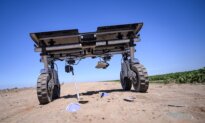
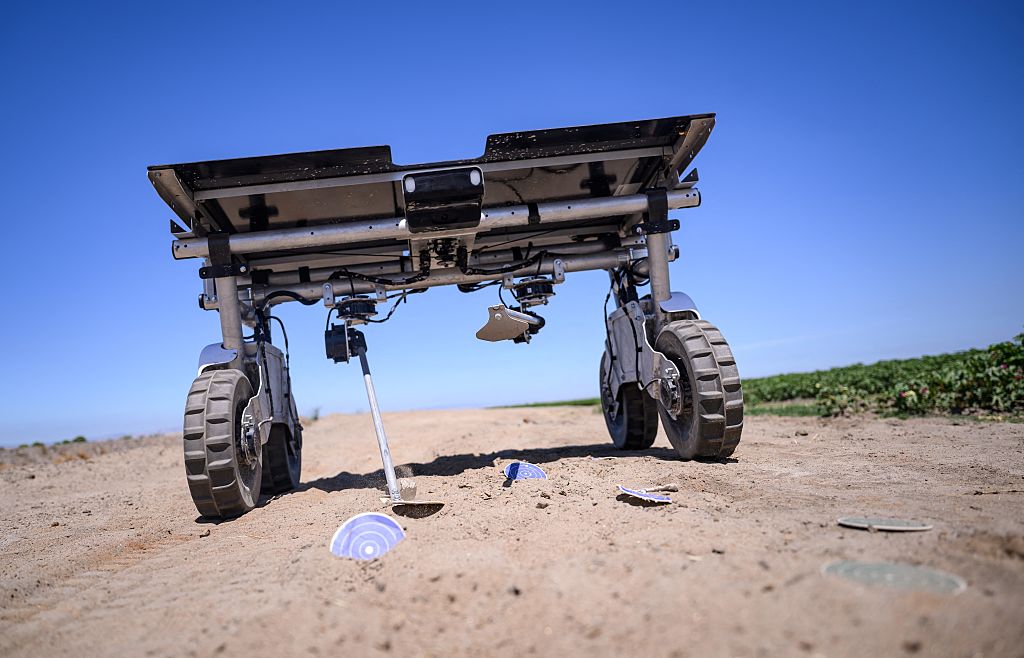
Venture capital firms, Silicon Valley start-ups, robotics companies, and artificial intelligence (AI) developers all seem convinced that the future of farming is fully autonomous. Driverless tractors. Robotic harvesters. AI crop management systems. Precision spraying drones. Entire farms operated with minimal human labor.
And yet, while all of this futuristic technology is being developed, tested, and marketed, something else is happening quietly in the background. The actual farmers are disappearing.
As I watch companies such as Monarch Tractor struggle after years of hype and hundreds of millions of dollars in investment, I cannot help but feel that there is a disconnect between the vision investors have for agriculture and the reality of life on the land.
I say this not just as a regenerative farmer, but as a mother and someone who spends every single day immersed in the unpredictability of living systems.
Agriculture is not software.
It is weather, biology, timing, and observation. It is mud and broken fences and animals escaping, exactly when you are already overwhelmed. It is pumps going out in the middle of the night and storms arriving during harvest. It is understanding subtle shifts in soil moisture, grass recovery, animal behavior, insect pressure, and seasonal rhythms that cannot always be quantified neatly into data points.
The further I get into farming, the more I realize that nature is not mechanical. It is relational.
And yet so much of the modern technological vision for agriculture treats the farm like a factory floor that simply needs better automation.
The scale of investment flowing into this sector is staggering. Agriculture technology (AgTech) start-ups have raised tens of billions of dollars globally over the past several years, with funding pouring into autonomous tractors, robotic harvesters, AI crop management systems, indoor vertical farms, satellite monitoring, synthetic biology, and data-driven farm management platforms.
Entire categories of investment are now centered around replacing or minimizing human labor in agriculture. Farm robotics and automation companies continue to attract enormous investor attention, while major corporations such as John Deere and Caterpillar increase their investments in autonomous systems and AI-driven machinery.
Some companies are raising hundreds of millions of dollars to automate everything from weeding to harvesting to spraying. Meanwhile, many farmers cannot earn enough to keep their operations afloat.
That contrast feels impossible to ignore.
At the same time, we are witnessing what feels like a full agrarian collapse happening in slow motion across America. Farmers are aging out. Young people cannot afford land. Small ranches are disappearing. Debt loads are crushing families. Local meat processors are scarce. Rural communities continue to hollow out while consolidation accelerates.
The average age of the American farmer continues to rise, and many operations survive only because one generation is holding on long enough to transfer knowledge to the next. In some communities, there is no next generation at all.
But instead of focusing our national energy on rebuilding resilient local food systems, restoring rural economies, training young farmers, decentralizing processing, and helping families stay on the land, enormous amounts of capital are flowing into the idea that maybe we can simply automate the human being out of the equation entirely.
That should concern all of us.
Because once you start looking closely, you realize this is not only happening in agriculture. Increasingly, our society seems to view humans themselves as the inefficiency.
Drivers are replaced by autonomous vehicles. Cashiers by self-checkout. Customer service by chatbots. Artists by AI generators. Teachers by software platforms. Farmers by robotics.
The assumption underlying much of modern technological development is that the ideal system is one with less human involvement.
But humans are not simply inefficient machines.
Humans carry intuition. Stewardship. Morality. Restraint. Care. Creativity. Observation. Relationship.
A good farmer is not simply maximizing output. A good farmer is participating in an ongoing relationship with land, water, animals, weather, and community. The best farmers I know are deeply observant people. They notice tiny changes in grass color, shifts in animal energy, patterns in rainfall, and the smell of soil after a storm.
Many of these things are difficult to quantify because living systems are dynamic and contextual.
And this is where I become deeply skeptical of the current trajectory.
Some technology absolutely has value. Farmers have always adopted tools. Tractors themselves were once revolutionary technology. Irrigation systems, refrigeration, electric fencing, chainsaws, and GPS mapping all dramatically changed agriculture.
Technology is not inherently the problem.
The real question is what kind of system the technology is reinforcing.
Is it helping farmers become more resilient and connected to the land? Or is it attempting to remove humans from the process altogether?
There is another piece of this conversation that feels uncomfortable but necessary to acknowledge.
Many of these autonomous technologies are being developed alongside increasingly chemical-dependent agricultural systems. Self-driving sprayers. Autonomous pesticide rigs. AI precision herbicide systems.
And I cannot help but wonder whether part of the push toward automation is because fewer people want to physically interact with the chemicals being used.
To be clear, farm workers deserve safety. Reducing harmful exposure matters. But there is a deeper philosophical contradiction here that we should not ignore.
If a system becomes so chemically intensive that we increasingly prefer robots to touch it instead of humans, what does that say about the system itself?
Because even if a robot sprays the chemical, we still live downstream from it. We still eat food grown within that system. The soil biology still interacts with it. The waterways still carry it. The ecosystems still absorb it.
Removing the human applicator does not remove the consequences.
As a mother, I think about this constantly. I think about my children’s microbiomes. I think about the health of the soil. I think about what happens when human beings become more disconnected from the biological systems that sustain them.
One of the greatest illusions of modern society is the belief that we can separate ourselves from nature while still remaining healthy.
We cannot.
We are not outside of nature. We are part of it.
That is why I believe the future of agriculture cannot simply be about replacing human beings with machines. The future must involve rebuilding human relationships with the land itself.
Regenerative agriculture, at its core, is not about nostalgia. It is not anti-technology. It is about recognizing that healthy systems require participation, observation, and reciprocity.
The answer is no technology. The answer is appropriate technology in service to living systems.
Tools that help farmers steward land better are valuable. Tools that reduce unnecessary labor without disconnecting humans from ecological reality are valuable. But a future where food production becomes entirely industrialized, autonomous, centralized, and detached from human stewardship feels profoundly dangerous to me.
Because food is not just another industry.
Food is life itself.
And the further humans drift from a direct relationship with the systems that sustain life, the more fragile we become.
Views expressed in this article are the opinions of the author and do not necessarily reflect the views of The Epoch Times.
 Friends Read Free
Copy
Facebook
Tweet
Friends Read Free
Copy
Facebook
Tweet