
Commentary
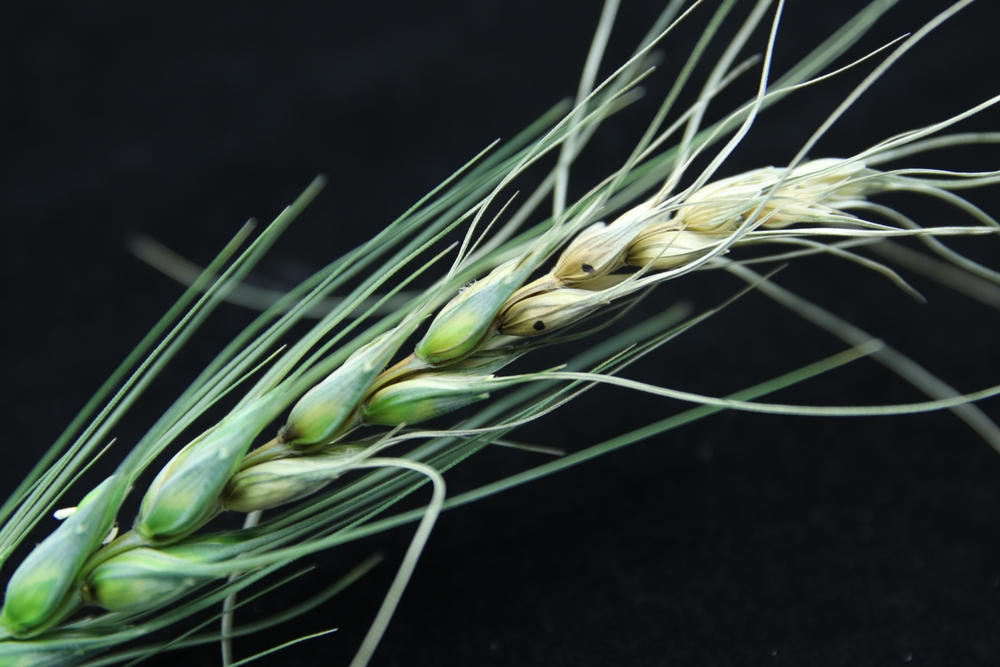
On June 3, the FBI arrested two Chinese nationals, Yunqing Jian and Zunyong Liu, who allegedly attempted to smuggle a dangerous crop pathogen, Fusarium graminearum, into the United States. The suspects had been admitted into the United States under the guise of being guest researchers at the University of Michigan.
This arrangement was part of a longstanding academic and scientific exchange framework intended to foster innovation and international collaboration. However, these arrests highlight missing safeguards that need to immediately be put in place at academic research institutions. For too long, academia has allowed foreign actors in the country who want to hurt America’s infrastructure and America’s citizens. All grants and research funding should be halted at the University of Michigan until this incident is thoroughly investigated.
According to federal authorities, the arrested individuals were embedded in research institutions and laboratories that had access to agricultural processes and food safety systems. Underneath the academic credentials and research résumés lay a much darker intent: the deliberate contamination of food supplies to cause public harm and national disruption.
While details of the criminal investigation remain classified, what is clear is this: America’s open-door approach to academic collaboration has created a soft target. The guest researcher program, which brings thousands of foreign scientists and scholars into the United States every year, lacks sufficient safeguards to prevent bad actors from entering the country under false pretenses. What was originally designed as a channel for cultural and scientific enrichment has been left vulnerable to foreign abuse.
This is not the first time that foreign nationals, especially those tied to the Chinese Communist Party, have been accused of exploiting research visas for noncollaborative ends. Over the past five years, the Department of Justice has charged numerous individuals connected to China with stealing trade secrets, violating sanctions, or misrepresenting their affiliations with the Chinese military. What differentiates this latest case is the shocking intent: not espionage but sabotage.
Just as border security is national security, food security is also national security. The United States boasts one of the most complex and robust agricultural supply chains in the world. But complexity breeds vulnerability. From farm to factory to supermarket shelf, the sheer number of touchpoints in our food system means that any actor with access and malicious intent could do significant harm. The FBI’s actions at the start of June underscore just how real that danger is and how easily it can enter through the front door.
According to the Department of Agriculture, the United States produces more than 1.6 billion bushels of wheat annually. A targeted outbreak of head blight, the disease caused by Fusarium graminearum, could cripple this vital crop and contaminate grain reserves with mycotoxins, rendering large quantities of food unfit for consumption. This would not only harm domestic supplies but also disrupt global markets.
Consider the story of the bacterium Candidatus Liberibacter asiaticus, which was first identified in China in 1919 and that mysteriously found its way to Florida in 2005. This bacterium causes citrus greening. Once infected, citrus trees suffer a slow decline: The bacteria clog the phloem (the tree’s nutrient transport system), leading to nutrient starvation, premature fruit drop, and the production of green, bitter, unmarketable fruit. Infected trees typically die within five to 10 years. Since its detection in 2005, this bacterium has spread rapidly, infecting more than 90 percent of Florida’s citrus groves. The industry, valued at $9 billion, has lost 8,000 jobs and $4.6 billion in economic impact since 2005. Now, imagine America loses 90 percent of its total farmland or 90 percent of its water supply. What would be the impact?
Congress and federal agencies should intensively study what occurred at the University of Michigan that allowed this breach to happen. What loopholes allowed this to happen? What warning signs were missed? How can we improve screening processes and interagency coordination to prevent similar threats in the future? The United States has world-leading intelligence and biosecurity capabilities, but we cannot expect success from systems that are only reactive. We need proactive policies that combine openness with resilience.
If America is to remain open to global talent, it must also remain closed to those who aim to do it harm. The privilege of research access comes with responsibility, and the obligation to safeguard that privilege comes with oversight. Academic research institutions must start being held accountable to any dangerous foreign actors that they employ in any way.
The integrity of America’s food supply, its research institutions, and its national security depend on it.
Views expressed in this article are the opinions of the author and do not necessarily reflect the views of The Epoch Times.
 Friends Read Free
Copy
Facebook
Tweet
Friends Read Free
Copy
Facebook
Tweet