
Commentary
I was sitting at a table in my restaurant after closing, answering a few messages on my phone. Like so many of us do without even thinking, I opened Instagram.
The first thing I saw was a post from the Texas Farm Bureau. The New World screwworm had been confirmed in Texas.
Texas is a big state, I thought. Maybe it was down on the border somewhere. Maybe it was hundreds of miles away.
I started digging.
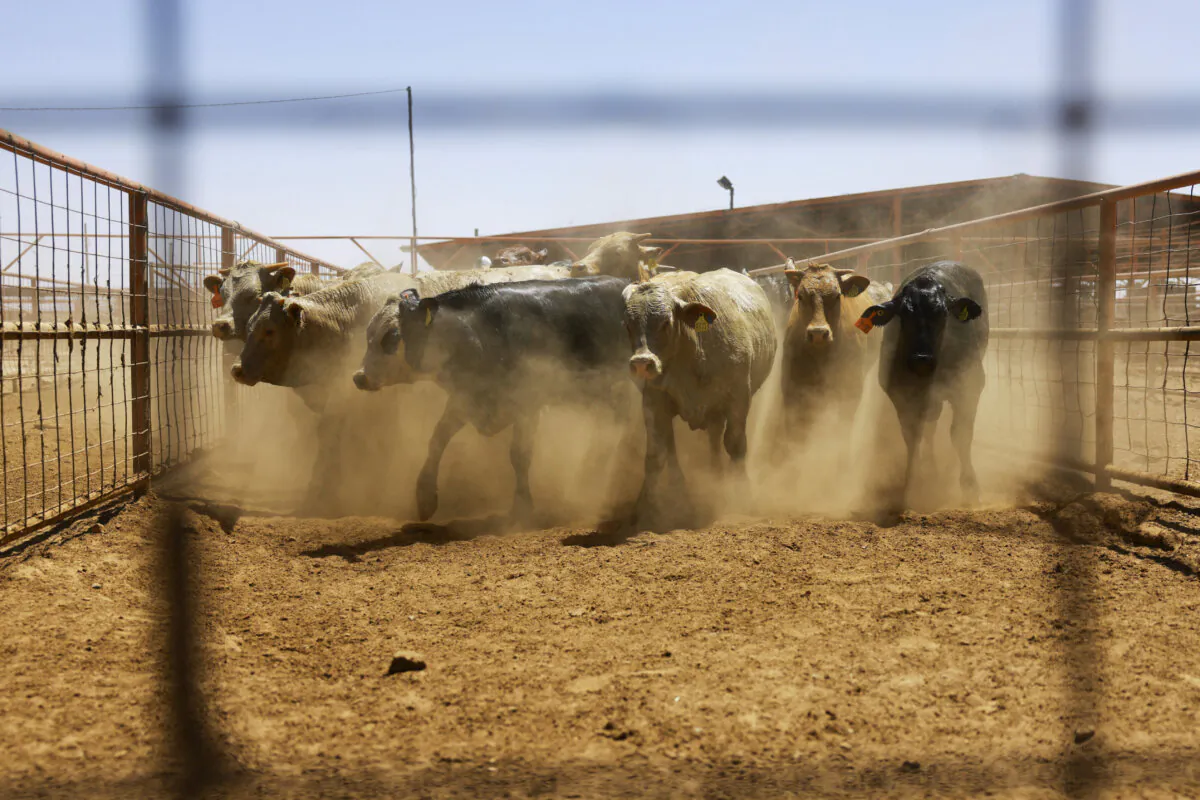
The case was in a three-week-old calf with an infected umbilical cord. The ranch was near La Pryor, about 90 miles from my ranch in Bandera County, maybe a little less as the fly flies.
Nobody wants to hear that a flesh-eating parasite is moving closer to home.
My mind immediately went into ranch mode. I searched for treatments. I ordered more ivermectin. Then I got up from the table, walked outside, and checked the navels on my newborn calves.
That is what farming does to you. The distance between reading the news and changing your life can be about 30 seconds.
We are right in the middle of calving season. Some Texas ranchers calve in the winter because the fire ants are less active then. We try to have our calves in the spring, but our herd runs with the bull year round, so there are always a few stragglers. Every fresh navel, every scrape on a fence, every cut from barbed wire suddenly feels different.
Then another thought crossed my mind. This is not just about cows.
Cattle are the first thing most people think about because they are the economic engine of so many ranches. But the screwworm does not care whether the wound belongs to a calf, a goat, a sheep, a pig, a horse, a deer, or a dog.
Right now, I have a ranch dog recovering from a wound he got from a wild boar. It is exactly the kind of injury that suddenly looks different through the lens of this news. A wound hidden beneath long hair, hard to inspect, easy to miss. The sort of place where a fly could lay eggs without anyone noticing until the damage had already begun.
The vigilance does not just increase for one species. It increases across the entire ranch. Every newborn calf, every goat kid, every sheep with a scratch from woven wire, every pig that gets into a fight, every working dog that comes home banged up after a day in the brush, even the wildlife that shares the landscape with us.
The New World screwworm is not like most maggots. It feeds on living tissue. It turns a small wound into something much larger. For generations, ranchers feared it because a healthy animal could go downhill quickly if it was not caught in time.
The remarkable thing is that we already solved this problem.
More than half a century ago, through one of the great agricultural victories almost nobody remembers, the United States and Mexico worked together to eradicate the fly from North America. It was pushed farther and farther south through cooperation, science, and persistence.
Which is why seeing that headline made me stop.
How did we let this happen?
We live in an age where robots can sort 250,000 packages during a 200-hour straight work shift. Artificial intelligence can answer questions in seconds. We can track a package across the globe and know exactly when it will arrive at our front door.
Yet somehow a fly we defeated decades ago has found its way back to Texas.
Maybe the answer is that nature is always one step ahead of us. Maybe maintaining barriers and biological control takes constant work. Maybe it is simply that in a world where our attention is scattered across a thousand different crises, we forgot to keep watching the old ones.
As a farmer, though, I cannot help but ask the uncomfortable question.
Who might benefit?
Who benefits when the barriers fail? Why was this not held at bay? Can Texas and Mexico work together again and push it back across the border and eventually back out of North America?
I pray the answer is yes.
But the truth is, we live in a world where almost every day seems to bring a new thing to worry about. A new disease. A new regulation. A new economic shock. A new headline telling us that something we thought was settled is suddenly uncertain again.
I am not sure fear has much space left in a life like that. Fear is exhausting. It clouds judgment. It keeps us frozen.
Farming has taught me that vigilance is better than fear. Commitment is better than panic. Dedication is better than despair.
So tomorrow morning I will do what farmers have always done. I will walk the ranch. I will check the newborn calves. I will look a little closer at the dog with the boar wound. I will watch every scrape and every cut across this place that my family and I care for.
And I will trust that the same determination that once pushed this fly out of North America can do it again.
Until then, we stay watchful. We do the work that is in front of us. And we keep going.
Views expressed in this article are the opinions of the author and do not necessarily reflect the views of The Epoch Times.
 Friends Read Free
Copy
Facebook
Tweet
Friends Read Free
Copy
Facebook
Tweet