
Commentary
With a ceasefire in place that will hopefully lead to a peace agreement, delving into how facts can be interpreted quite differently depending on your perspective is a worthwhile exercise. In particular, we will evaluate two different explanations for the 90 percent reduction in drone and missile attacks that has been touted at numerous official pressers by the U.S. War Department.
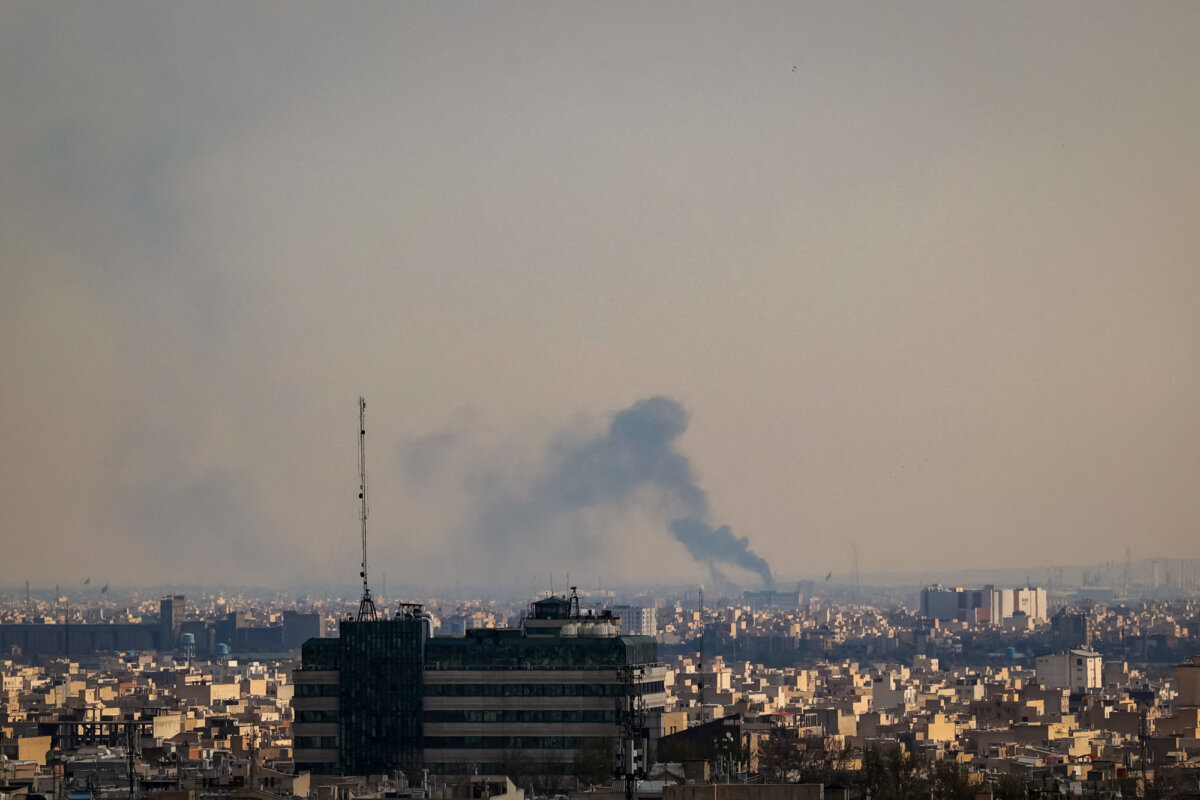
Within days of being attacked by the United States and Israel, Iran launched more than 500 ballistic missiles and more than 2,000 drones at Israel and other targets and military bases in neighboring Gulf states. This adds up to more than 2,500 drones and missiles launched by Iran in its initial frenetic response.
Then, on March 5, at a press briefing, War Secretary Pete Hegseth reported that Iran’s missile attacks were down by 90 percent. On March 19, he repeated the same point, saying, “The Iranians will still shoot, we know that, but they would shoot a lot more if they could, but they can’t.”
According to U.S. and Israeli officials and a March 13 report by the Center for Strategic and International Studies, these declines were driven by coalition attacks on launchers and inventories. There is little doubt that Iran’s conventional navy and air force have largely been destroyed, along with much of its defense industrial base.
But regarding estimates of how many drone launchers remain, they are so simple and quick to make that coming up with credible estimates of how many Iran has at any given time is not possible. Regarding ballistic missile launchers, there is no doubt that many have been destroyed. However, given that real-time battle damage assessments are notoriously unreliable, history and experience tell us that we will not know how many launchers were actually destroyed until analysts have time to conduct detailed post-conflict damage assessments, and that could take months.
This opens the door to considering other reasons why Iran’s launch rates have declined since the first few days of war. To consider this possibility, let’s break things down. Using averages, Iran’s initial response to the attack on it involved at least 571 missiles and more than 1,000 drones, over a matter of a few days. Prior to Feb. 28, it was estimated that Iran had about 2,500 ballistic missiles. This means that if Iran had continued to launch at its initial response rate, it would have burned through its ballistic missiles in just 10 to 15 days.
It’s estimated that the number of attack drones is much greater: 10,000 or maybe even a whole lot more. Even then, those would last only about 10 to 20 days. This leaves us with the question: Did it make strategic sense for Iran to continue to launch drones and missiles at the initial blistering, unsustainable rate, or did it make sense for Iran to dial back the number of launches to a rate that can be maintained for months?
After all, the longer the conflict lasts, the more the world economy is disrupted, the more political capital U.S. President Donald Trump expends, and the more depleted Israeli and U.S. air defenses become.
Hence, it makes both tactical and strategic sense for Iran to throttle down to a launch pace that it can maintain for months, about 10 percent of the initial furious pace. Put another way, the 90 percent reduction in drone and missile launches being touted by U.S. and Israeli officials could have been entirely due to Iran’s desire to extend the pain it is inflicting on the United States, Israel, and the world for as long as possible. Statistically, it makes total sense.
This is not to say that U.S. and Israeli attacks didn’t destroy many missile launchers, even some missiles, but Iran has been preparing for this kind of war for decades, and claims of numbers or percentages of launchers can be doubted, not because of outright lies, but because it is almost a rule that near real-time battle damage assessment has a long history of being optimistic.
While the United States and Israel have executed thousands of strikes on targets, there is no certainty that all the targets were destroyed or that the targets struck weren’t decoys designed to draw fire. After all, Iran’s air defense strategy includes extensive use of decoys, some quite sophisticated.
Meanwhile, dozens of high-end surveillance drones worth hundreds of millions of dollars—the very expensive drones that both the United States and Israel rely upon, at least in part, to determine whether a target is real or fake, as well as conduct battle damage assessments—are getting shot down. At least 11 MQ-9 Reaper drones ($30 million each) have been lost over Iran, and it has been reported that the attrition rate of Israel’s Hermes 900 Kochav drones (about $10 million each) is so high (about 80 percent) that it is no longer sending them into harm’s way. And Iran’s missiles and drones have forced the United States to make major modifications in how it conducts operations.
This—and other fog-of-war factors—all add up to making it extremely difficult to conduct real or near-real-time battle damage assessments.
Yes, compared with the first few days, Iran’s daily drone and missile attacks have declined dramatically.
But since that big initial decline, Iran’s daily launches of drones and missiles have varied from day to day, with no clear signs that the frequency of attacks targeting Israel, U.S. military bases, and Gulf states was continuing to decline. This opens the door to the possibility that the big initial drop in drone and missile launches was due more to a strategic decision by Iran to reduce its launch rate to a level that will allow it to sustain missile attacks for months, not just for a week or two.
Due to the fog of war in assessing Iran’s arsenal, and given that there is not much more that air power alone can do in degrading Iran’s military power or stopping Iran’s nuclear ambitions, the ceasefire makes a whole lot of sense.
Views expressed in this article are the opinions of the author and do not necessarily reflect the views of The Epoch Times.
 Friends Read Free
Copy
Facebook
Tweet
Friends Read Free
Copy
Facebook
Tweet