
Commentary
There are often two versions of every public figure: the person who actually exists and the person the public has been taught to believe exists.
The distance between them can be enormous.
We increasingly experience people through headlines, photographs, sound bites, and social-media clips. Before we shake someone’s hand, sit across from them, or hear their story without interruption, someone else has already introduced us to a version of them.
The media can turn a complicated human being into a character: hero or villain, conservative or liberal, genius or fool, saint or sinner. Once that character is established, nearly everything that follows gets interpreted through that frame.
But human beings are rarely that simple.
I was reminded of this while reading appraiser Timothy Gordon’s remarkable account of President Ronald Reagan’s belongings at Rancho del Cielo.
The Reagan of history is enormous: Hollywood actor, California governor, president, commander in chief, and one of the defining figures of the Cold War.
Then you enter his home.
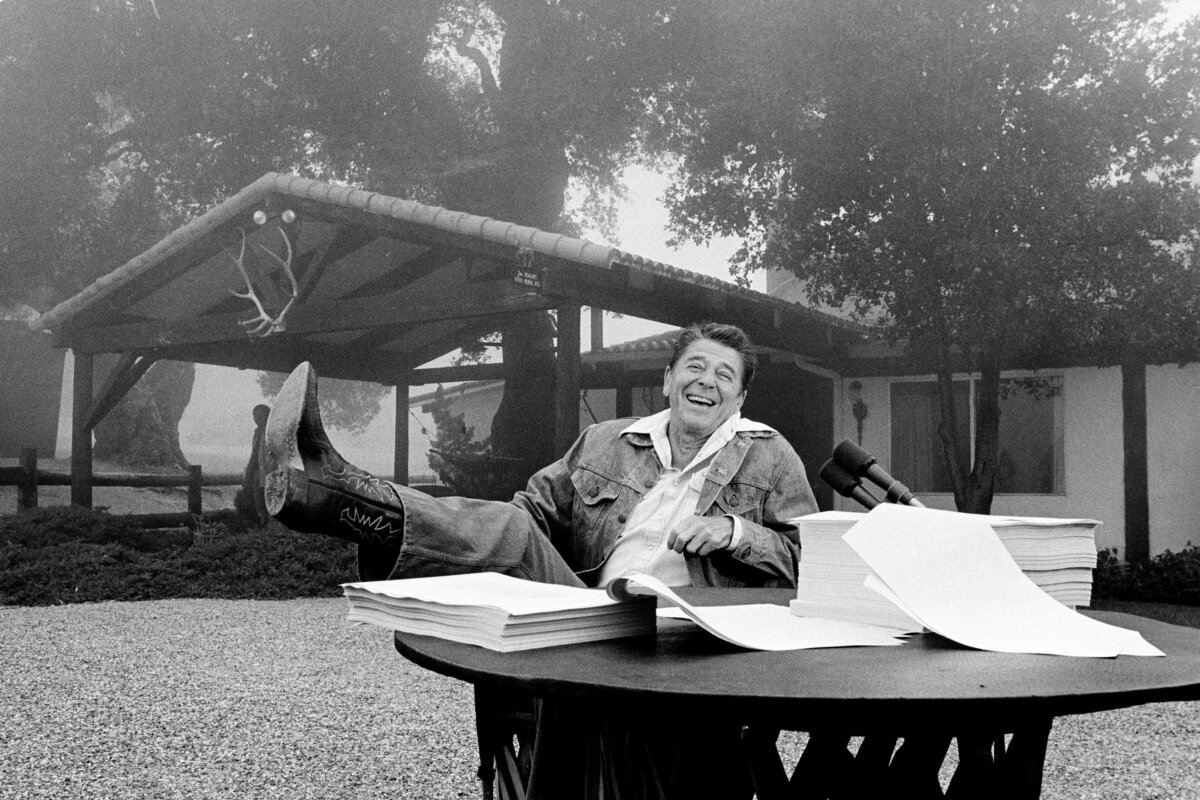
Suddenly, the historical giant becomes a man whose feet hung over the end of an old bed, so he placed a piano bench beneath them. You see the Depression-era table he kept because it belonged to his parents, Nancy Reagan’s handmade needlework, his jeans and cowboy boots, an old chainsaw, a Jeep, and a Subaru.
Beside that modest bed sat a red telephone connecting a remarkably simple room to the enormous responsibilities of the presidency.
That contradiction tells us something important.
Public life requires compression. A life becomes a headline. A complicated argument becomes a sound bite. Decades of successes, failures, and contradictions are reduced to a narrative.
The danger comes when we mistake that narrative for the human being.
I have spent much of my life around public figures, and experience has taught me that meeting the person can completely disrupt your understanding of the persona.
People celebrated publicly can disappoint you privately. People condemned publicly can surprise you with extraordinary kindness. The person portrayed as arrogant may be painfully shy. The person presented as fearless may carry enormous private doubts. Someone the world believes has everything may go home profoundly lonely.
That is why we should approach both praise and condemnation with humility.
Knowing about someone and actually knowing someone are profoundly different things.
Perhaps that is also why personal artifacts matter. A worn chair tells you where someone rested. A handwritten letter reveals who they loved. A repaired tool shows what they valued enough to preserve. A family photograph reminds us who mattered when the cameras disappeared.
Sometimes a scuffed piano bench tells you something a thousand political speeches cannot.
None of this excuses wrongdoing or diminishes the responsibility of journalism to scrutinize powerful people. It simply reminds us that scrutiny is not the same as complete knowledge.
Eventually, the cameras leave. Headlines fade. Political battles become history.
What remains are the people we loved, the choices we made when nobody was watching, and the evidence of how we actually lived.
The media may introduce us to someone’s reputation.
But sometimes you have to step beyond the narrative to finally meet the human being.
Views expressed in this article are the opinions of the author and do not necessarily reflect the views of The Epoch Times.
 Friends Read Free
Copy
Facebook
Tweet
Friends Read Free
Copy
Facebook
Tweet