
Commentary
The word quarantine is from the Latin for 40 (quarantena). The idea is that infected people would be isolated for a period of 40 days to avoid infecting others. The practice—rooted in biblical symbolism that turns out to have practical merit—dates to the Middle Ages, if not earlier. The most common application came in the ports of Italy where plague ships would have to wait until the disease burned out before its crew could land.
The word now refers to the period of isolation for the infected. It can be voluntary, but the word embeds the idea of force if you break quarantine. The practice clearly has its uses. Private companies operating in areas of Africa use quarantine in the event of Ebola outbreaks to contain and mitigate the impact.
It is an ominous power and one that is easily and frequently misused. It provides an excuse and opportunity for scapegoating minority populations.
In the 1900 San Francisco bubonic plague, authorities targeted Chinese residents in Chinatown with forced inoculation and quarantine, while sparing others despite similar risks. In 1917, during the El Paso typhus quarantine authorities used draconian methods to limit Mexican entrants at the U.S. border. These continued for decades after the epidemic ended.
In the famous case of “Typhoid Mary” from 1906, the hard-working Irish-immigrant cook Mary Mallon was targeted as the cause of a typhoid outbreak and ended up in a prison for the better part of 30 years, despite repeatedly testing negative and having no symptoms. More tellingly, hundreds of other infected people were on the loose. Her story is frequently cited as a good case of quarantine, but it is actually a deep tragedy and an example of grave abuse.
Disease panic is easily weaponized with quarantine power. The Nazi regime used a disease rationale for rounding up Jews from cities to put them in ghettos before moving them to concentration camps. The human mind is prone to conflate biological disease and the demonization of whole populations.
For that matter, the New Testament contains many examples of supposed lepers with no evidence of infection who were excluded from the community. The case of Simon the Leper makes the point.
The U.S. Founders put no quarantine powers in the Constitution. Such matters were left to the states. It was not until 1942 that the federal government acquired any such power. Wartime fears of biological pathogens led to the law, which has rarely been used.
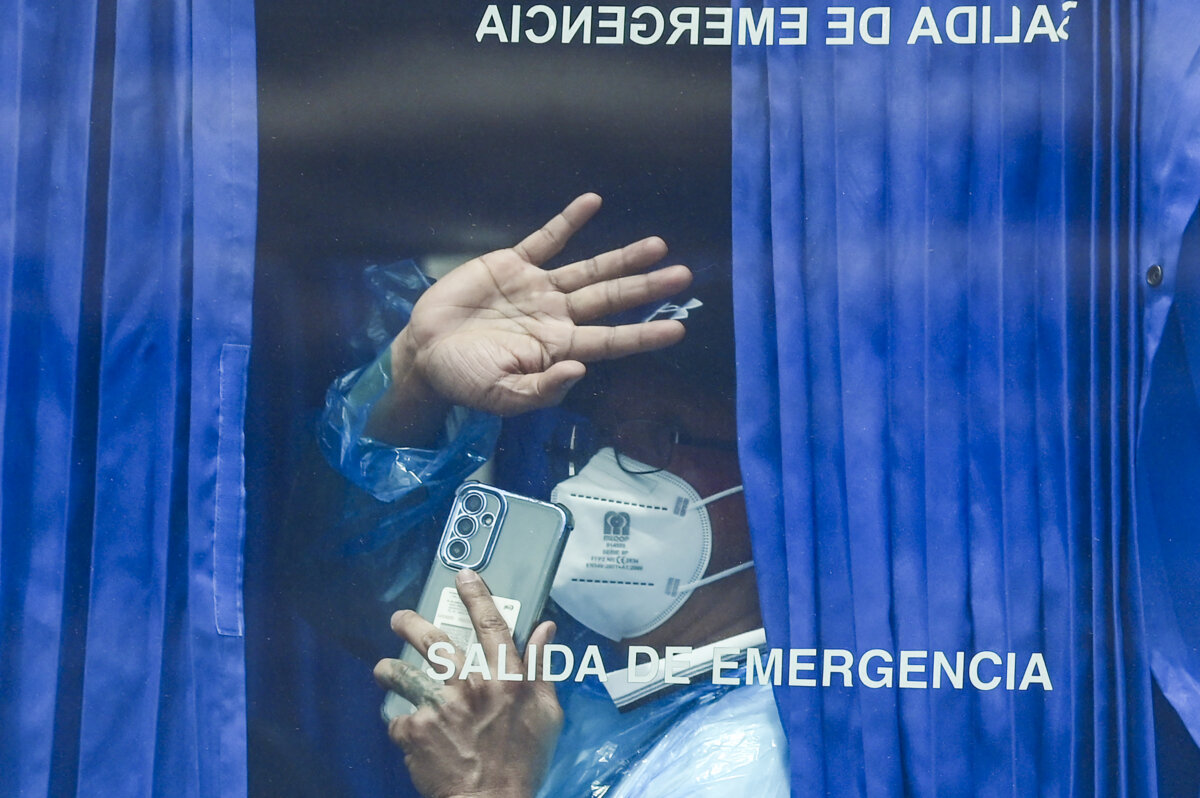
It’s for this reason that the recent hantavirus quarantine (imposed by the Centers for Disease Control and Prevention) bears examination. The MV Hondius cruise ship had an outbreak from which several died. The boat was stopped and the passengers were quarantined. Among them were 18 Americans who were taken to a federal quarantine facility in Omaha, Nebraska. They were told that it was voluntary, and most went along.
The case of Angela Perryman is a fascinating one. She was on the cruise ship with the hantavirus outbreak. She was exposed but has no symptoms and has consistently tested negative. Others were freed because their states agreed to 24/7 monitored quarantine at home.
Florida, which values human freedom, refused to do that, thus triggering a federal refusal to let her leave. She remains there now, protesting that it is like a prison sentence. This is despite the CDC’s recommendation that she be free, which was overruled by Robert F. Kennedy Jr.
Perryman was and is outraged.
“I am angry,” she told NPR. “I feel betrayed because I’m being imprisoned. It’s a nice prison. But this is a prison. Let’s be clear: I am being detained against my will.” She further warned: “If they can do this to me they could do it to anybody. They could come up with a similarly unsupported order and lock you up in the same facility.”
Clearly her rights were violated. That really cannot be disputed. The only issue concerns the relationship between her rights and the health of the community. In the case of hantavirus, person-to-person transmission is extremely rare and requires direct exchange of bodily fluids. Yes, the disease has a high fatality rate. But exposures are very common in the desert Southwest, where barns host rats and mice. Federal officials have never intervened in these cases.
So why did RFK impose such extreme measures despite his own objection to lockdowns and the use of federal power during the COVID-19 period?
We have to consider the current moment, which is very delicate. People today fear lockdown. One suspects that many people and interest groups are angling for a repeat of the money and power that flowed during the COVID-19 period. RFK and his friends do not want that.
I suspect that they believe that a targeted quarantine makes better public health sense because it blocks a more general lockdown. An exposed hantavirus suspect on the loose could, maybe, generate public anxiety and provide fodder for such a lockdown.
I see the point but, in the end, we are talking about taking away a person’s rights for mere exposure and many negative tests. That seems inconsistent with freedom. You cannot violate one person’s rights in the name of protecting freedom for all. That’s a dangerous trajectory.
I get the political point here, but using a person for purposes of political strategy is not where we want to be. The core truth is that she represents no threat to the community. This is very obvious. Florida was correct to refuse to put her under house arrest. The federal government should never have overrode that decision in favor of keeping this woman in jail.
At the very least, she should be paid reparations for the taking of her liberty, consistent with the Fifth Amendment and the 13th Amendment. This is involuntary servitude, and she should be compensated at the very least.
Think too of the implications for public health from the involuntary quarantine of the exposed. It actually punishes people for not treating others as disease vectors. If by treating or caring for someone, you are subjecting yourself to a possible 40-day jail sentence, you won’t do it. If you are on a cruise and hear a rumor of infection, everyone will run to their cabins. The people who are sick are damned to isolation.
We should be rewarding those who embrace and care for the sick, not punishing them with jail.
The federal quarantine power is itself inconsistent with the American ideal. It needs a complete rethinking. It is too likely to be abused. It’s a power that the states can handle by themselves if the need presents itself. Congress should repeal it, especially in light of the COVID-19 period and its abuses.
I say this not to rap RFK or the Trump administration on the knuckles but just as a warning and heads-up. The administration wishes that Perryman had just quietly complied, but Americans are a funny breed. They believe that they have rights. They act on them. We have to presume that this will be true forever. In that case, we should always choose individual freedom regardless of the political moment.
The whole model of quarantine and lockdown needs to be rethought. One is not a replacement for the other. They are part of a gradient of control. This whole subject needs to be urgently reconsidered.
Views expressed in this article are the opinions of the author and do not necessarily reflect the views of The Epoch Times.
 Friends Read Free
Copy
Facebook
Tweet
Friends Read Free
Copy
Facebook
Tweet