Commentary
Deep in the San Fernando Valley, there used to be a restaurant called Mandarin Deli. If you knew, you knew.
It sat on Reseda Boulevard in an aging standalone building with stained drop ceilings, fluorescent lights, and floors that looked more like a hospital than a restaurant. The vinyl on the booths was cracked around the edges. Large round tables with lazy Susans filled the center of the dining room for shared family-style meals.
The clientele was usually steady but rarely trendy. Mostly Chinese and Taiwanese families, students, workers, grandparents, and regulars who knew exactly what they came for. There were no aesthetics designed for social media. No polished branding. Just old-fashioned cooking and recipes that had survived generations.
Someone first brought me there in my early 20s and told me, “You have to try the scallion pancakes.”
At the time, I had never had one in my life.
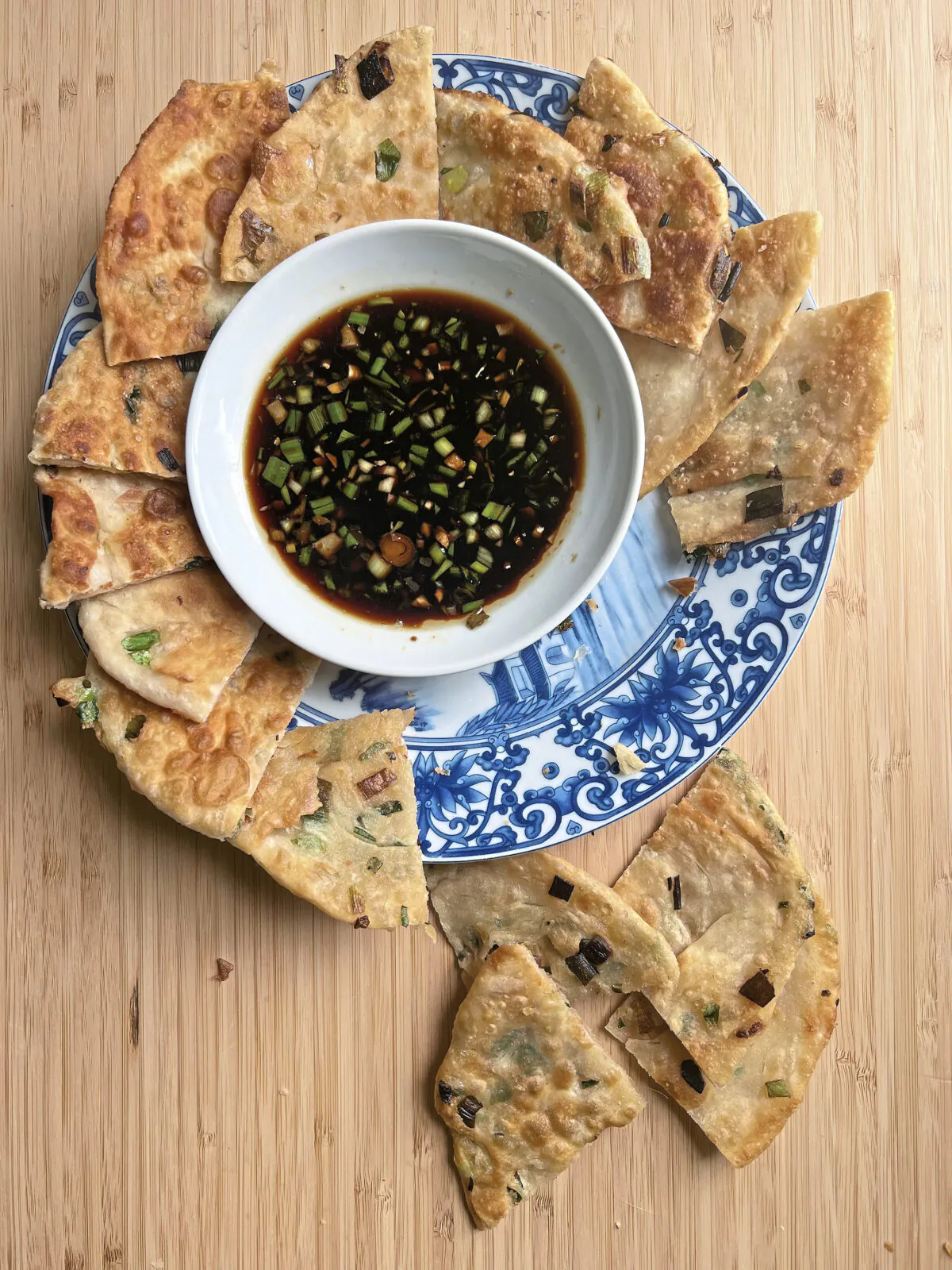
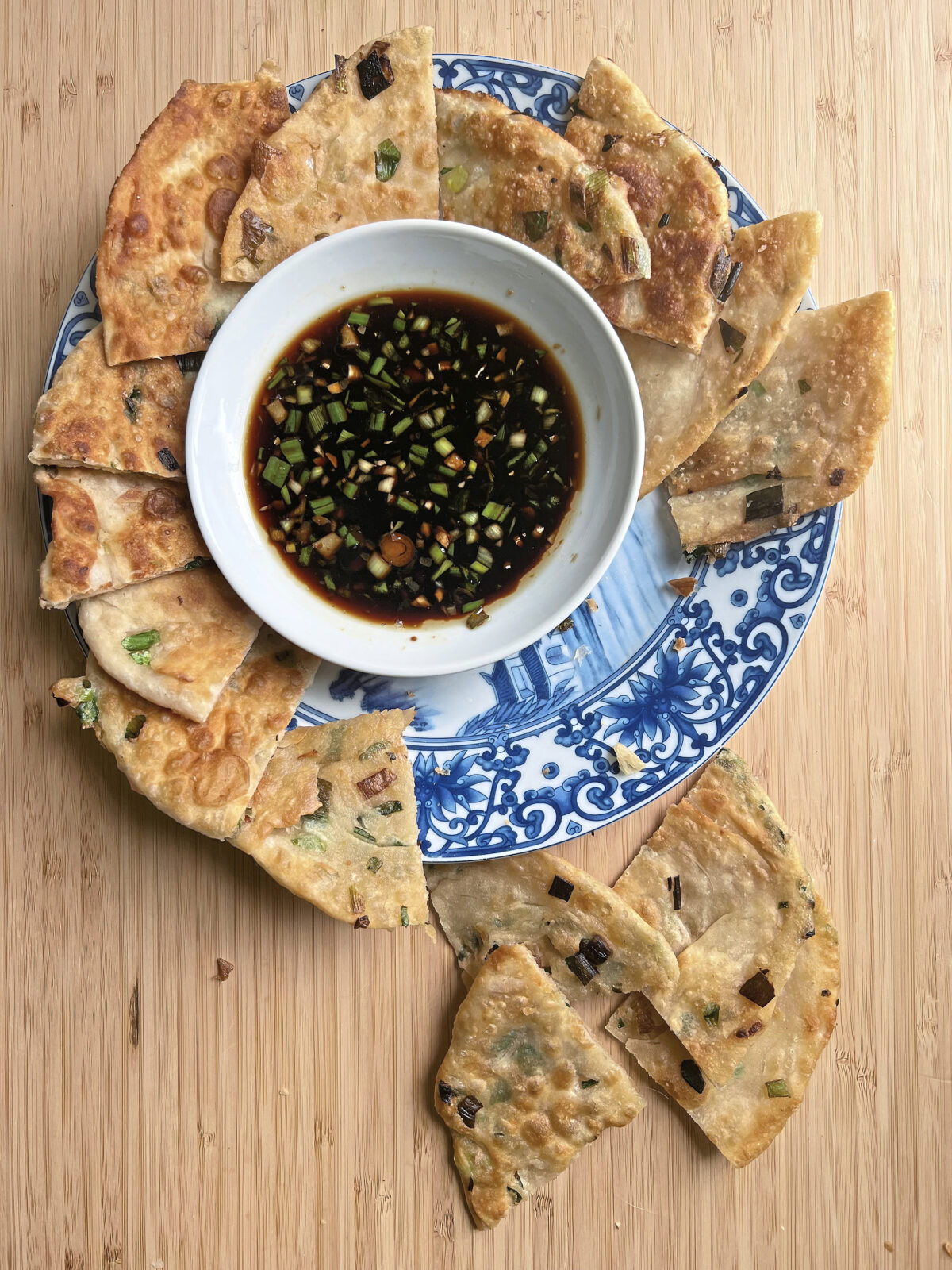
In America, when we hear the word pancake, we imagine batter poured onto a griddle. But scallion pancakes are not pancakes at all. They are dough folded and rolled over and over again with oil and green onions layered between the folds. A good scallion pancake should be crispy and flaky on the outside and chewy on the inside, rich in onion flavor without being greasy.
I loved them best when ripped apart and dipped into garlic-chili paste, or folded around bits of vegetables soaked in soup broth.
Mandarin Deli made the best scallion pancakes I have ever eaten.
Over the years, the restaurant became woven into different chapters of my life. When I was growing cannabis in California, we would order giant takeout meals for trimming crews. When my husband and I lived in Granada Hills, we would drive there on our days off. Later, our children learned to love the pancakes, too.
Recently, my son Rio mentioned that after years of living in Texas, we still had not found a scallion pancake that compared to the ones from Mandarin Deli. That simple comment sent me searching online for the restaurant.
That is when I discovered Mandarin Deli had permanently closed sometime between 2021 and 2022 after more than 30 years in business. Like many family-run restaurants across America, it did not survive the years surrounding the COVID-19 pandemic.
As I searched online, I found old articles and Reddit threads filled with people mourning the restaurant, almost like they had lost a family member. Some debated which auntie made the best recipes. Others discussed the related noodle houses and family restaurants connected to Mandarin Deli that had also closed over the years.
It struck me that people were not simply grieving the loss of a restaurant; they were grieving the loss of something authentic.
There was another layer of memory tied to that restaurant for me.
I had a dear friend named Chris who battled cancer for years. He always wanted the beef noodle soup from Mandarin Deli. He believed it made him feel better. He used to say the broth felt healing.
After he took his own life, I could not bring myself to return to the restaurant for a long time. Eventually, I started eating there again because somehow it felt like honoring him. The waitresses spoke little English, but they remembered exactly what we ordered and how we liked it.
Restaurants like Mandarin Deli carried something larger than food. They carried memory, migration, and tradition.
Many Americans grew up eating what we believed was “Chinese food,” but much of it was heavily Americanized over time to fit fast-moving restaurant systems and Western tastes. Mandarin Deli was different. It served northern Chinese- and Taiwanese-style comfort food, prepared the way families had for generations: handmade noodles, beef noodle soup that simmered for hours, garlic spinach, garlic broccoli, and scallion pancakes folded and rolled until they shattered when you bit into them.
Ultimately, almost all Americans are descendants of immigrants. The very fabric of America is woven from cultures carried here from elsewhere. Scallion pancakes may belong specifically to northern Chinese tradition, just as certain breads my Austrian grandmother made every Christmas belonged to her own ancestry, but the deeper value is the same.
The craft itself matters.
Traditional foods taught by ancestors cannot truly be recreated in a manufacturing plant, prepared in a centralized kitchen, frozen, distributed nationwide, and expected to carry the same meaning. Some things can only be handed person to person.
A handmade tortilla tastes warm, pillowy, and alive in a way store-bought tortillas never do. My grandmother’s bread carried the same feeling. Imperfect in shape perhaps, but perfect in spirit because they were made by human hands shaped by memory and repetition.
That is how traditional food survives.
One generation teaches the next generation the perfection of the imperfection: how the dough should feel, how thin to roll it, and when it is ready, without measuring or timers. Recipes become living things passed through touch, instinct, smell, and practice more than written instruction.
There is wisdom embedded in traditional food that industrial systems cannot replicate.
Today, so much restaurant food arrives on Sysco or US Foods trucks. Sauces come in giant buckets. Meats arrive pre-portioned and pre-cooked. Menus across America increasingly taste the same, no matter the city or state.
But traditional foods made by hand still carry identity.
They remind us that culture is not only preserved in museums or books. Sometimes it survives through soup broth simmering in a kitchen or dough being folded by an elderly woman who has done it the same way her entire life.
This week, we searched for scallion pancakes in San Antonio. The ones we found were decent. But they did not compare to Mandarin Deli.
Still, we will keep searching.
Because there is something deeply human about wanting food that tastes rooted, distinct, and real. There is something meaningful about introducing your children to foods tied to histories older than America itself.
And every time I eat a scallion pancake with my son, I will think of Chris and his soup. I will think about all the ordinary family dinners and takeout meals in that worn-out restaurant in the San Fernando Valley.
I will also think about the family behind Mandarin Deli, whose livelihood disappeared alongside so many other long-standing American restaurants in recent years.
I hope the family behind Mandarin Deli and the other noodle houses connected to it passed that knowledge down to another generation. I hope those recipes and techniques were not lost forever when the restaurants closed. Because once traditional food knowledge disappears, it is almost impossible to recreate. You can copy ingredients. You can imitate recipes. But you cannot easily replicate decades of touch, instinct, memory, and practice passed from one set of hands to another.
Some losses are bigger than they first appear.
Sometimes the loss of a beloved restaurant is also the loss of craftsmanship, memory, and one more thread connecting America to the traditions that immigrant families worked so hard to preserve.
Views expressed in this article are the opinions of the author and do not necessarily reflect the views of The Epoch Times.
 Friends Read Free
Copy
Facebook
Tweet
Friends Read Free
Copy
Facebook
Tweet