Commentary
I recently watched a video of Lauren Friedman speaking at the MAHA Institute Mental Health and Overmedicalization Summit, where she shared her experience with selective serotonin reuptake inhibitors (SSRIs) and what is now being referred to as post-SSRI sexual dysfunction.
Friedman is only 23 years old and has an enormous amount of life ahead of her. Hearing her describe complete numbness of her genitals, an inability to love her mother, an inability to feel connected to friends or family, an inability to experience sex or intimacy, and the feeling that her soul had left her body broke my heart.
What struck me most was her bravery. She was not speaking only for herself. She was speaking for the thousands of people who are now coming forward describing eerily similar symptoms and experiences. Whether every detail of these conditions is fully understood medically yet or not, the reality is that people are suffering, and that raises a lot of questions worth asking.
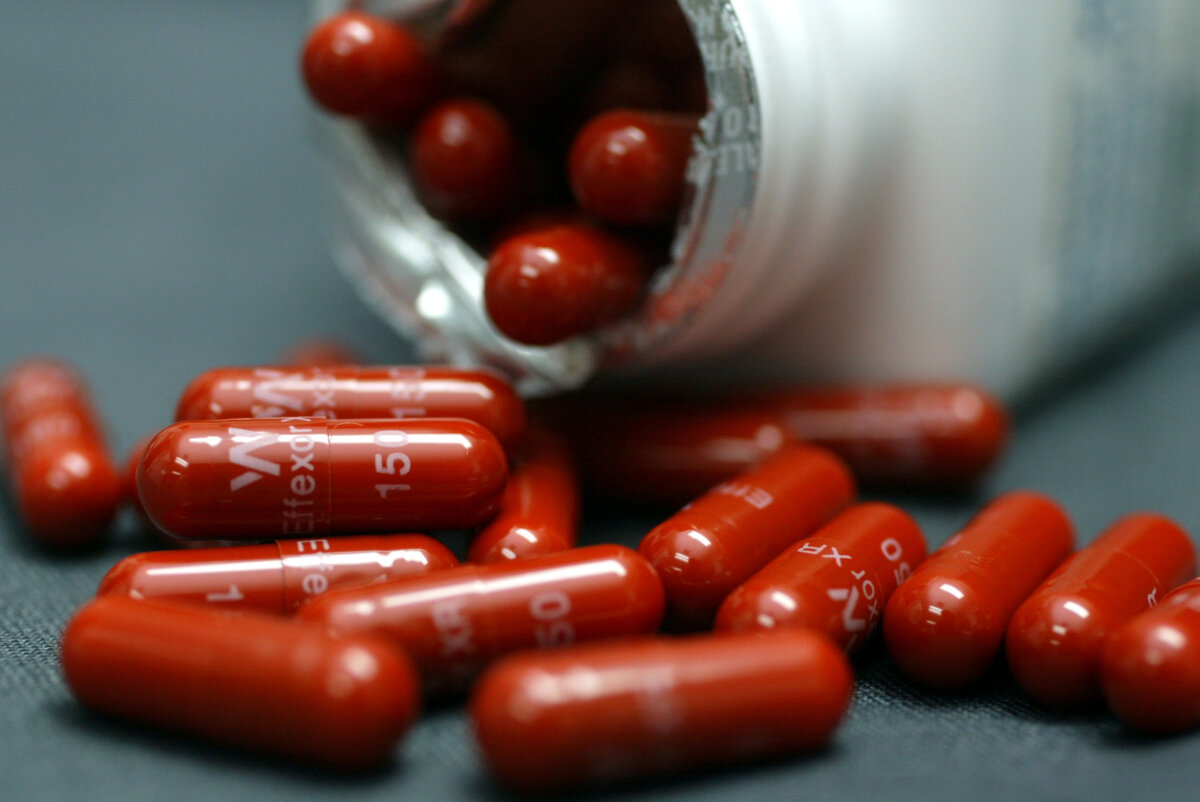
We are living through a moment in which millions upon millions of people are taking antidepressants, particularly SSRIs. Somewhere between 14 percent and 18 percent of the American adult population is currently on antidepressant medication, and nearly 29 percent of Americans report having been diagnosed with depression. Estimates also suggest that more than 30 percent of U.S. adults may have been exposed to antidepressants at some point in their lives. In the 1950s, estimates of diagnosed depression were 1 percent to 3 percent.
Something massive has changed.
At the same time, suicide rates are higher than they were generations ago. Anxiety is rising. Emotional instability is rising. Loneliness is rising. Young people report record levels of hopelessness and despair. We are medicating more than ever, diagnosing more than ever, and yet emotionally we do not appear to be thriving.
That should force us to ask difficult questions.
I am not a doctor. I am not a psychiatrist. But I am capable of reading numbers and observing the world around me. I am capable of listening when thousands of people begin describing the same symptoms. Loss of sexual function. Emotional numbness. Inability to cry. Inability to bond. Inability to feel romantic love. People describing themselves as spiritually absent from their own lives.
These are not small side effects.
Sexual dysfunction while taking SSRIs is widely acknowledged in the medical literature. Some estimates place it between 40 percent and 70 percent of users. More controversial, but increasingly acknowledged, is the condition known as post-SSRI sexual dysfunction, in which symptoms persist after the medication is discontinued. Some estimates place the risk at about one in 216 exposed patients, although the true number is unknown.
We are talking about a potentially massive public health issue.
In a less-extreme case than Friedman’s, I have a dear friend who describes parts of himself as turned off and unable to come back on. He has not taken SSRIs since 2018. When he speaks about it, there is a sadness and grief for pieces of himself he feels that he can no longer access emotionally. Whether science has fully explained these experiences yet or not, dismissing them outright feels increasingly irresponsible as more people continue coming forward with similar stories.
And these medications are now being prescribed not only to adults in acute crisis, but also increasingly to teenagers and children whose brains, endocrine systems, emotional resilience, and identities are still developing.
That should concern all of us, especially when some of these same medications have also been used in certain contexts to reduce libido and suppress sexual functioning in sex offenders. That fact alone should make us pause before casually prescribing them to children and adolescents whose brains and bodies are still forming.
We speak constantly now about metabolic disease. Obesity. Diabetes. Autoimmune illness. We acknowledge that our food system is making us physically sick. We acknowledge that ultra-processed food, chronic stress, environmental toxins, sedentary living, sleep disruption, and microbiological destruction are damaging the human body. Why would we imagine that the brain is somehow exempt from that same collapse?
There are now studies linking time spent in healthy soil environments and exposure to diverse microbiology with improvements in mood and mental health. We also continue to see expanding research around the gut microbiome and neurological health, with studies suggesting that the condition of the gut environment can profoundly influence mood, cognition, anxiety, inflammation, and even behavior itself.
The gut and brain are deeply connected. Researchers increasingly refer to the gut as a second brain. Yet we live in a world where our food, water, and environment are continually sterilized: chlorine, herbicides, antifungals, preservatives, antibacterial products, ultra-processed food, depleted soil biology, food shipped thousands of miles from dying soil to distant tables.
Then we act shocked that depression is exploding.
We have built a disconnected world—disconnected from sunlight, from soil, from community, from movement, from extended family, from purpose, from meaningful struggle, from God, from the living systems that shaped humanity for all of history. And when human beings begin breaking under the weight of that disconnection, we increasingly hand them a pill.
Again, I am not claiming that these medications never help anyone. There are people who believe that SSRIs saved their lives. There are people who may genuinely benefit from them during periods of severe crisis. But the scale of prescribing should concern us deeply, especially when the long-term outcomes are still so debated.
The old story told to the public was simple: Depression was a chemical imbalance; SSRIs corrected the imbalance. But in recent years even many experts have backed away from that oversimplified explanation. We no longer speak with the same certainty about serotonin deficiency because the science itself is far more complex than the public was led to believe.
And so we are left with a society in which more people than ever are medicated, while simultaneously more people than ever seem emotionally fragile, anxious, disconnected, lonely, and unable to tolerate discomfort.
That may be the deeper issue underneath all of this.
Have we raised generations of people who no longer believe that suffering has meaning? Who no longer believe that sadness can pass? Who no longer trust themselves to endure difficult seasons? Have we lost the understanding that human beings are supposed to struggle sometimes, grieve sometimes, feel pain sometimes, and still continue forward?
Discomfort is not always pathology. Sometimes heartbreak is part of love. Sometimes grief is evidence of deep connection. Sometimes anxiety is the nervous system responding honestly to a profoundly unnatural world.
The answer to every form of human suffering cannot simply be sedation or suppression.
I do not expect doctors to suddenly stop prescribing antidepressants. But I do think that we need to fully grapple with the gravity of what we are discussing when we prescribe these drugs, especially to children and young adults.
We are not talking about temporary dry mouth or mild nausea. We are talking about reports of lifelong emotional blunting, sexual dysfunction, loss of intimacy, loss of connection, and people describing profound changes to their sense of self and humanity. Even if these outcomes are statistically uncommon, the scale of exposure means that the human cost may still be enormous.
And perhaps most importantly, we need to ask whether the answer to a disconnected, unhealthy, spiritually starved society can really continue to be found primarily in another prescription bottle.
Views expressed in this article are the opinions of the author and do not necessarily reflect the views of The Epoch Times.
 Friends Read Free
Copy
Facebook
Tweet
Friends Read Free
Copy
Facebook
Tweet