
Commentary
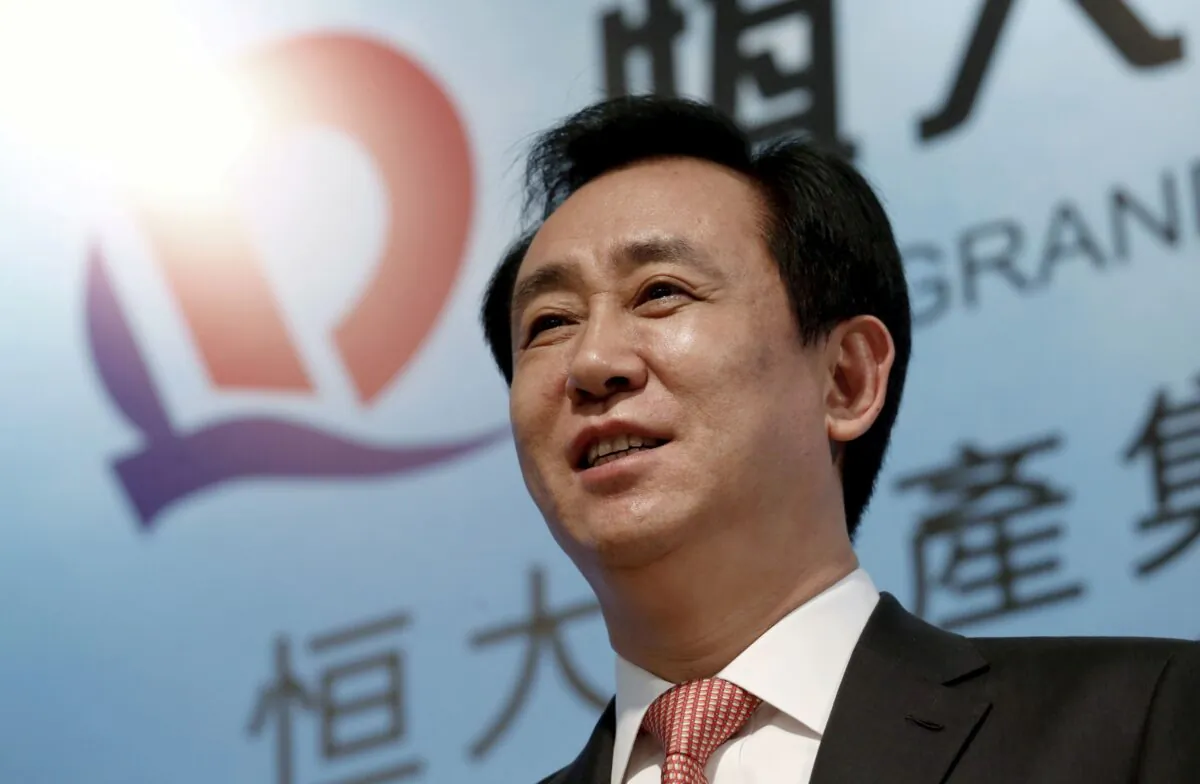
The life sentence handed to China Evergrande founder Hui Ka Yan has closed one chapter of the country’s most spectacular property collapse.
However, Hui’s downfall should not be viewed simply as the punishment of a rogue tycoon. He was also a product, and arguably the ultimate beneficiary, of a property system built on state-controlled land, state-directed finance, presales, and debt-fueled growth.
Hui was sentenced to life in prison in Shenzhen on Aug. 20 after pleading guilty to eight charges, including fundraising fraud and embezzlement.
The ruling brings a measure of legal closure to a crisis that erupted publicly in 2022, when Evergrande and its subsidiaries were suspended from trading on the Hong Kong Stock Exchange after the developer failed to publish audited financial results on time and Evergrande Property’s deposits were subject to enforcement action.
Yet the collapse of Evergrande has left unresolved questions about the policies and incentives that allowed the company to become one of China’s largest and most aggressive property developers in the first place.
For years, Evergrande was regarded as a model of China’s property boom. The company pushed the industry’s dominant formula of high leverage, rapid turnover, and relentless expansion to an extreme.
In that sense, Evergrande was not simply a rogue developer; it is arguably one of the clearest examples of how the system under the Chinese Communist Party (CCP) works.
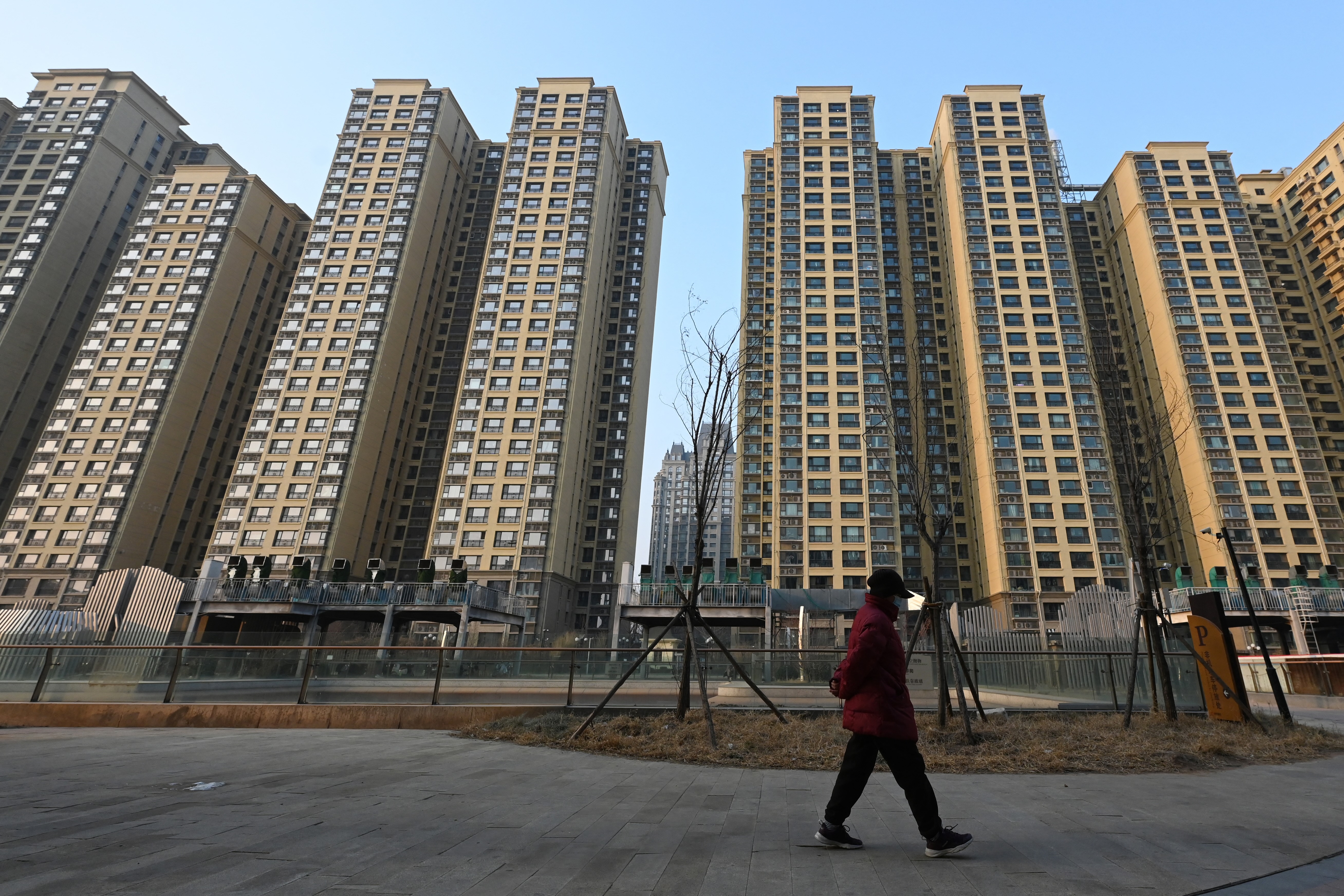 A woman walks past an Evergrande Group residential complex called Evergrande Palace in Beijing on Jan. 29, 2024. (Greg Baker/AFP via Getty Images)
A Model Powered by State Resources
China’s property market operates within a framework in which the state controls all core resources, starting with land.
Developers must acquire land from local governments, and land costs can account for roughly 40 percent to 70 percent of a home’s price. Major state-owned and -controlled developers have accounted for more than 60 percent of land purchases in some major first-tier cities for years.
This arrangement also gave local governments a powerful incentive to support the property market, because revenue from land sales became an important source of local government income.
Developers then relied heavily on bank financing, other forms of borrowing, and presale payments from homebuyers to fund construction and expansion. China’s banking sector is overwhelmingly state-controlled, while the presale system allowed developers to receive money from buyers before homes were completed.
This setup enabled developers to sustain extreme leverage and continuously recycle capital into new projects. Evergrande became perhaps the most aggressive practitioner of that model. Hui did not design these rules—he simply exploited them more aggressively than anyone than many of his competitors.
The system had been built through government decisions made decades before Evergrande became a property giant. A 1988 constitutional amendment allowed land-use rights to be transferred in accordance with the law. In 1990, the State Council established a framework for transferring state-owned urban land-use rights. The 1994 tax-sharing reform associated with then-Premier Zhu Rongji further encouraged local governments to rely on land-sale revenue. In 2002, the Ministry of Land and Resources expanded the use of bidding, auctions, and listings for land transfers.
By the time Evergrande began its explosive expansion, the institutional machinery for a debt-fueled property boom was already in place.
Hui’s political prominence also suggested that Evergrande’s business model had enjoyed considerable official acceptance during the boom years. Hui became a member of the National Committee of the Chinese People’s Political Consultative Conference, the upper house of China’s rubber-stamp congress, and appeared at major political commemorations marking the 70th anniversary of the founding of communist China and the 100th anniversary of the founding of the CCP.
For years, the company’s rapid expansion was celebrated rather than treated as a warning sign.
When the Model Began to Unravel
Evergrande’s high-turnover model relied on continuous borrowing, presales, and expansion. At the peak of its crisis, the company carried more than 570 billion yuan ($85 billion) in interest-bearing debt, including 368.4 billion yuan ($55 billion) in bank and institutional loans.
A developer using heavy borrowing can maintain rapid growth as long as buyers and financing continue to flow. However, when demand weakens, sales slow, and financing tightens, the model can unravel quickly.
Evergrande’s expansion increasingly took on the characteristics of a Ponzi scheme, relying on continued sales and financing to sustain an ever-growing debt burden. The property market, however, could not expand indefinitely if housing demand and buyers’ purchasing power failed to keep pace.
Although Hui is now jailed, his prosecution should not obscure the distinction between the broader business model and the specific crimes for which he was convicted. High leverage, presales, and aggressive expansion are widespread practices in China’s property industry. Evergrande simply took the model to an extraordinary extreme.
That raises a broader question: Why were practices that helped propel developers to extraordinary growth tolerated, and sometimes rewarded, during the boom but subjected to intense scrutiny after the collapse?
 Since the third quarter of 2021, China’s land market has cooled, demand has fallen, and local land sales revenue has plummeted. Some provinces and cities in China have reportedly cut civil servants’ salaries. (Nicolas Asfouri/AFP/Getty Images)
Land Ownership and Political Power
The ultimate root of the crisis lies in state land ownership.
China does not have private ownership of land in the Western sense. Rural land is collectively owned, while urban land is owned by the state. The 1982 Constitution formally established that urban land belongs to the state.
That arrangement gave the regime control over the supply of land available for urban development while allowing local authorities to generate revenue through transfers of land-use rights.
The combination of government-controlled land, state-dominated finance, presales, and high leverage created the foundation for China’s extraordinary property expansion. It also produced an unusually close relationship between the property industry and political power.
Developers depended on state-controlled land and financing, while local governments depended heavily on property-related revenue and economic activity. Evergrande represented that relationship in its most extreme form.
While Hui must answer for his specific crimes, his rise and fall are inseparable from the state-engineered incentives that created him. For decades, property development was China’s economic engine.
Today, Evergrande’s collapse marks the limits of a system built on ever-expanding debt, state land sales, and endless construction. Hui ultimately became both a creation of that system and its scapegoat.
Michael Zhuang contributed to this report.
Views expressed in this article are the opinions of the author and do not necessarily reflect the views of The Epoch Times.
 Friends Read Free
Copy
Facebook
Tweet
Friends Read Free
Copy
Facebook
Tweet