Commentary
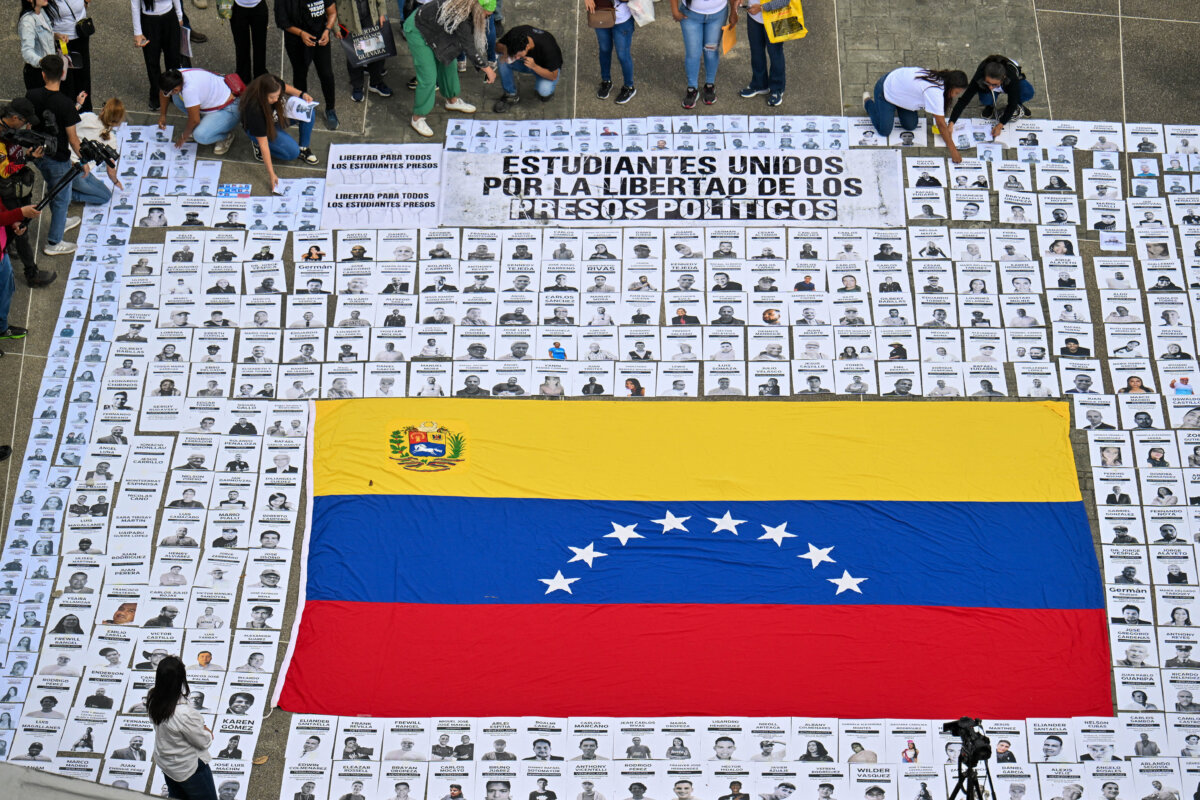
Hundreds of political prisoners in Venezuela have been released since the U.S. military captured the country’s socialist strongman, Nicolás Maduro. Human rights group Foro Penal claims that 266 of the prisoners were released, and the government of Venezuela claims to have released 808.
The release was a major win for the United States, which demanded their freedom before and after Maduro’s capture.
The U.S. operation had other positive effects. The country’s parliament is rewriting its laws to welcome the kind of foreign investment that will increase economic growth and jobs for ordinary Venezuelans. The key reforms will improve the terms of foreign joint ventures (JVs) with the country’s state-run oil company, PDVSA. JV partners will get greater control over energy projects, direct access to revenues from the sale of oil, and more flexibility in their operations.
As a result, U.S. sanctions on Venezuela will likely be rolled back. Bondholders will be repaid, investors will feel that further investments are secure, employment will increase, and wages will rise. For years, U.S. oil companies have asked for these changes. The capture of Maduro finally did the trick.
The government of Venezuela has become mostly cooperative with the United States. The caretaker president, Delcy Rodríguez, has taken action against Maduro loyalists. She dismissed Alex Saab, a Colombian businessman whom the United States sanctioned for laundering money for the Maduro regime. She also worked with the United States to force the return of a tanker carrying Saab’s oil to Venezuela.
The political environment is now sufficiently acceptable for the CIA to open a field office there. It will pave the way for reopening the U.S. Embassy that closed in 2019. Not surprisingly, developments in Venezuela are boosting President Donald Trump’s public support.
For all of the recent progress in Venezuela, the country is not yet a democracy, and risks remain. Rodríguez is a socialist with a reputation for corruption. Her removal of Maduro loyalists is good, but her own authoritarianism could become the new problem. On Jan. 25, she made anti-American comments on Venezuela’s state-run television, for example.
“Enough already of Washington’s orders over politicians in Venezuela,” she said.
The legal reforms to oil exploitation are a positive move, but more should be done on the issues of corruption, JV partner rights, and new oil contract regulation. That Rodríguez is not doing more to get ahead of these issues is not a good sign for the democratization of the country.
Rodríguez used to be Maduro’s vice president. She apparently wants to continue his authoritarian model of governance and avoid new elections. Some analysts in Venezuela compare her to China’s Deng Xiaoping and have coined a new nickname for her: “Delcyping.”
Maduro’s old interior minister, Diosdado Cabello, has retained control of the police, intelligence, and military apparatus, including the “colectivos,” a feared paramilitary group that roams the streets. As many as one thousand political prisoners remain behind Venezuelan bars. Others are gagged by court order.
For democracy to return to Venezuela, the government should cut all ties with China, Russia, Iran, and Cuba. This is the demand that the United States made following the capture of Maduro. All countries, including the United States, should strive to decouple from dictatorships that are adversarial to the United States and other democracies.
Democracy in Venezuela will require new elections. María Corina Machado was barred from running in the 2024 presidential election, and her lesser-known replacement got 70 percent of the vote. Maduro only retained his hold on power through force. His methods included intimidation of the opposition, their unlawful detention, and the suppression of free speech.
To get an election will require getting past the unpopular Rodríguez and Cabello. One commentator has suggested that mid-level military officers in Venezuela could do the job. If so, elections should be scheduled immediately and held within two months.
As should be clear from the above, the Trump administration’s capture of Maduro was a winning strategy. Although democratization in Venezuela admittedly requires more work, the capture of an adversarial dictator was far better than past U.S. strategies of appeasement. This is quite clear when considering new business opportunities in the country and the freeing of political prisoners. Trading U.S. prisoners for those held by adversary countries, and other such giveaways, just incentivizes further wrongs. There should be no more rewards for dictators. The Trump administration’s approach to Maduro is far preferable.
Views expressed in this article are the opinions of the author and do not necessarily reflect the views of The Epoch Times.
 Friends Read Free
Copy
Facebook
Tweet
Friends Read Free
Copy
Facebook
Tweet