
Commentary
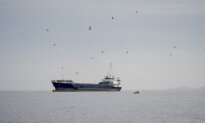
The blockade of shipping into and out of Iran’s ports is apparently working. Twenty-one vessels reversed course due to the U.S. blockade by April 17. Five sanctioned tankers responded to a U.S. announcement that ships transporting Iranian oil would be blocked globally, not just in the Strait. Most recently, at least two of these transporting three million barrels of oil towards Asia turned around in the Indian Ocean, and at least two empty shadow ships in the Gulf of Oman reversed course. This puts significant pressure on Iran during negotiations.
However, there are major sticking points. Iran continues to refuse to relinquish its uranium, the Iranian military still demands that ships hug Iran’s shore, and coordinate with the Iranian navy. The regime is negotiating for the right to charge tolls, which will likely never happen. Iran’s mines still threaten shipping. Stranded ships in the Persian Gulf are still advised not to risk a passage, though some are due to the foreign minister’s announcement that the Strait is now open to commercial shipping. The advisory against transits will likely continue until Iran demonstrates more of a willingness to concede and a pathway through the mines is definitively cleared.
In the meantime, the United States has wisely not lifted the blockade of Iranian ports and cargo. If Iran continues to refuse to give up its uranium, the blockade should continue and arguably be expanded to seize and sell as much as possible of the shadow fleet that services Iran. This would cover U.S. expenses in providing security in the Middle East. As many as 430 tankers have recently serviced Iran, most of which could reasonably be defined as among the shadow fleet and seized by the U.S. Navy. Some vessels may require individualized forfeiture proceedings, but philosophical and legal architectures exist to support their seizures in many cases.
The two ships that recently reversed course carried three million barrels of Iranian oil. Iranian oil is similar in quality to Oman crude, worth approximately $100 per barrel at the time of writing, or $300 million in total aboard the two ships if sanctions were removed on seized oil. The price of oil is rapidly dropping, but this figure gives an order of magnitude. The ships themselves could add another $20 million if sold by the United States on the open market. Doing the math, and assuming that most ships would not carry such valuable cargoes, the entire shadow fleet could approach $25 billion, depending upon how many ships and cargoes could be seized and sold. This would partially defray the cost of U.S. military operations in the Middle East and help deter maritime shippers from servicing sanctioned countries in the future.
One could make the counterargument that some of the shadow fleet ships have links to China and Russia, including by ownership and crew nationality. However, even these ships often have flags and crews of different nations while servicing third countries, depending on which sanctions are in effect at any given time. The shadow fleet purposefully obscures its links to U.S. adversaries to avoid sanctions. That provides a convenient offramp for Beijing and Moscow. They enjoy plausible deniability that any given ship is not their own, enabling them to decline to defend them to decrease tensions with the United States and our allies. While risk is unavoidable, especially as the tactic is scaled to hundreds of shadow ships, not confronting the shadow fleet poses its own significant risks.
The Chinese Communist Party’s (CCP’s) muted response to the blockade and interdictions of China-linked ships so far indicates that the CCP is unlikely to react much to future interdictions of at least a moderate number of shadow fleet vessels. Neither did the CCP react much to the capture of Venezuela’s dictator, Nicolás Maduro, which posed a similar risk to China’s imports of hydrocarbons. As fast as China’s military development is proceeding, it is not yet ready to compete with the United States in far-flung places such as the Middle East, Africa, or South America. This forces Beijing to remain relatively quiet about U.S. wins in these locations. Any failure of China’s military abroad would only decrease the perception that Beijing’s military bite is worse than its bark.
The Iran blockade is therefore an opportunity for the U.S. Navy to capture as many of the world’s shadow fleet ships as possible. This could be a new source of revenue for the U.S. Treasury in providing for the global public good of international security. While the tactic is unlikely to immediately recoup much of U.S. defense expenditures, it would be defensible according to democratic principles for democracies to roll back autocratic shadow shipping. A new U.S. doctrine could be promoted: freedom of the seas is reserved for free nations. This would set a precedent for broader revenue collection strategies from adversary shipping that could significantly expand U.S. and allied defense revenues in the future. When providing a global public good like international security, U.S. taxpayers should not be the only ones to shoulder the burden. New strategies are needed that impose these costs squarely on the shoulders of U.S. adversaries, to the point that they are eventually defeated.
Views expressed in this article are the opinions of the author and do not necessarily reflect the views of The Epoch Times.
 Friends Read Free
Copy
Facebook
Tweet
Friends Read Free
Copy
Facebook
Tweet