
Commentary
Every year on Remembrance Day, Canadians gather to honour the fallen, recalling the iconic battles of Vimy Ridge, Ypres, Ortona, and Kapyong, and the bravery of Spitfire pilots, corvette crews, and infantrymen who clawed through Europe’s darkest hours.
But beyond those famous chapters are lesser-known stories, often forgotten, that reveal the full scope of Canada’s military commitment, from global wars to distant peacekeeping missions and humanitarian crises.
One of those stories begins not in Europe, but in the deserts of Sudan.
In 1884, the British Empire was transfixed by the fate of Khartoum. Gen. Charles Gordon, a decorated officer and public hero, had been sent to evacuate civilians under threat from a massive force of 50,000 jihadist fighters. But Gordon refused to leave. Instead, he fortified the city and prepared for siege.
The enemy, followers of Muhammad Ahmad, who had proclaimed himself the Mahdi, a messianic figure in Islamic prophecy, were imposing brutal rule wherever they advanced. Dissenters were slaughtered, and slavery was reinstated. The situation was dire.
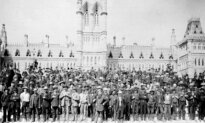
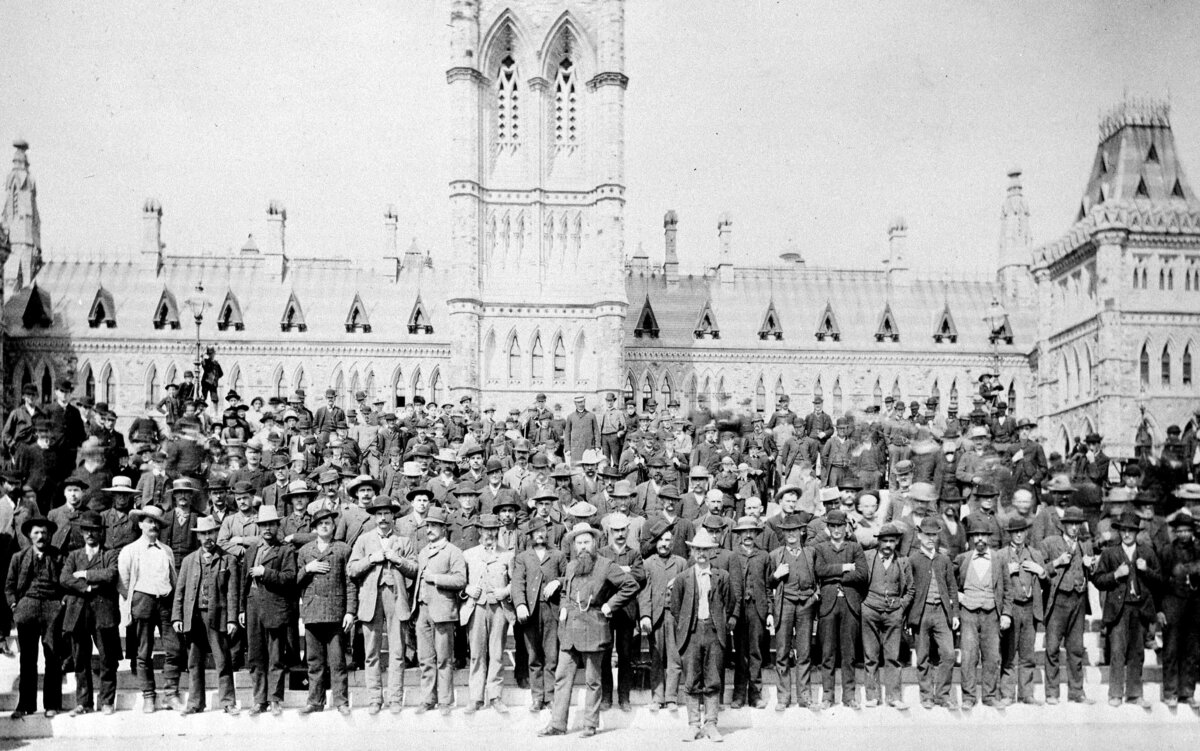
The British government authorized a rescue mission under Gen. Garnet Wolseley, who had once served in Canada during the Red River Rebellion. He called on the voyageurs—indigenous, Métis and settler boatmen who had impressed him with their strength and skill—and nearly 400 volunteered to help move his forces up the Nile.
Under a searing sun, the Canadians hauled boats through rapids, battled disease and exhaustion, and pushed upriver toward Khartoum. But they were too late. Two days before they arrived, Mahdist fighters broke through the city’s defences, massacred 10,000 residents, and beheaded Gordon.
The mission failed, but not because of the Canadians. They had done their duty. Maj.-Gen. Brackenbury, one of Wolseley’s aides, wrote: “No finer, more gallant, or more trustworthy body of men ever served the Queen.”
Sixteen of those voyageurs died. Their names are recorded in the Books of Remembrance, a set of seven volumes housed in the Peace Tower on Parliament Hill, inscribed with the names of Canadians who died in military service.
The Sudan was the beginning, but it would not be the last time Canadians were called to far-off conflicts with little glory and little notice.
Nearly a century later, Canadian soldiers again found themselves in a far-off conflict that few at home could fully explain.
Cyprus, an island in the eastern Mediterranean, had long simmered with tension between its Greek Christian majority and Turkish Muslim minority. In 1964, the United Nations sent in peacekeepers, including Canadians, to maintain an uneasy truce.
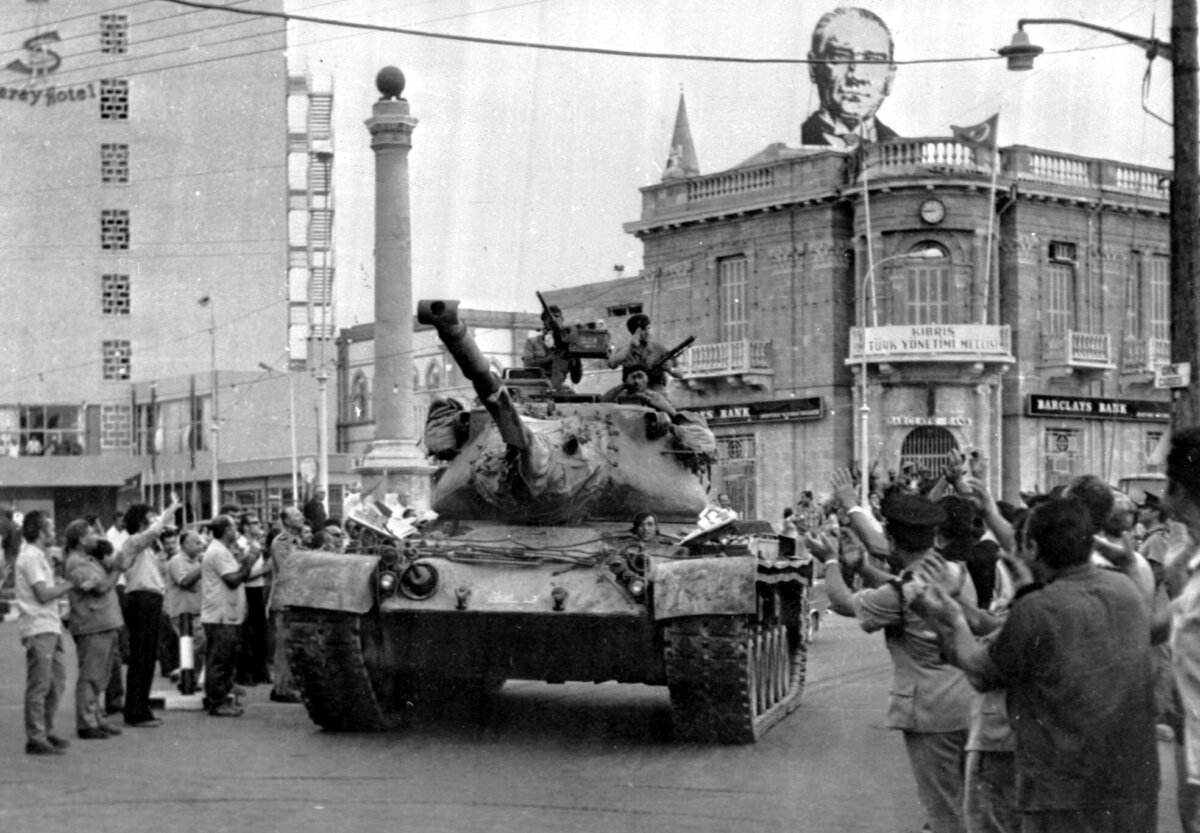
Canada was one of the architects of modern peacekeeping and played a major role in U.N. missions throughout the Cold War. For a decade, the Cyprus mission mostly held. But in 1974, after a pro-Greek coup sparked a Turkish invasion, the island descended into chaos. Canadian troops, including the Airborne Regiment and Lord Strathcona’s Horse, were suddenly in the crossfire. Ceasefires collapsed. Snipers fired without warning. Patrols crept through hostile territory at night.
That summer, Privates Lionel Gilbert Perron and Joseph Jean Claude Berger of No. 1 Commando were both shot and killed, marking the first Canadian combat deaths since the Korean War. Twenty-six other Canadians would die on the island. Their names, too, are recorded in the Books of Remembrance.
That same summer brought another tragedy, this time in the skies over the Middle East.
On Aug. 9, 1974, United Nations Flight 51, a Canadian-operated De Havilland Buffalo, was flying a routine supply mission from Egypt to Syria. The flight had been cleared through Syrian airspace. But almost immediately after crossing the border, it was hit by three surface-to-air missiles.
All nine Canadians on board were killed. Investigations suggested the attack may have been deliberate, a warning shot from the Syrians to discourage U.N. support for Israeli overflights. Among the dead was Capt. George Gary Foster. He and the rest of the “Buffalo Nine” are also honoured in the Books of Remembrance. It remains the deadliest single incident involving Canadian peacekeepers.
More than a decade later, in the 1990s, another war would claim more Canadian lives, this time in the ruins of Yugoslavia.
As Yugoslavia fractured, ethnic and religious groups Muslim Bosnians, Catholic Croats, and Orthodox Serbs turned on one another in civil wars fuelled by propaganda, grievance, and power struggles. Peacekeepers became targets.
Cpl. Daniel Gunther of the Royal 22nd Régiment, the legendary Van Doos, was part of a U.N. mission near the village of Buci. On June 18, 1993, just 40 minutes after a ceasefire was supposed to take hold, he was on patrol in an armoured vehicle. As he rose from the hatch to scan the area with binoculars, a rocket, likely fired by a Muslim militia, struck the carrier and killed him instantly.
Gunther was one of 23 Canadians to die in the former Yugoslavia. His name, too, is etched in memory.
None of these missions altered the course of history. They weren’t D-Day or the Somme. The casualties were not in the tens of thousands. The causes were complex, sometimes controversial. But that doesn’t make them any less worthy of remembrance.
These were Canadian lives, volunteers who served in distant lands, in the name of peace, duty, and honour. Some died in forgotten places, but all in service to something greater than themselves.
It’s important that Canadians remember the forgotten missions, from Sudan to Cyprus, Bosnia to the Golan, where soldiers served and died for ideals, not headlines. Honour lies in victory, but also in sacrifice. And a country that forgets those who died for its ideals, that ignores its past, has little future.
Gerry Bowler is a Canadian historian and a senior fellow of the Frontier Centre for Public Policy.
Views expressed in this article are the opinions of the author and do not necessarily reflect the views of The Epoch Times.
 Friends Read Free
Copy
Facebook
Tweet
Friends Read Free
Copy
Facebook
Tweet