
Commentary
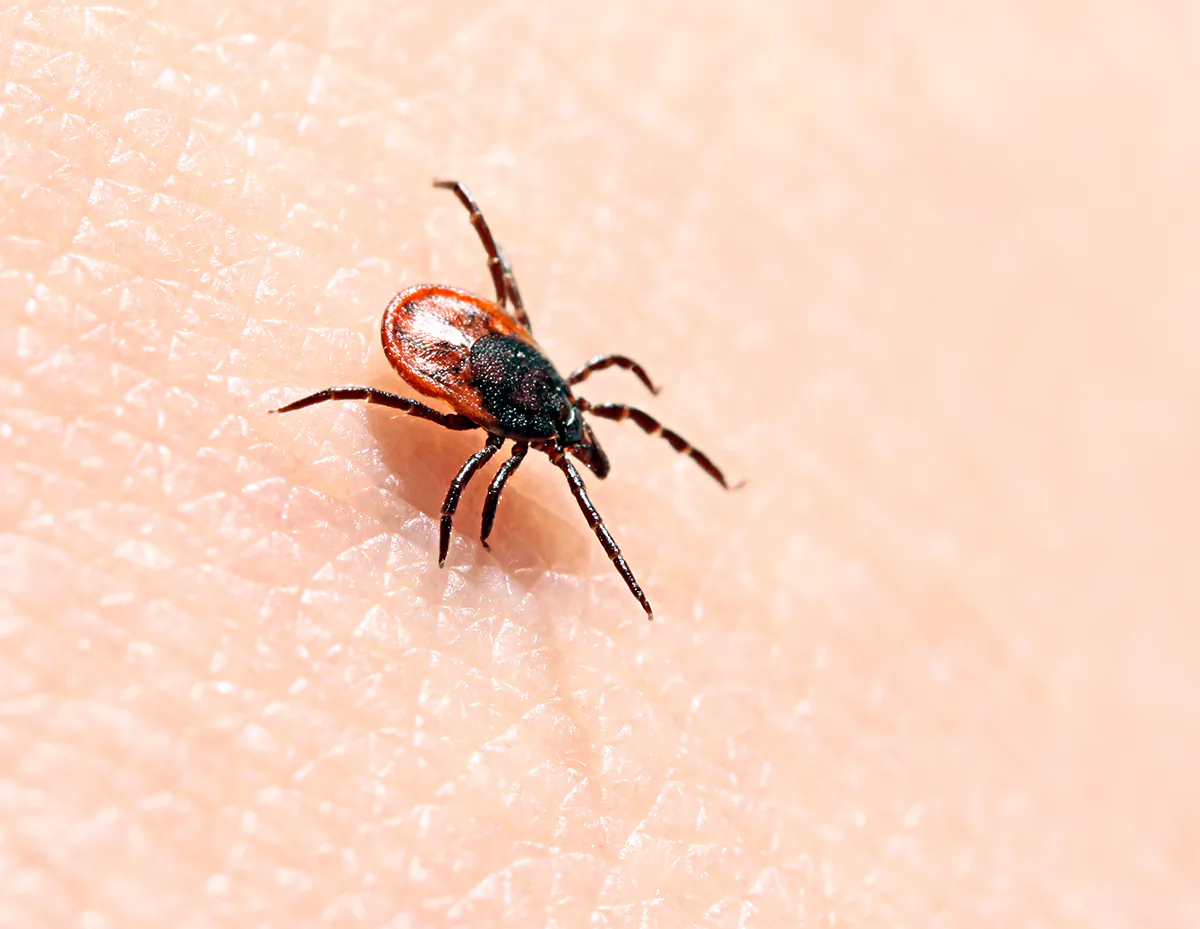
There’s no dispute that Lyme disease has become a national obsession, with profound fear spreading coast to coast. By all reports, ticks are worse than anyone can remember, thus inspiring frenzy in all directions.
It is particularly intense in New England and anywhere near Lyme, Connecticut; hence the name of the disease spread by ticks. It’s close to the labs from whence the disease born of tick bites emanates.
This is not a conspiracy theory. It is well-documented in the public record. In 1953, the Biological Warfare Laboratories at Fort Detrick created a program investigating ways to spread anti-personnel agents via arthropods (insects, crustaceans, and arachnids). The idea was that slow-acting agents wouldn’t immediately incapacitate soldiers, but rather make the area dangerous for a long period of time.
Clearly something went wrong. The whole of the problem is not traceable to such research, but it appears to be part of the story. If you are interested in this rabbit hole, you can read the bestselling book “Bitten: The Secret History of Lyme Disease and Biological Weapons,” by Kris Newby, a Stanford University science writer.
It came out in 2019, just before the COVID-19 disaster hit. Here again, we had an allegation of lab creation.
Whatever the origin, the victims of Lyme have had a very hard time getting a hearing. The disease is slow to emerge and takes many forms, and it is sometimes lethal. But for decades, physicians have mostly gaslit patients over this problem, probably millions of them. A subgroup formed of people with Lyme who have had to figure out the problem and solution on their own.
The gaslighting is only recently well-documented, including in the journal Healthcare, which published a study in 2013 and stated, “Both acute and chronic Lyme disease (CLD) have been relegated to the category of ‘contested illnesses’, which can lead to medical gaslighting.”
Addressing the problem, the Department of Health and Human Services, under the direction of Secretary Robert F. Kennedy Jr., has announced the first-ever national program to end the gaslighting, find therapeutics, and seek to deal with the problem, which is national in scope.
This is why many victims and their families are cheering right now. They see hope for the first time. That said, the fear is spreading, and no quick solutions are in sight. The problem has festered for decades.
This entire topic is new to me. I grew up surrounded by ticks and chiggers in Texas. They were an annoyance. You avoided them by sprinkling sulfur on your shoes. You did this because they are gross, not because they spread a disease of which you were fearful.
It was only six years ago that I first heard of Lyme disease as spread by ticks, and even then there was an ominous layer to the telling. Many who are affiliated have been met with nonstop frustration by physicians in denial and then the absence of effective fixes for the problem.
At the time, I had not heard of what is now notorious. It was and is very likely a product of science gone wrong, a kind of bioweapon that lives among us. That’s enough to generate a low-grade terror and constant confusion.
There is a particular strain circulating in Martha’s Vineyard that comes from the lone star tick. It gives you alpha-gal syndrome, which is a lifelong allergy to meat and dairy. That this is very real is obvious from the sheer number of vegan restaurants that have opened to serve residents. No one wants this terrible thing, so stepping carefully and avoiding low-hanging trees and leaves is the norm.
Speaking of which, tickophobia taps deeply into a trait of modern thinking in general. The tendency is to regard the human person not as part of the microbial kingdom but rather as exogenous to it. In particular, members of high social strata aspire to be clean people, the only threat to whom is external. The tick fits the bill in every sense.
The tick further empowers a vampiric presence, latching on in surreptitious ways, drawing blood, and imparting intractable and painful infections. It seems perfectly structured to create unrelenting anxiety, in this case somewhat justified in anecdote and evidence.
Nature is lovely, friendly, beautiful, inspiring—until it is not. It presents itself differently in this case: tiny, parasitic, deadly.
Indeed, I’ve had friends of mine consider and then reject the idea of moving to Connecticut solely on the grounds of tick fears. Will property values in Martha’s Vineyard, Nantucket, and Greenwich begin to suffer? If so, that’s a problem that will truly inspire action. Even the crunchiest nature lover will reach for chemical sprays at some point.
As for the near term, let’s consider the sulfur solution. Again, my mother would never allow me to walk in tall wet grass in Texas without spreading sulfur on my shoes. I thought everyone knew this. As it turns out, hardly anyone in New England knows about this at all. I recently found myself evangelizing for sulfur and being treated like a crank salesman of snake oil.
We have here another case of lost knowledge. This happens in science history. The cure for scurvy, for example, was found and lost three times in recorded history. Once the threat recedes, so does the way to address it erode in the public mind. It might have been this way with sulfur and ticks.
The way information travels, it could be years before New Englanders catch on to what every Texan has known for generations.
Meanwhile, ticks are the talk of the town everywhere, even in the fanciest places. There is a pottery maker in Martha’s Vineyard called Chilmark Pottery. The proprietor and potter is Geoffrey Borr, a wonderfully talented man who also happens to be interested in cryptocurrency.
He recently had an idea. As a gift certificate for his products, he is minting his own currency called Bitten Coin. Get it? He has limited production to 10,000, and maybe they will start selling at a premium. It’s a way to deal with the trauma in a cheeky way while perhaps making money at the same time.
This is the American way. We figure out ways to overcome and profit regardless. Not even the tick—extremely small and unbearably nasty—can defeat us.
Views expressed in this article are the opinions of the author and do not necessarily reflect the views of The Epoch Times.
 Friends Read Free
Copy
Facebook
Tweet
Friends Read Free
Copy
Facebook
Tweet