
Commentary
It’s getting hot out there in the Northern Hemisphere. One is loath to heat up the house even more with roasts in the oven and stews on the stove. This is how the backyard barbecue became so popular in American culture. Take that fire outside, please; those of us indoors are suffering enough as it is.
Sure, we have air conditioning today but you don’t want to detach entirely from traditional ways as influenced by the season and weather. Save the stews, casseroles, and roasts for the winter. The spring and summer call forth the steaks, burgers, salmon, and sausages on the grill on the back porch. Throw the veggies on there too, fresh from the garden.
Methods by which we preserve and prepare meat for eating have been a defining feature of the story of humanity itself. Before refrigeration, this was a huge challenge solved by leaving it in the snow in winter, sawing off rancidity in the spring months, and salting and smoking in the summer and fall. Boiling, braising, broiling over fire were always the main methods for not only cooking but also burning off pathogenicity.
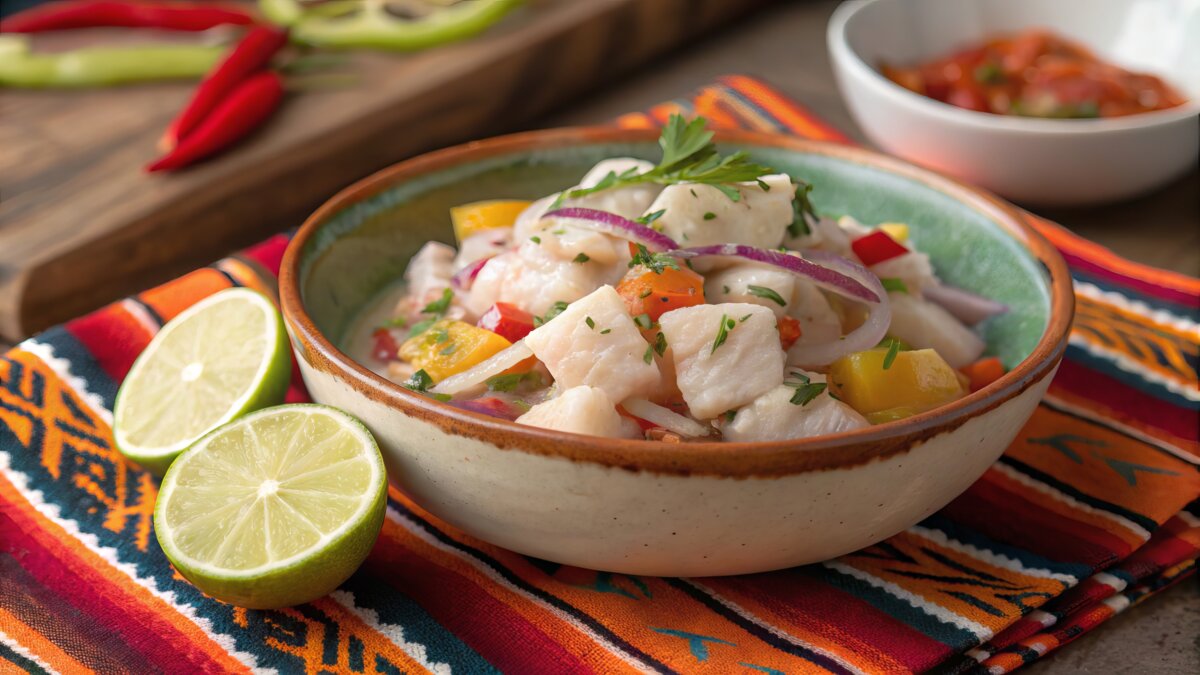
There is another method, oddly neglected in American culture. In Latin America, especially seaside in Peru, you can cook with citrus acid. Catch the fish. Pick the limes, lemons, and oranges. Squeeze the juice and soak the fish, along with onions, tomatoes, and herbs. And salt and spices and there you go. The fish cooks!
If you have never done this, you might find yourself in a state of disbelief. Is this halibut and shrimp soaking in lime juice really cooking? Are we sure? Somehow we have been acculturated to believe that only heat and fire cook things. This is not true. Citrus also cooks. This is where we get what’s called ceviche.
I was in Mexico City a while back and asked for ceviche from a restaurant. I was presented with a large menu with an incredible range of options. I ordered one randomly and was presented a dish I never could have expected. I went back and ordered another. It too was delicious but entirely different. From this I gained the impression that my own conception of ceviche was way too limited.
Bottom line: this is not a single dish but a method of cooking in general. You can take any combination of seafood—whatever is on sale—and add whatever peppers, onions, cucumbers, or greens you have. The lime does the rest of the work for you. Leave it in a bowl to cook for a few hours or even overnight and you have a spectacular dish for spring and summer.
Something about this choice in this season truly works. You don’t really want to be supping on hot soup when the days are long and the sun is blasting the earth. You want fresh, cold, tangy, bright, flavorful. This is exactly what this method of cooking does for you.
How unusual is this dish in North America? It seems like it is growing in popularity at restaurants, ordered by customers who know what’s what and enjoy showing off the sophistication of their tastes. That said, I cannot recall ever eating it at someone’s home or hearing of a family who makes it.
It’s just not our way and tradition, maybe because the United States is mostly an inland culture without fresh seafood around. Those areas that do have fresh seafood have other traditions: frying, sauteing, chowders, and so on. One wonders why. It could really trace to our strongly biased belief that nothing is truly cooked unless it is hit by a flame.
The acid-cooking method is older than we imagine. Historians trace something like ceviche to pre-Columbian times along the Pacific coast of South America. The Moche and other ancient peoples used the juice of a local fruit to “cook” fresh fish.
When the Spanish arrived with their limes and lemons from Asia via Europe, the technique exploded into the dish we recognize today. Peru claims it as national patrimony, Ecuador has its own proud variations with toasted corn, and in Chile they often serve it with a side of boiled potatoes or crisp bread to soak up the marinade left at the bottom of the bowl.
I used two-day old bread to do the same and it was wonderful.
Mexico, of course, took the idea and ran with it, adding mango, avocado, or even coconut milk in some regions. What began as necessity—preserving the day’s catch without fire in a hot climate—became high art.
That is the quiet genius of it. Ceviche is low-energy cooking. No oven, no grill, no propane tank, no smoke alarm going off because you forgot the salmon. You chop, squeeze, stir, and wait. The citric acid denatures the proteins in the fish the same way heat does, turning translucent flesh opaque and firm.
It is chemistry you can eat. And because the “cooking” happens at room temperature or in the fridge, the result stays bright and fresh rather than dried out or overcooked. The textures remain: a slight resistance in the shrimp, a melting quality in the scallops, a pop from the onions.
I have come to see ceviche as the ultimate people’s dish. You do not need a special knife set or copper pans or years of culinary school. A sharp blade, a glass or ceramic bowl (metal can react with the acid), and fresh ingredients are enough.
You can rely on whatever the market has that looks bright-eyed and smells of nothing but the sea. Halibut, snapper, cod, shrimp, scallops, even octopus if you feel adventurous. Everyone says I should add conches but I personally find them too much on the other side of weird to embrace this for now. Maybe someday.
The rule of thumb is this: if you would happily eat it raw as sushi, it will work beautifully in ceviche. Buy the freshest you can find and keep everything ice-cold until the moment you mix.
The customization is endless and forgiving. Start with a base of red onion sliced thin. Then add diced tomato, cucumber, jalapeño or serrano for heat, cilantro by the handful, and maybe some garlic. Mango or pineapple brings sweetness that balances the acid. A splash of olive oil at the end rounds it out. Salt draws out moisture and seasons the marinade itself.
Leave it in the refrigerator for 30 minutes for white fish or overnight for shrimp and octopus. Any longer and the acid can turn the texture mushy, though even then it is usually still delicious. A cold beer or white wine or even sparkling water with lime turns the meal into an event.
What strikes me most is how ceviche quietly challenges our assumptions about “real” cooking. We Americans tend to equate culinary seriousness with fire, fat, and long preparation. Yet here is a method that relies on sunlight, fruit, and time. It honors the ingredient instead of masking it.
In an age when we are all trying to eat lighter, ceviche feels almost subversive. It is anti-industrial food in the best way: It cannot be made in a factory, cannot be frozen and reheated without loss, and cannot be rushed. You have to respect the fish and the fruit.
I have started making large batches for gatherings. People who claim they “don’t like seafood” or “don’t do raw” end up going back for seconds. Kids love the bright colors and the interactive element. It travels well to potlucks too. Just keep it on ice. And unlike barbecue, which leaves you smelling of smoke for hours, ceviche leaves you smelling of lime and cilantro, which is considerably more pleasant.
There is a larger cultural point here. We in the United States have imported every other tradition under the sun. Why not this one? Inland or not, refrigerated shipping means we can have good fish anywhere. The only thing missing is the habit.
Skip the heavy casseroles and the endless parade of grilled meats. Reach for the citrus. Embrace the ancient, simple, brilliant technique that needs no flame to transform the sea into dinner. Your kitchen will stay cooler, your palate will wake up, and you might just discover that the best cooking sometimes means stepping back and letting nature finish the job.
Views expressed in this article are the opinions of the author and do not necessarily reflect the views of The Epoch Times.
 Friends Read Free
Copy
Facebook
Tweet
Friends Read Free
Copy
Facebook
Tweet