
Commentary
On the border of Cambodia and Thailand in Prey Chan Village, you could be forgiven for thinking that you had stumbled into a MAGA rally.
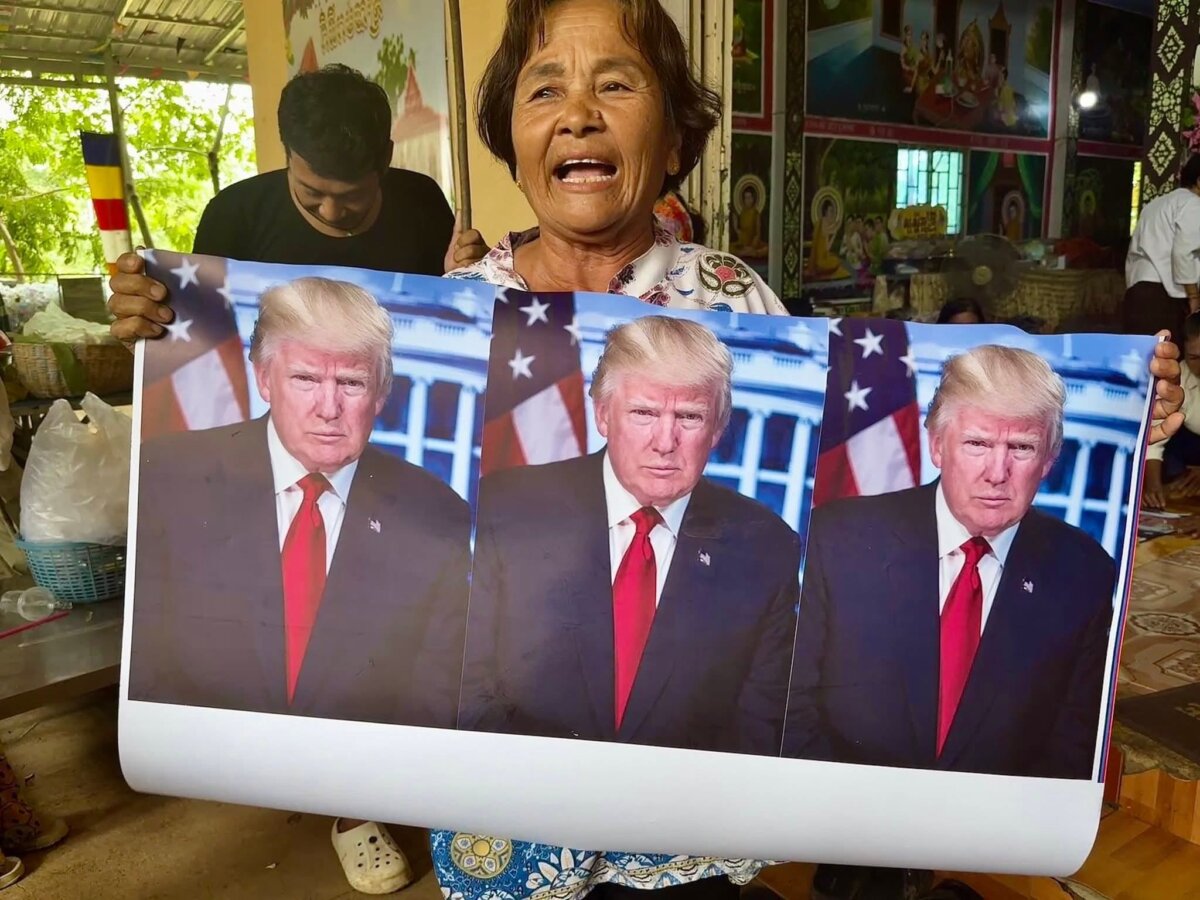
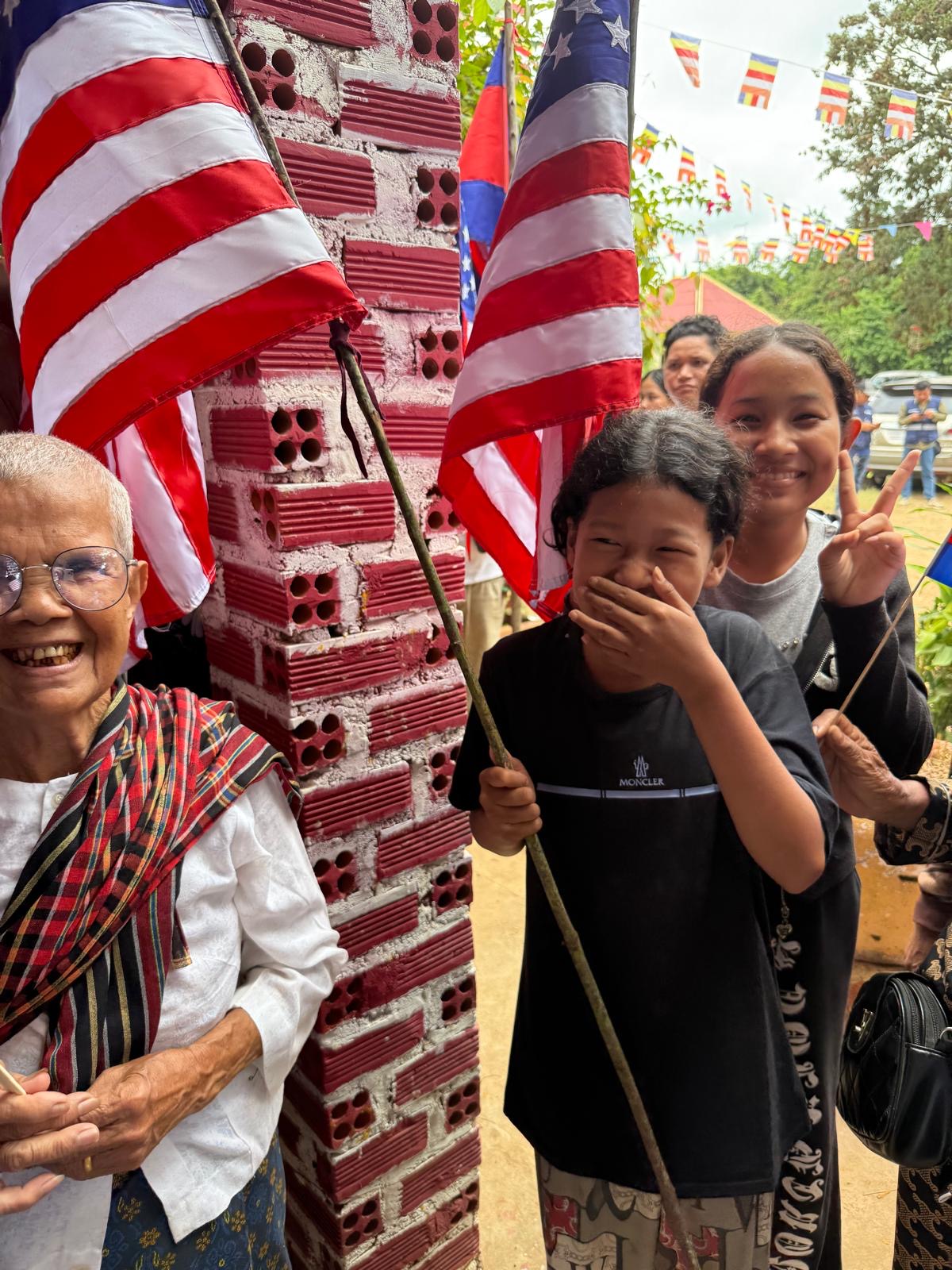
Hundreds of villagers wave American flags and hold up photos of U.S. President Donald Trump and First Lady Melania Trump. Men, women, boys, and girls of every generation are gathering here outside a small temple to call for peace and prosperity in their homeland. The villagers chant in unison: “We want peace!”
A cease-fire brokered by U.S. President Donald Trump between Thailand and Cambodia and his continued efforts to maintain peace on this fragile borderland give them hope.
Trump flew to Kuala Lumpur, Malaysia, on Oct. 26 to preside over an agreement between Thailand and Cambodia after months of fighting and a precarious cease-fire. It was billed as a success as the two countries’ leaders amicably shook hands.
This was the diplomatic culmination of events brought about by Trump’s popularity in the region—and especially with the Cambodians—which I witnessed at the country’s northern border a month ago.
On that visit to Cambodia’s disputed border with Thailand, I witnessed a reverence for an American president we don’t usually expect from foreigners. Villagers surrounded by Buddhist monks in prayer cheered for Trump.
U.S. Rep. Richard McCormick (R-Ga.) told me that Trump in Cambodia is “the most popular American President in any foreign country I’ve seen to date.”
What makes it all the more pivotal is that in any other time than now, none of this would be imaginable in Cambodia, a former Communist country with close ties to China that’s at loggerheads with Thailand, a U.S. ally.
On my previous trip to Cambodia, I spoke to Deputy Prime Minister Sun Chanthol. I asked the deputy prime minister what he thought of Cambodian journalist Soy Sopheap’s suggestion that a U.S.-built 140-mile highway in Cambodia be named Trump Highway.
“I think it would get a lot of support within the country,” he said. “We are seeing a lot of support for this suggestion on social media.”
The signing of the peace deal on Oct. 26 was a boon for the United States. America retained historic relations with Thailand while opening up trade with Cambodia.
The scenes I saw in Prey Chan Village showed me that in some weird way, Trump’s popularity is working in the world’s favor. Events that have unfolded since then back that up.
It was first reported in September that Thailand was headed over the border on Oct. 6 to evict Cambodians from their homes. That date came and went. The situation was still unstable for a while, with demining exercises conducted on Oct. 10 in disputed areas without Cambodian consent.
Now a signed treaty between the two sides that the president brokered is starting to show signs of easing up the tensions. That should be a victory for the world.
The fate of the villagers can’t be underestimated. Yan Yong is the mother of one of 18 Cambodian soldiers whose release by Thailand was negotiated as part of the peace pact but has still yet to be fulfilled. All she wants is to see her son again, she said.
The reaction I received from most Washington insiders to my reporting from Cambodia’s border was one of shock that they hadn’t heard about the fighting and its consequences for the villagers before they read my report.
Cambodian Prime Minister Hun Manet acknowledged over the summer that Trump deserved the Nobel Peace Prize. He reiterated the endorsement on Oct. 26.
Now, to keep the peace and restart trade, transparency—starting with accuracy in reporting—is essential.
Views expressed in this article are the opinions of the author and do not necessarily reflect the views of The Epoch Times.
 Friends Read Free
Copy
Facebook
Tweet
Friends Read Free
Copy
Facebook
Tweet