
Commentary
Museums have long occupied a rare and enviable position in American life: they have been trusted. While confidence in nearly every other major institution has cratered, museums have quietly held the line.
The numbers tell the story.
Fewer than one in five Americans express confidence in newspapers, television news, big business, or Congress, which bottoms out at 8 percent. Trust in the mass media sits at a record low of 31 percent.
Museums, by contrast, rank second only to friends and family as trusted sources of information, well above researchers, scientists, national news organizations, the federal government, and social media.
The 2026 tracking data confirm the trend has held: museums score 7.3 on a 10-point trust scale, more than three points above the federal government.
Why has this trust endured while faith in other institutions collapsed?
Until recently, the public rarely saw discussions confined to museum trade journals and conferences. Meanwhile, new media exposed the inner workings of government, academia, and legacy media. Finally, citizens are seeing major museums transform from centers of education into instruments of activism.
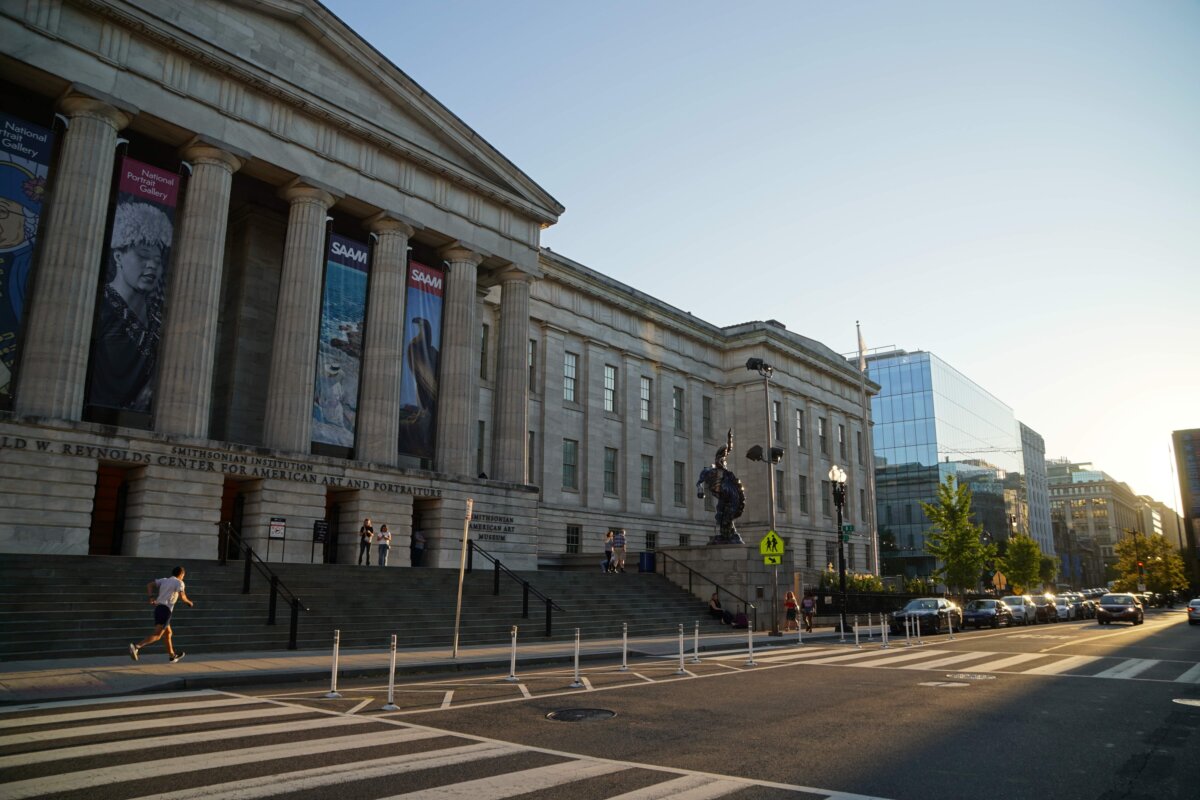
My recent visit to the Smithsonian’s National Museum of American History illustrates the change.
The China Shop Before the Bull
As a scholar, I am wary of politicians involving themselves in museums, universities, or scholarship. Academic independence and intellectual freedom matter.
But the Smithsonian controversy did not begin with President Donald Trump. With his characteristically aggressive approach, Trump can sometimes be the proverbial bull in the china shop. But Trump didn’t build this china shop.
For decades, a movement inside the profession has urged museums to embrace political activism. Frameworks such as the Facing Change DEAI initiative and the widely circulated MASS Action Toolkit reject neutrality, while “activist scholars” argue that museums should not merely educate society, but change it.
There is a fundamental problem with that approach. Scholarship asks questions. Activism begins with an answer. Once activism becomes the mission, evidence becomes a means to an end—facts are selected, emphasized, or omitted according to how well they advance a desired narrative.
This is not a theoretical concern about what might happen in higher education and museums. It has been the animating premise of professional literature in academic and public history for years.
What’s Missing From the Wall
The Smithsonian’s problem is not primarily what visitors see, but what they do not. History can be distorted without falsification when curators decide which facts receive prominence and which disappear.
As the United States of America celebrates its 250th birthday, I expected our National Museum of American History to offer a robust exploration of the ideas, people, and events that created this nation. Instead, I was struck by what was absent.
There was no comprehensive treatment of the Declaration of Independence, the Constitution, or the American Revolution. Pilgrims and other early immigrants receive scant attention. The founding persons and principles that distinguished this remarkable experiment in self-government are not seriously examined. How can visitors adequately understand America without being exposed to the ideas that created America?
Meanwhile, contemporary political and social issues—from COVID-19 and “social justice” to abortion, LGBTQ+ rights and voter ID—receive prominent attention. Those subjects certainly belong in a museum of American history. The question is one of balance, context, and mission.
Slavery should be taught honestly and unflinchingly. But the full story also involves abolition and emancipation, including evangelical Christians who saw abolition as a moral crusade to extend the founding promises. Ultimately, we fought the deadliest war in our history to end slavery.
Likewise, American Indians should not appear merely as supporting characters in a story that begins with European arrival. Indigenous peoples had nations, governments, alliances, rivalries, inter-tribal wars, and diplomacy of their own. Reducing them simply to victims of European settlers does not elevate their history; it diminishes their agency, their accomplishments, and their failures.
America’s history is not spotless. But neither is it one-dimensional. The historian H. W. Brands, biographer of Benjamin Franklin, aptly identifies the disposition required of both scholars and visitors at our history museums: “Life is complicated, and so is history. The good is mixed in with the bad. Don’t let the latter blind you to the former.” Sadly, it is evident that many history museums, including the Smithsonian, wish to cultivate the opposite disposition.
A Selective Omission That Says a Lot
One omission was almost comical. A temporary exhibit about Latin American salsa—the dance—cataloged its cultural influences but conspicuously omitted Spain, whose influence shaped the music, language, and dance.
History is also like salsa, the chip dip: if you explain its ingredients, you do not omit the jalapeño because it is too spicy for your taste—or your narrative. The truth lies in all the ingredients, good and bad.
That is the pattern. Not falsehood on the wall, but a curated silence that quietly bends the visitor’s understanding in a predetermined direction. In history, context always matters. Selective and subtle omissions can completely alter public perception of events. That is not scholarship. It is curated propaganda.
Accountability Is Not the Enemy of Scholarship
This is why the current debate about the Smithsonian should not be reduced to a contest between Donald Trump and academic freedom.
Academic freedom is essential. But academic freedom that jettisons truth in pursuit of a political agenda should not be the goal of any museum, and it cannot confer immunity from accountability, especially not in the case of this particular museum.
The Smithsonian is supported substantially by the American taxpayer. Its museums occupy a unique position of national trust. The American people and their elected representatives therefore have every right to ask whether those institutions remain faithful to their educational mission.
Scholars accept scrutiny of their work every day. We defend our evidence, explain our methodology, cite our sources, and answer criticism. Accountability isn’t the enemy of scholarship. Accountability is fundamental to scholarship.
Nonprofit and public-trust laws that govern museums assume as much; academic freedom has never meant freedom from any obligation to those who fund the institution, whether donors, boards or, in this case, the taxpaying public.
Museum leaders who turn institutions devoted to education and interpretation into instruments for social change should acknowledge and defend that choice.
‘De-centering’ Trump
Activist scholarship is not a figment of Trump’s imagination but an openly promoted commitment among many academic and public historians. By challenging it, he has shown citizens how museums can become political instruments. Its advocates cannot invoke institutional independence to avoid scrutiny.
That said, the answer to Progressive history is not Conservative history. Museums should tell the whole story.
Give Americans evidence and context, accomplishments and failures, Washington and Jefferson in their complexity, slavery and emancipation, injustice and reform. Give them the ideals America proclaimed and the struggle to live up to them. When there are two sides, give them both.
Trust museum visitors to reach the correct conclusions themselves.
President Trump may be rattling the Smithsonian, but after seeing it myself, I understand why. Trump did not politicize America’s museum. He is challenging those who did—and that reckoning is long overdue.
Views expressed in this article are the opinions of the author and do not necessarily reflect the views of The Epoch Times.
 Friends Read Free
Copy
Facebook
Tweet
Friends Read Free
Copy
Facebook
Tweet