
Commentary
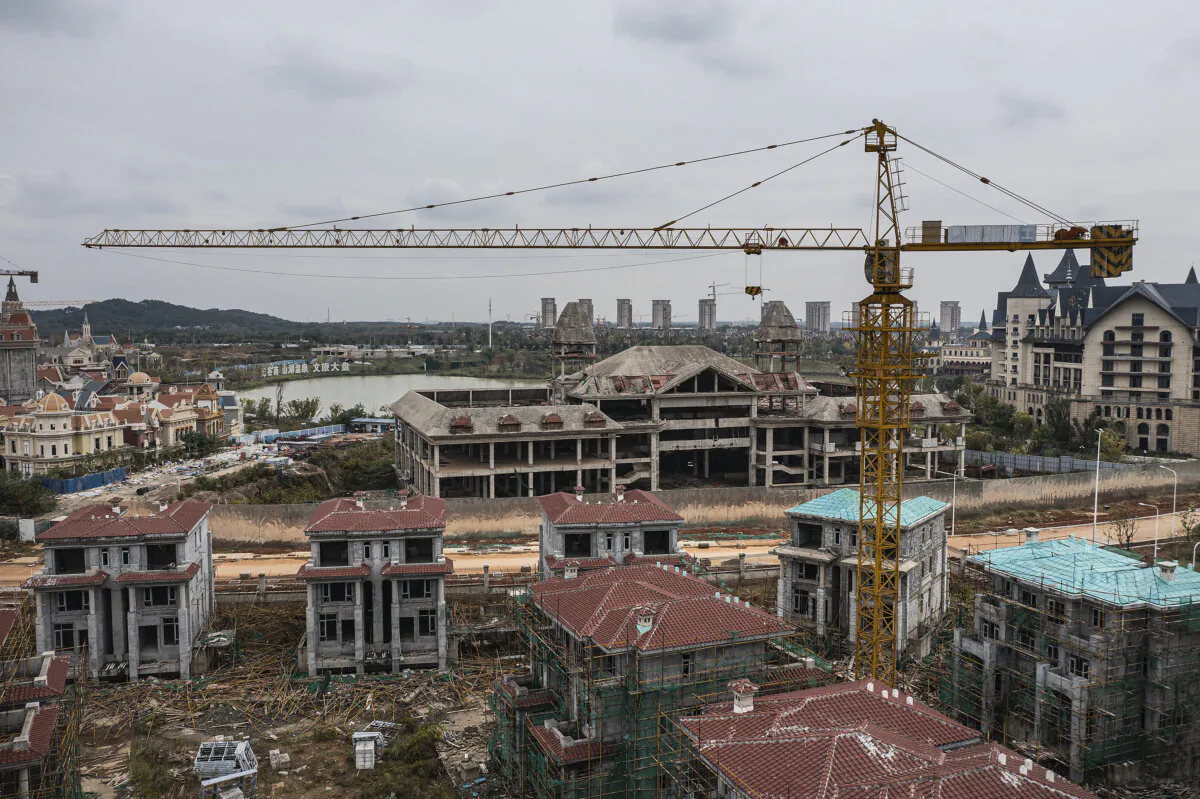
Recently, signs of improvement have emerged in China’s housing market, and with these signs, some reason to hope that the country’s long-running and destructive property crisis may at last be turning.
What has occurred is, to be sure, easy to dismiss. The evidence that has come to light is uneven; spotty might be a better word. It is also tentative at best, and there is much else holding back China’s economy. But positive signs have appeared, and China watchers need to take note.
According to reports from Shanghai, March was on track to see some 30,000 transactions for sales of existing homes in that city. That is up by 170 percent from the same period a year earlier. Huatai Securities indicates that its tracking of such sales across 26 major Chinese cities shows an average 22 percent increase in transactions over the same period a year ago. Separately, the city of Nanjing reports a 54 percent increase in such transactions during the first three weeks of March.
It would seem from this admittedly tentative data that the stimulus measures taken by Beijing and local authorities are having an effect. These measures offered tax exemptions to first-time homebuyers and lowered homebuying restrictions in several venues, such as required down payment amounts and various regulatory tests.
Especially since most of this homebuying occurred at the low end of the market, the suggestion is that these incentives provided the impetus for the buying surge. After all, fully two-thirds of the reported transactions were for homes priced below 3 million yuan ($434,000). Low indeed, considering that the average two-bedroom flat in Shanghai’s inner ring goes for 6 million yuan (about $878,426).
If China is to effectively break the downward trajectory of its property crisis, this buying would have to remain sustained for longer than a single month. And March data are especially suspect, coming right after the Lunar New Year’s celebrations, which have always had a distorting impact on Chinese economic data.
Such buying would also have to extend in three crucial directions that are as yet not indicated. One, the buying would have to embrace higher-end properties. Two, it would need to include not only already existing homes but also the country’s huge stock of new, as yet unoccupied construction. Three, it would need to extend beyond the major cities reporting so far to include more distant locals and smaller towns, where, before the crisis broke, much of China’s overbuilding occurred in response to the authorities’ misplaced development dreams.
This persistence and these extensions are essential to mending China’s economic damage. It is, after all, the property crisis that has depressed real estate prices across the country by almost 25 percent from their peak in the second half of 2021. And because, for most Chinese citizens, the value of their house constitutes the main source of the family’s wealth, this collapse in home values, more than anything else, is what has held back consumer spending.
China’s economy, in other words, must take many more steps beyond this uptick in existing home sales before it is securely on the road to a recovery that both the Chinese authorities and the Chinese people want to see. That huge need should temper any enthusiasm about these recent shafts of light in the country’s once-huge property sector. But they have occurred and now bear watching.
Views expressed in this article are the opinions of the author and do not necessarily reflect the views of The Epoch Times.
 Friends Read Free
Copy
Facebook
Tweet
Friends Read Free
Copy
Facebook
Tweet