Commentary
There’s a growing movement called Blue Dot Farmers, supposedly a coalition connecting consumers with farmers and ranchers who share their values.
The idea is to buy beef, dairy, eggs, and produce from farmers whose beliefs align with yours. On the surface, connecting consumers with independent farmers sounds like something I could get behind.
But apparently, the values we’re talking about aren’t necessarily how you treat your animals, whether you’re rebuilding soil, or what chemicals you use. They’re increasingly about who you voted for.
Matt, a social media personality known as Necessary Noise, launched a Blue Dot Farmers Facebook group that has grown to approximately 49,000 members. The movement recently received international attention in a Times article titled “The beef battleground: Americans boycott food from Trump-voting farmers.”
Matt has been making videos confronting farmers who voted for Donald Trump and are now struggling financially or frustrated with agricultural policies. Rather than offering compassion to people whose livelihoods are already under pressure, he publicly shames them for their votes. He told The Times those farmers had made their own bed.
I’ve experienced a version of this myself.
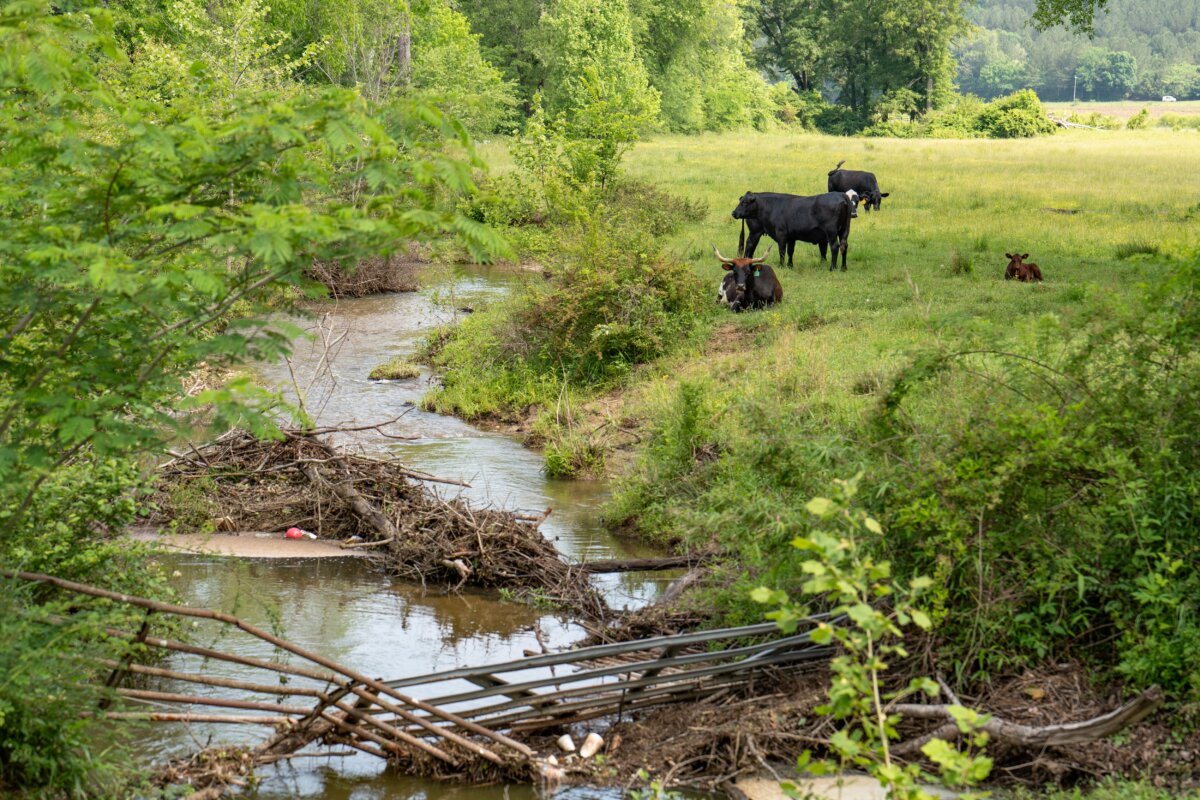
Recently, I posted an Instagram video standing in my pasture, cowboy hat on, cows behind me, talking about imported beef and what it means for the American cattle industry. I wasn’t asking anyone to feel sorry for me. I was talking about an industry I’m part of and arguing that Americans should support American farmers and ranchers.
That video received 699 comments on Instagram alone. Many weren’t discussing imported beef or cattle prices. They were discussing who I voted for.
Somehow a conversation about the American cattle industry had become a referendum on my presidential vote.
My brother, Ryland Engelhart, co-founded Kiss the Ground and has spent years bringing regenerative agriculture to unlikely audiences. Recently, we attended a dinner connected to Congressman Chip Roy’s office. The next morning, he flew to New York for Climate Week and attended a luncheon with Governor Gavin Newsom and his wife.
I believe California’s policies destroyed my businesses and much of my life’s work. But Ryland understands that changing things means sitting with people you profoundly disagree with. That’s bridge-building.
I voted for Trump. I also voted for Barack Obama.
I joke that I’m politically nonbinary. I believe in God. I’m an environmentalist, pro-life, pro-family, antiwar, and a believer in the Constitution. I believe you cannot be born in the wrong body. My husband was illegal when we married, or undocumented, depending on whether you’re a blue dot or a red dot. I think adults should be free to buy meat and dairy directly from one another without government permission.
So which box am I supposed to fit into?
I don’t regret voting for Trump. I don’t agree with everything he does, but nothing I saw from Kamala Harris during her vice presidency convinced me she would have been better for farmers. We cannot know how an administration that never existed would have governed.
Voting isn’t a lifelong pledge to defend every decision that follows. I don’t even agree with everything my husband does, and we’re married and raising children together.
I watched government decisions during COVID-19 devastate businesses, including mine. Restrictions began under Trump but were imposed largely by state and local governments and lasted longer in many Democratic-led states, including California. I watched restaurants close and children struggle through prolonged school closures.
I could spend my days shaming Biden voters for policies imposed by politicians they supported. I don’t. They made decisions for their own reasons, just as I did.
My neighbor Chuck taught me something about political labels. Years ago, while I still lived in California but owned the ranch next to his, he called after seeing me on Fox News.
“Girl, I about choked when I saw my Democratic neighbor on Fox News! Why’d they hire you?”
He assumed that California, or my husband, meant we were on different teams. But Chuck and I voted for the same president.
We share a vote but disagree profoundly about farming. Are our values aligned?
Now, imagine I’m a Democrat buying beef from a politically aligned farmer. Who did his hay grower vote for? His mechanic? His feed supplier? The neighbor who loaned him a tractor? The trucker? The meat processor?
How far must I follow my dollar before I’m sure it hasn’t reached a Republican?
I encountered this thinking when I owned organic vegan restaurants. People asked whether I bought produce from vegan farms. But organic agriculture often relies on animal agriculture. Farmers use manure, bone meal, blood meal, and other animal-derived fertilizers. Growing organically without animal inputs is possible, but finding a reliable commercial supply grown entirely without them was another matter.
The vegetables on a vegan plate may have been nourished by cows or chickens. Food systems are tangled together. Life feeds on life.
And was every cook vegan? Every dishwasher or delivery driver? I spent hundreds of thousands on payroll. Was I supposed to police where employees spent their wages?
Money refuses to stay inside ideological fences.
I believe in voting with our dollars. But I want consumers voting for farming practices. Is the farmer rebuilding soil? Reducing chemicals? Protecting water? Treating animals well?
Several websites using the Blue Dot name describe agricultural ideals, but I couldn’t confirm that Matt runs or is affiliated with them. What has been documented about his Facebook group is political vetting. I couldn’t find comparable evidence of checks on soil health, chemical use, or livestock practices.
What makes a farmer a blue dot? The way they farm or the way they vote?
Matt and I probably agree about plenty. Chuck and I voted alike but disagree profoundly about farming. People who vote differently can share values. People who vote alike can share almost nothing else.
There will always be another election, another administration, another swing in a different direction. But farmers will still need to grow food, ranchers will still need to care for their animals, and neighbors will still need one another.
Healthy soil requires diversity. Beneath our feet, bacteria, fungi, protozoa, nematodes, and countless other organisms perform different functions and exchange nutrients. Resilient soil isn’t created by making every organism identical. It is built through diversity and relationships.
I believe healthy communities work the same way. We don’t need everyone to think alike, vote alike, worship alike, or agree about every issue.
Long after the election signs come down, we’re still going to be neighbors. We’re still going to need each other.
Who are we going to be for one another?
My values align with humanity.
Views expressed in this article are the opinions of the author and do not necessarily reflect the views of The Epoch Times.
 Friends Read Free
Copy
Facebook
Tweet
Friends Read Free
Copy
Facebook
Tweet