
Commentary
Facing a blockade after failing to gain an empty agreement that would have left the regime and its nuclear weapons program in place, Iran’s clerics are desperate to end the conflict.
They must focus on destroying Iran’s increasingly powerful and growing domestic opposition. The regime has taken a two-tiered approach to achieving that end.
First, Iran’s Islamic Revolutionary Guard Corps (IRGC) leadership has threatened to strike its neighbors and the U.S. Navy’s blockading units unless Washington ends the blockade.
Second, the regime has expressed interest in another ceasefire and round of talks to buy time, which Tehran feels is on its side. The next round of talks will see little change in the regime’s demands. It just needs a break while U.S. political divisions about the war play out.
The IRGC threat is real, but that doesn’t mean that U.S. President Donald Trump should lift the blockade. China has not challenged it. Its tankers turned away when notified by U.S. Navy units. Beijing does not see today, or the Strait of Hormuz, as the time and place to test U.S. leadership. However, Sino-Russian intelligence sharing and covert material support will continue. Otherwise, Iran is on its own, for now.
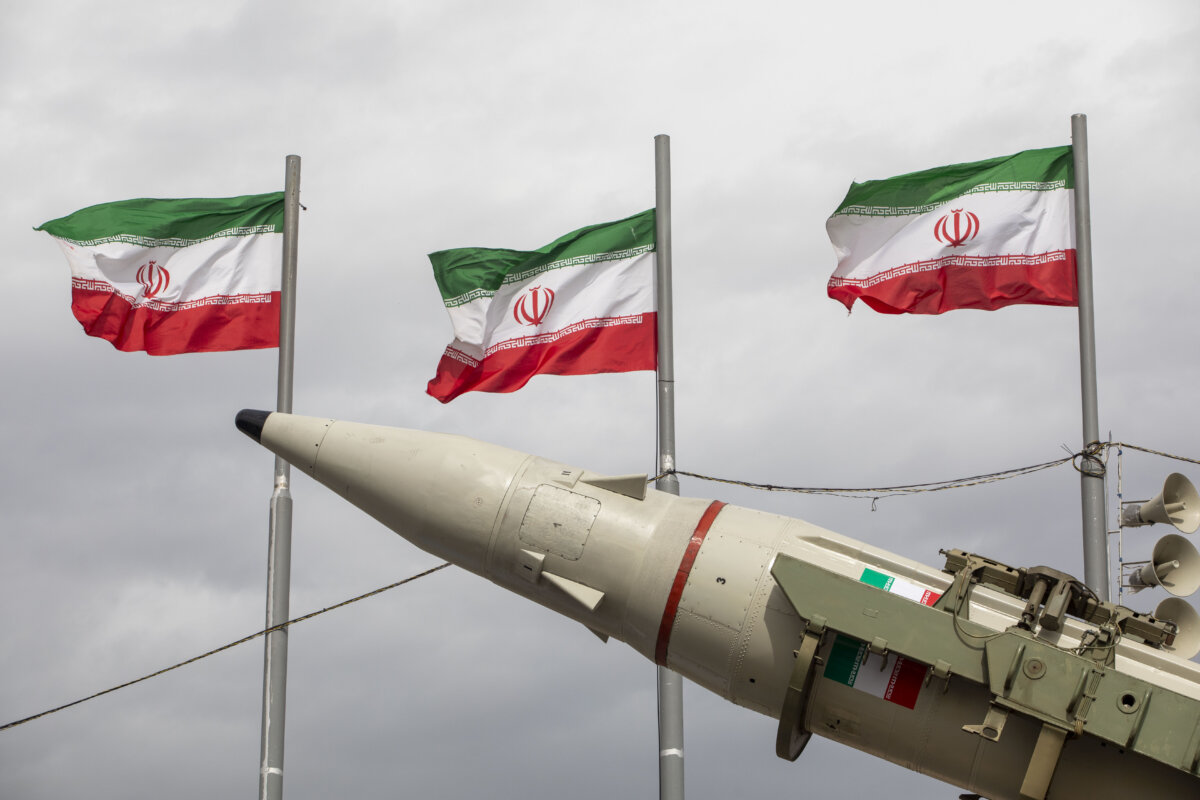
Drones constitute Iran’s most cost-effective weapons, and Tehran will employ them extensively against its neighbors’ oil facilities and export terminals, as well as against U.S. ships in or within range of the Strait of Hormuz. The damage inflicted on the facilities will not be devastating, and the U.S. Navy’s ships will handle the drones effectively.
Similarly, Iran’s ballistic missiles will target Israel and regional U.S. bases while cruise missiles, fast-attack boats, and mini-subs will go after our ships. Although the results may be disappointing militarily, Tehran’s primary goal will be the attacks’ political impact.
Tehran’s priority is regime survival, both as a governing entity and personally. Autocrats who have been as brutal as the clerics and IRGC rarely outlive their regime. Moreover, the regime’s most likely post-collapse safe havens, Syria and Iraq, are not and may not be welcoming, respectively.
Because Tehran can’t defeat Israeli and U.S. forces in a traditional military sense, it will seek a political victory against opponents that it considers casualty- and cost-averse. The clerics consider the United States to be the weaker party politically. They believe that every rise in oil prices increases the political pressure facing the Trump administration. In fact, it is already a U.S. midterm election issue.
Additionally, every loss of expensive military equipment inspires more political opposition to the war. In some cases, the planes are no longer in production. Also, U.S. shipyards struggle to maintain undamaged naval ships, much less to repair or replace any that are damaged or lost.
Weapons expenditure is another issue Tehran hopes to exploit. Neither Israel nor the United States has the industrial capacity to sustain a major high-tech military effort for any significant period. Tehran is confident that the Trump administration’s opponents will block or limit the funding to replace the consumed ordnance or lost equipment.
Politically, Iran’s strikes on Israel, like those of Hezbollah, have a psychological and political purpose. A few of the missiles get through, but no defense is perfect. Even intercepted ballistic missiles create high-velocity debris that inflicts damage below.
Also, the need to take shelter disrupts lives and creates tensions, and Tehran may believe that it will generate political pressure for Israel to end the fighting. Only time will tell if the clerics are right, but the Israeli public’s response may be to push for hitting Iran harder.
With that in mind, Tehran will use “launch and flee to shelter” tactics. While that will complicate U.S. operations, they are also more difficult to execute and survive in today’s surveillance world. Iran has built miles of tunnels to protect its weapons stores, its missile and drone launchers, and possibly even its mini-subs and fast-attack craft. But the tunnel exits are very difficult to hide and can be surveilled 24/7 by the drones of an enemy that enjoys aerial superiority. More importantly, they can be struck and collapsed by precision weapons.
Finally, the water conditions of the Persian Gulf challenge the traditional acoustic sensors and sonars used to detect submarines, especially mini-subs displacing less than 300 tons submerged. But the laser search systems designed to detect and destroy naval mines are even more effective at detecting mini-subs, which tend to be four to five times larger. Lasers are particularly effective in waters less than 150 meters deep, such as those of the Persian Gulf and the Strait of Hormuz.
This does not mean the Iranian threat can be ignored. It can’t, but neither should it be seen as a show-stopper. The regime sees this conflict as a test of wills with time on its side. It is tailoring its operations to maximize the political impact on its opponents and the segments of the global community that can influence them. Tehran recognizes that Israel’s and America’s primary strategic goal is the eradication of its nuclear program, followed by regime removal.
The clerics hope they can deny those goals simply by surviving until their opponents’ respective publics force them to end the war. So they will offer talks when they must and prove intransigent during talks unless military pressure threatens their survival or regime collapse is near. The stakes in this war are greatest for the people of Iran and Israel. They are fighting for freedom and national survival, respectively. For the United States, this is a war to contain the threat posed by a regime that has been killing Americans for more than 40 years and is seeking the means to kill many more.
Democracies rely on popular support—that is, political will—to continue a fight. However, authoritarian regimes rarely worry about domestic political will in a war. They can imprison or kill the opposition, as indeed Tehran has done by the thousands.
Views expressed in this article are the opinions of the author and do not necessarily reflect the views of The Epoch Times.
 Friends Read Free
Copy
Facebook
Tweet
Friends Read Free
Copy
Facebook
Tweet