
Commentary
Most of us who are 30 or older can remember where we were on that day of infamy on Sept. 11, 2001.
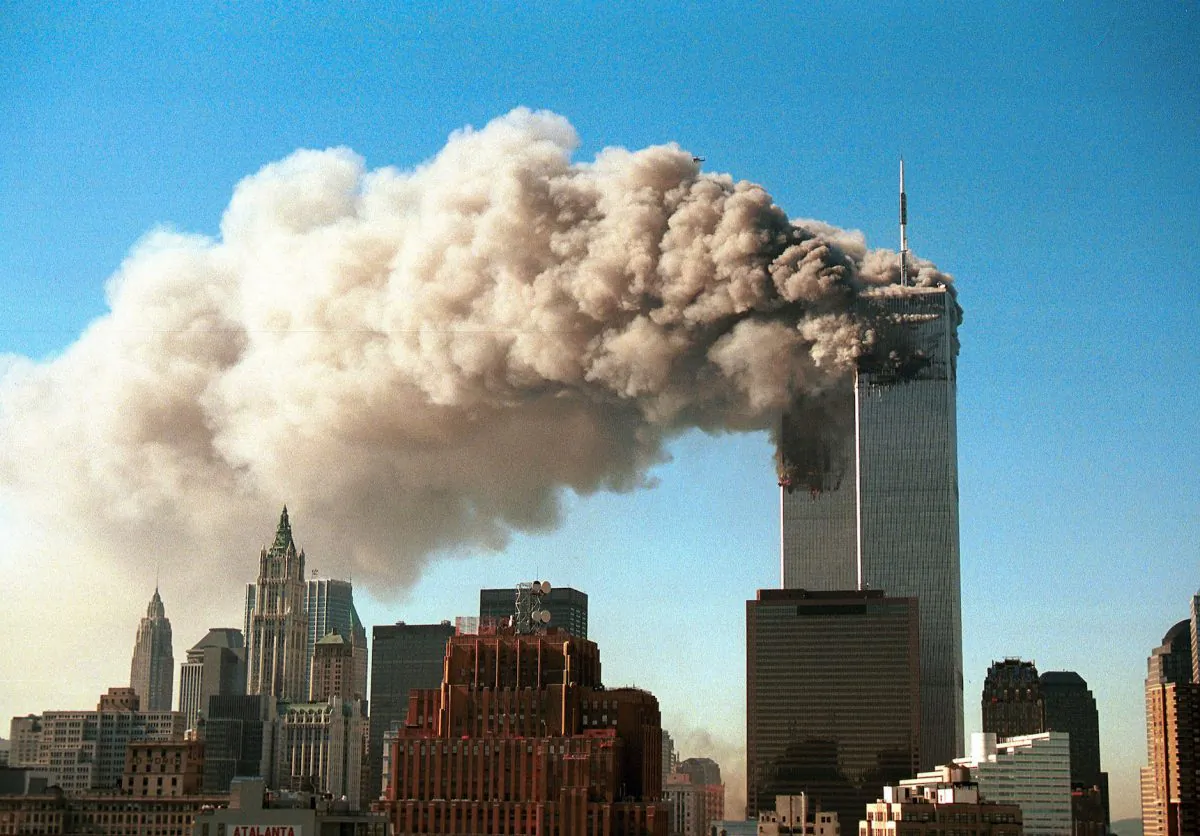
Many of us were going to work or at work on that Tuesday morning, when we heard news about the two jetliners that struck the World Trade Center’s twin towers. The third aircraft crashed into the Pentagon, and the fourth plane was forced down by valiant passengers near Shanksville, Pennsylvania.
The unforgettable sights and sounds were seared into our memories.
Nearly 3,000 people perished on that fateful day when 19 al-Qaeda terrorists used commercial jet aircraft as missiles to strike a deadly blow to civilization. The horror of 3,000 people meeting a premature death at the hands of a death cult wasn’t merely shocking to those who witnessed it. Most of the victims were aware that their lives were about to come to an abrupt end.
Moreover, their deaths created a large hole in the hearts of their families, friends, and relatives. Contrary to the claims of some anti-Americans, the 3,000 did not deserve to die.
As a consequence of this atrocity, then-President George W. Bush embarked on a course of retaliation named the Global War on Terror (GWOT), first in Afghanistan and then in Iraq. What were once predicted to be short-term conflicts turned out to be long-term commitments that cost dearly in American casualties and treasure as we battled al-Qaeda, ISIS, and the Taliban.
U.S. troops finally withdrew from Iraq in 2011 (under the Obama administration) and Afghanistan in 2021 (under the Biden administration) following a version of quasi-nation-building that met with only partial success.
What are some lessons that can be gleaned from 9/11 and its aftermath during this 25th commemoration of the fallen?
An array of national security agencies has learned that they must work together to avoid stovepiping in order to thwart terrorist strikes. Special Operations have been ramped up for covert actions against terrorists.
Greater emphasis is placed on disrupting terror plots during the planning-stage chatter before operational actions are rolled out. Prevention also requires cooperation with our global partners in the spheres of intelligence gathering and surveillance related to terror cells.
Although it’s important not to diminish the atrocity perpetrated on 9/11, offering some perspective could be useful. Mass casualty events have occurred many times in the past, and they likely will unfold in future locations because evil exists in our world.
Human beings have the capacity to carry out both evil and good deeds. However, doing our utmost to curtail domestic and foreign terrorist acts and warfare should be our primary objective if we want to elevate the human condition.
Additionally, while terrorist attacks have targeted developed democracies, a larger number of strikes over the decades have been carried out in developing nations that are undemocratic. Why is this?
Many nations could almost be considered terrorist states. They are either communist, Islamist, military, or socialist regimes. They come down harder on their own citizens than on the soft targets in other countries.
Any opposition to autocratic rule can be met with deadly force or imprisonment. Undemocratic societies also have a deficit of freedom, opportunity, and the rule of law. Some developing nations also lack a robust security infrastructure to mitigate or prevent external or internal terrorist attacks.
While many terrorists since 9/11 have utilized knives or ramming vehicles as their modus operandi, attacks of the future might involve more sophisticated disruptions in the communications, energy, food, or water grids that we often take for granted. These cyber or malware attacks could emanate from both non-state and state actors.
Unleashing biological or chemical agents could also be part of the terrorist arsenal.
Strengthening America’s grids ought to be a top priority in our national security strategy.
Another lesson to be learned from 9/11 is the example of the late Charlie Kirk. He had strong convictions about country, faith, family, and merit, but was willing to converse and debate with folks from all points of the cultural and political spectrum.
In a democracy, there will always be differences of opinion and some divisions, but the willingness to listen to those we disagree with should be part of our interpersonal philosophy.
Even if there are sharp contrasts, this should not lead to ad hominem attacks or physical violence. There is no excuse to dismantle time-tested institutions and traditions merely due to America’s flaws.
Indeed, Americans likely have much more in common than they often admit or realize. We must not take our blessings for granted.
Curtailing terror attacks could also involve the penetration of unfree societies with the good news of education, free markets, liberty, and the rule of just laws. Too many nations lack the concepts and values common in Western countries.
Freedom is a natural universal principle that can’t be extinguished but is suppressed in undemocratic states. If people in developing nations can experience basic levels of freedom and opportunity, it offers them an off-ramp away from counterproductive extremism and the cycle of fear and poverty.
On this 9/11, let us honor the victims and pray for peace in our time. Let us hope that the heartbreaking events in our history can help us forge a more perfect union through civil discourse, gratitude, humanitarian acts, viewpoint pluralism, and self-governance.
Views expressed in this article are the opinions of the author and do not necessarily reflect the views of The Epoch Times.
 Friends Read Free
Copy
Facebook
Tweet
Friends Read Free
Copy
Facebook
Tweet