Commentary
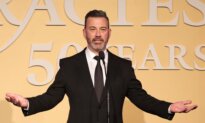
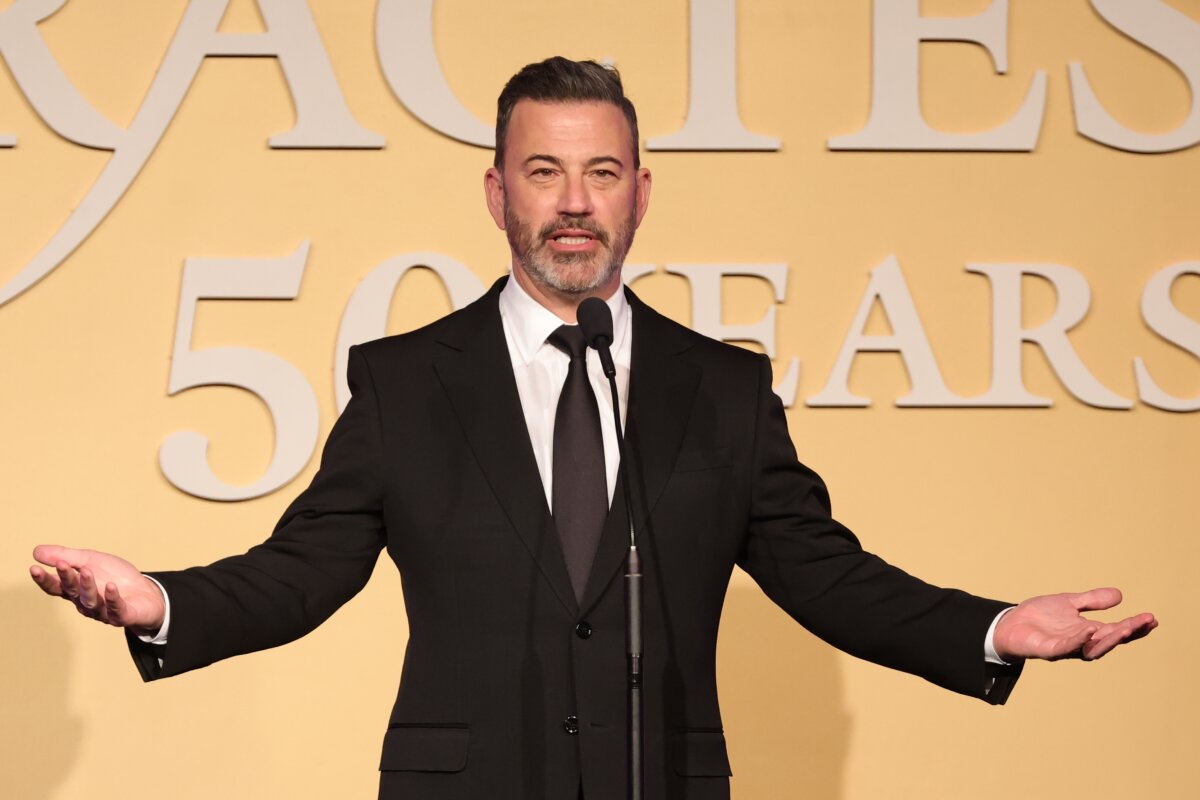
Suddenly, we are bombarded with claims of censorship because a late-night host has had his show canceled in response to viewer and advertiser disgust. His name is Jimmy Kimmel and all his colleagues are pleading on his behalf. We do well to consider the prehistory here.
When Tucker Carlson was fired by Fox News in 2023, after years of a hugely successful show, he could easily have riled up his followers about being censored. Many speculated that there was something like that going on. Carlson had departed from the network’s orthodoxies on a range of topics, from pharmaceuticals to Russia and Ukraine to Middle East politics. Carlson went on to start his own channel and show. Both are huge successes.
Over the years, I’ve heard Carlson address his firing many times, usually in response to questions from interviewers. Every time I’ve heard him speak about this, he is gracious and not bitter at all. He expresses gratitude to the network for hosting him as long as it did and expresses warmth toward former colleagues and managers. He speaks of the right of any company to add or subtract talent as it sees necessary.
He might have felt some anger inside. Surely he did and does. He never to my knowledge claimed to have been censored. This is how a gentleman responds.
It’s never been clear to me why anyone would want to work for a company that does not want him there. If you are fired, it means that the company believes that it is better off without you than with you.
That should be enough information for anyone. Just as you would never want to force your way into a dinner party at which you are not welcome, no decent human being should demand to work for a company that does not want him there. This is just good sense.
Mature individuals understand this. The labor contract has got to be mutual. When one party bails, it is over, and so is the debate about it.
However, this has not been the case for the late-night comedians whose shows have been canceled following many years of reliably anti-President Donald Trump content and highly partisan content. Their audiences are slipping ever further. The market has been speaking.
In addition, both broadcasters and networks are increasingly concerned about triggering market boycotts of the sort that took down Bud Light, harmed the market valuation of Target, and humiliated the management of Cracker Barrel.
All the late-night hosts have been on thin ice, not knowing whether to shift or to continue to feed their dwindling audiences more of the same. The murder of Charlie Kirk seems to have pushed matters too far. As the nation mourned the loss of a major conservative voice on campus, these voices fell back into a reflexive nonchalance.
Kimmel, for all the world to hear, speculated that the killer was MAGA-adjacent and dismissed the idea that Trump himself was mourning the loss of his friend.
This was too much for broadcasters and networks. Kimmel found his show unplugged, not at some distant point in the future, as with Stephen Colbert, but immediately.
In addition, Brendan Carr, chairman of the Federal Communications Commission (FCC), expressed outrage at Kimmel’s comments. This intervention by the FCC has since been decried as some kind of intervention amounting to an attack on free speech. Thus was born a new trope found everywhere in public culture today. It is claimed that the right is censoring in the same way the left was only a few years ago.
It’s difficult to take these protests seriously. David French of The New York Times has issued a grave warning: “It’s hard to grasp the magnitude of the emerging threat to free speech in the United States. … The Trump administration is using Kirk’s death as a pretext to threaten a sweeping crackdown on President Trump’s political and cultural opponents.”
That’s very interesting because four years ago, writing in Time Magazine, French congratulated the big tech companies for taking down the social media app Parler and for banning Trump from Twitter.
“Technology companies acted effectively to protect the republic when the government could not,” he wrote. “They deserve our thanks, not our rage.”
In other words, this looks like partisanship masquerading as principle.
We must gain clarity on the difference between social media and major network television. The commercial licenses for the public airways that go to four main companies are worth countless billions of dollars but, by tradition, are granted for free. This amounts to a massive public subsidy to ABC, NBC, CBS, and Fox.
In exchange, the FCC has long had rules: “The FCC prohibits broadcasting false information about a crime or a catastrophe if the broadcaster knows the information is false and will cause substantial ‘public harm’ if aired.”
In addition, it is “illegal for broadcasters to intentionally distort the news.”
Such rules do not apply to cable TV or internet content. What Carr said concerning Kimmel was not unjust intimidation. It was merely a reminder of existing law that has been in place in some form for a century. Moreover, his statements gave needed cover to the networks and broadcasters for what they needed to do anyway.
To be sure, it would have been better had Carr said nothing and just let the show melt on its own, thus avoiding the claim that the right is censoring just like the left. That said, the temptation to apply the law as written is rather obvious. Kimmel did in fact appear to broadcast “false information about a crime.”
I’ve argued for the full privatization of the public airways. Doing so would eliminate some of these ambiguities and difficulties, putting private producers fully in charge. I doubt that my solution is on anyone’s agenda. My point is simply that this case cannot be cited as an example of Trumpian censorship.
What about the many firings of university and private sector employees who celebrated Kirk’s death? Is that cancellation of the sort that has traditionally been opposed by the right but is now being practiced by the same groups? I see no evidence.
Sadly, universities and corporations are replete with staff that managers have long wanted to offload but have not because they don’t want to risk the legal liabilities. Everyone in the corporate United States knows of many employees who have blackmailed their way into job security. What their egregious statements and behaviors have done is granted the excuse that companies have long sought to get rid of employees who care far more about their political activities than the well-being of companies.
As for Attorney General Pam Bondi’s statement that there is a difference between free speech and hate speech, that was a serious misstatement, widely and rightly condemned by conservative commentators. She has since walked it back.
We should never dismiss or disregard threats to free speech or provide cover for censorship of the sort that seized control of media and tech over the past five years. A blowback that practices the same would deserve condemnation.
That said, I’ve yet to see the evidence to justify this wave of maudlin protests about supposed attacks on free speech by Trump. What we are seeing instead is the reassertion of market forces that had long been suppressed under previous administrations.
The censorship of the past five years involved government agencies using backdoor tactics to curate content on privately owned tech platforms. Some of that is still going on, with algorithms of the past still in place. No evidence has emerged that anything like this is going on in the Trump administration, which has fully committed itself to free speech. To be sure, eternal vigilance is always necessary, but so is accuracy and clarity on the difference between censorship and standards that readers and viewers increasingly demand.
My advice for all those in high dudgeon about losing jobs and programming because the public is fed up with woke ideology and unrelentingly boring displays of Trump Derangement Syndrome is as follows.
If you are dismissed from your media job, be like Carlson: Man up, take your lumps, and reinvent yourself in a new iteration. In a free country, institutions can hire and fire, and so, too, can you shop for jobs and quit when you want. The labor contract is a two-way street.
Views expressed in this article are the opinions of the author and do not necessarily reflect the views of The Epoch Times.
 Friends Read Free
Copy
Facebook
Tweet
Friends Read Free
Copy
Facebook
Tweet