
Commentary
Canada is finally having the defence conversation it has deferred for a generation. Prime Minister Mark Carney’s new $6.6 billion Buy Canadian defence plan promises to prioritize domestic production, expand small- and medium-sized firms into the sector, and create up to 125,000 jobs over the next decade.
At the same time, Canada has pledged to raise core defence spending to 3.5 percent of GDP within 10 years, alongside an additional 1.5 percent for dual-use security infrastructure. By 2035, that implies annual defence-related spending approaching $160 billion.
This is not marginal adjustment. It is structural change. The political context matters. Polling from Nanos Research shows support for increased defence spending has risen from 41 percent in 2020 to 62 percent today. Seventeen-point growth in defence salience is extraordinary in Canadian politics. A majority now believes Canada faces serious international threats. References to the Canadian Armed Forces being under-resourced and reliant on outdated equipment have multiplied several times over in just five years.
Canadians still value trade and diplomacy, but they increasingly understand that diplomacy without capability is persuasion without leverage, and trade without security is exposure without protection.
The government deserves credit for recognizing this shift. A Buy Canadian framework that strengthens domestic supply chains, prioritizes industrial participation, and reduces strategic dependence on foreign suppliers is strategically sound. Canadians overwhelmingly say procurement should create jobs at home rather than simply chase the lowest sticker price abroad. Only a small minority sees buying American equipment as a priority.
This is not economic nationalism. It is national prudence. Modern conflict is industrial. Ammunition production, shipyard throughput, aerospace capacity, cyber resilience, Arctic infrastructure, and energy security are determinants of sovereignty. If Canada is to meet its 5 percent of GDP defence and security commitment, it must build the industrial base capable of sustaining it.
But here is the central challenge. Announcements are not strategy. Spending targets are not force design. Job projections are not operational capability.
The Parliamentary Budget Officer has warned that meeting the new targets could add nearly $63 billion to cumulative deficits by 2035 to 2036. Canada has not published a detailed year-by-year path to 3.5 percent of GDP. There is no updated defence strategy explaining how these billions translate into force structure, readiness levels, or doctrinal priorities. This cannot become another cycle of aspiration without execution. If we are to increase defence spending materially, three disciplines are required.
First, clarity of purpose. What kind of military does Canada intend to field in 2035? What Arctic posture? What naval mix? What air and missile defence architecture? What munitions stockpiles? Absent a defined force design, spending risks dispersal across competing priorities.
Second, procurement reform with measurable timelines. Bureaucratic drag has long plagued Canadian defence acquisition. Streamlining must be real and audited. Contracts require enforceable delivery schedules. Industrial participation must be explicit. Readiness rates must be published transparently.
Third, fiscal honesty. A 5 percent-of-GDP commitment is sustainable only if paired with credible funding decisions. Whether through reprioritization, revenue measures, or slower growth elsewhere, Parliament must state clearly how this expansion will be financed. Intergenerational debt cannot become the default instrument of strategy.
Public opinion is supportive but not naive. Canadians associate the Canadian Armed Forces with professionalism and bravery, but also with small size and aging equipment. They are willing to serve. They are willing to invest. But they expect competence.
We are living through a period in which allies are uncertain, adversaries are assertive, and the Arctic is increasingly accessible. Foreign interference, cyber operations, and economic coercion are persistent features of the landscape. The strategic clock is not generous. Buy Canadian is a credible starting point. Increased spending is necessary. Public support is present. Now comes the harder task: delivery.
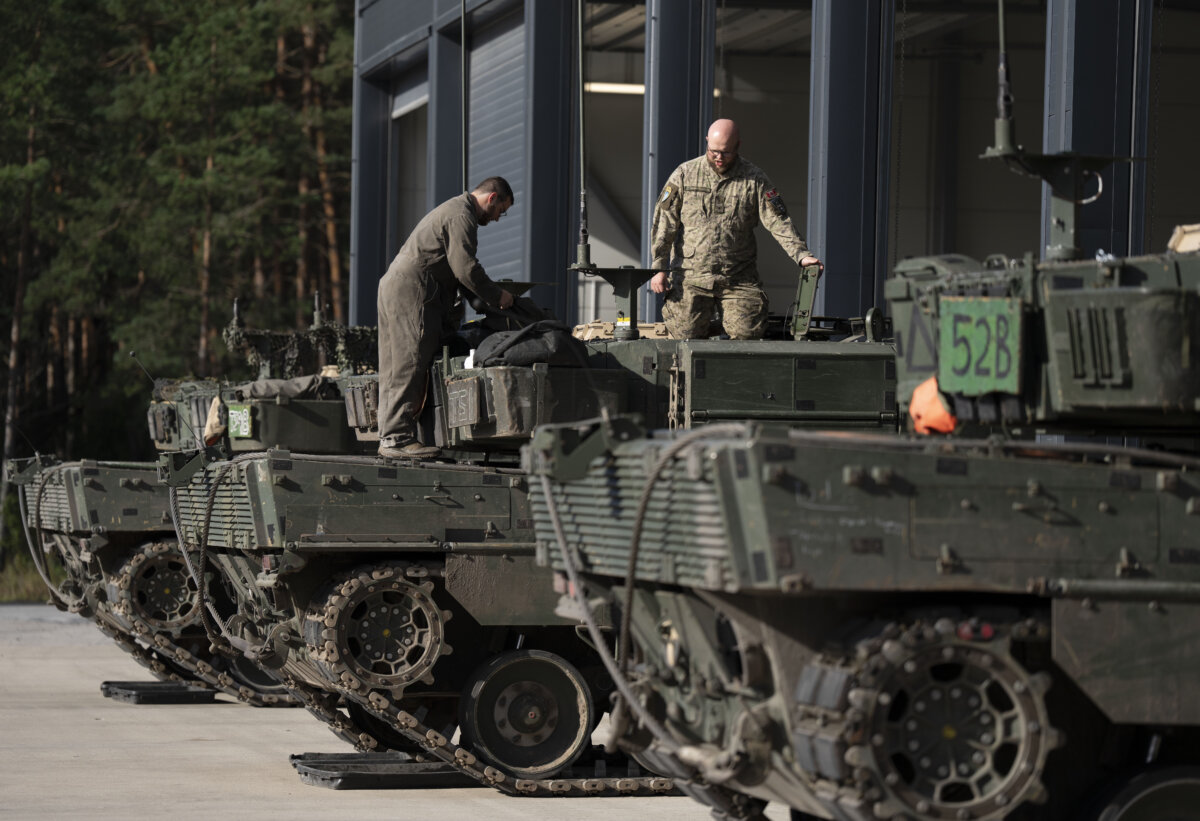
Ships must sail. Aircraft must fly. Ammunition stocks must be replenished. Northern infrastructure must be built in concrete and steel. Industrial capacity must scale beyond pilot programs. And Parliament must insist on a transparent path from dollars committed to capability deployed.
In a harsher world, sovereignty is not assumed. It is constructed through discipline, capacity, and execution. Canada has chosen to invest in its defence. The country now needs proof that it can deliver.
Budgets do not defend a country. Capability does.
Views expressed in this article are the opinions of the author and do not necessarily reflect the views of The Epoch Times.
 Friends Read Free
Copy
Facebook
Tweet
Friends Read Free
Copy
Facebook
Tweet