
Commentary
In light of the U.S. actions in Venezuela, Panama, and Iran over the past year, it’s clear that the world has entered a new era. But it’s not just U.S. intentions and actions that have changed.
China’s offensive capabilities have also evolved with a variety of cutting-edge technological advances that put it on a collision course with the United States both economically and militarily.
‘Intelligentized Warfare’
For more than two decades, Washington largely assumed that America’s technological superiority would remain unchallenged.
That assumption is no longer wise or valid.
Today, the People’s Republic of China is investing enormous national resources into military technologies specifically designed to neutralize America’s traditional strengths rather than mirror them: hypersonic weapons, quantum communications, artificial intelligence (AI), autonomous drones, space-based surveillance and long-range precision strike capabilities.
Taken individually, each technology is significant. Together, they reveal something far more consequential.
China appears to be preparing for a highly networked, information-centric conflict, where speed, automation, and precision are used to overwhelm an opponent before it can respond.
Public assessments by the U.S. Department of War and other analysts increasingly describe these technologies as central to the People’s Liberation Army’s (PLA) modernization effort.
Shrink America’s Decision Time
China is widely regarded as one of the world’s leaders in operational hypersonic missile development.
Unlike traditional ballistic missiles, hypersonic glide vehicles can maneuver while traveling at speeds exceeding the speed of sound by a factor of five (Mach 5). This makes them more difficult to track and intercept using existing missile defense systems. Analysts note that China has fielded systems such as the DF-17 and continues expanding both land- and sea-based hypersonic capabilities.
Recent reporting indicates Beijing is deploying hypersonic anti-ship missiles across a larger portion of its naval fleet, extending the potential threat to U.S. carrier strike groups operating in the Western Pacific.
The military objective is not necessarily to make aircraft carriers obsolete. Beijing, after all, is building its own fleet of carriers.
Rather, the expressed purpose is to threaten and even eliminate U.S. carriers in order to hinder America’s ability to project power around the world, and in particular, in the Asia-Pacific region.
Protect Command Networks
Another less-publicized area receiving years of sustained investment is quantum communications.
China has built one of the world’s largest quantum communication networks, including thousands of miles of terrestrial quantum links and the pioneering Micius quantum satellite. Recent demonstrations have shown secure quantum key distribution over long distances, illustrating China’s ambition to create resilient, difficult-to-intercept communications.
Quantum key distribution is critical. It can make interception attempts detectable, potentially strengthening command-and-control systems, intelligence sharing, and strategic communications.
While practical limitations remain, defense organizations increasingly view quantum networking as a promising future capability rather than science fiction.
For the PLA, secure communications are essential if cyber-attacks, electronic warfare, or anti-satellite operations disrupt conventional military networks.
Combat Multiplier
Artificial intelligence may ultimately prove even more transformative. According to U.S. War Department assessments, China considers AI a foundational technology for future warfare. It is integrating AI across intelligence analysis, logistics, command support, autonomous systems, and battlefield decision-making.
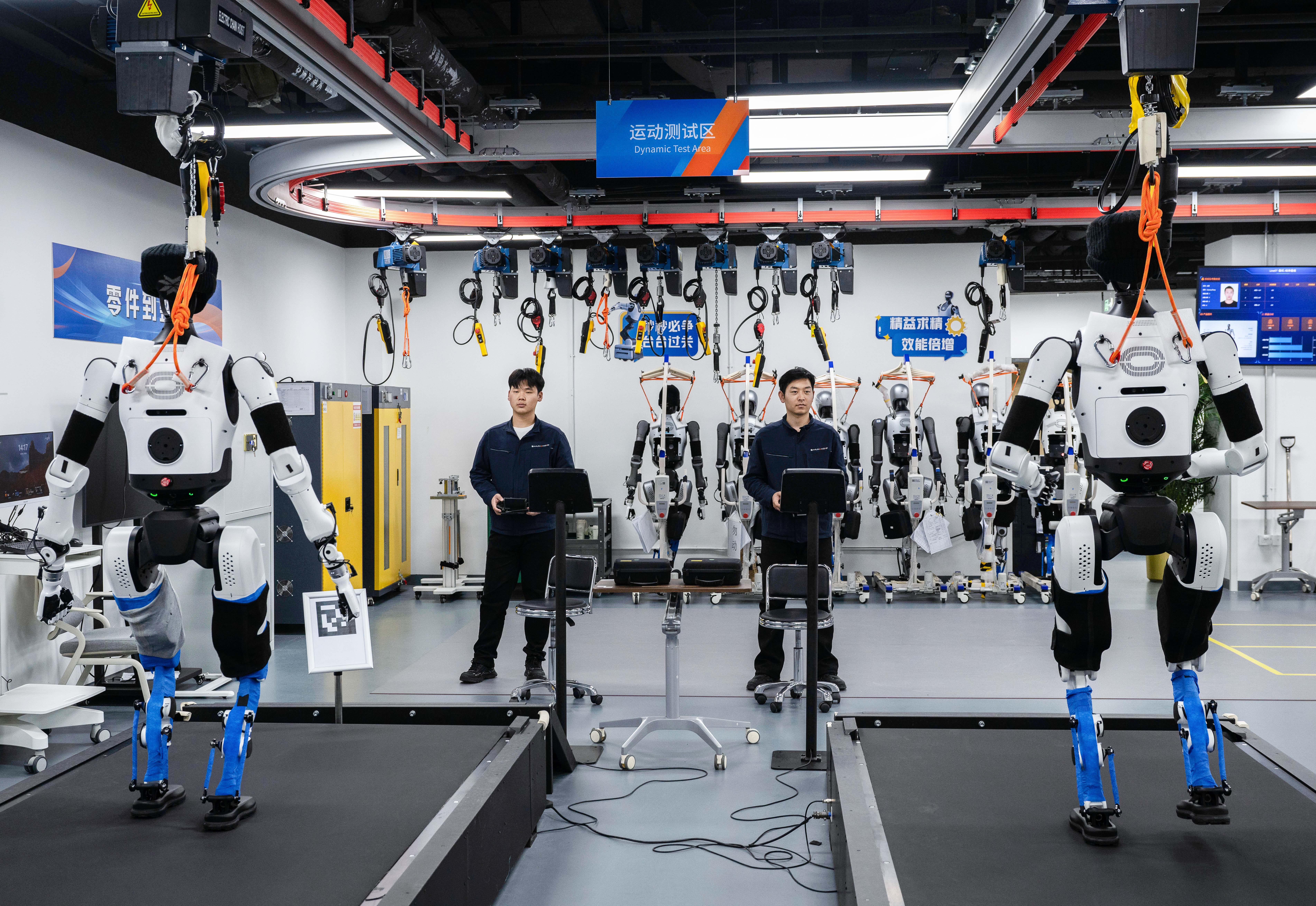 Engineers carry out testing on humanoid robots in the production facility of X-Humanoid at the Beijing Innovation Center of Humanoid Robotics in Beijing, China, on March 20, 2026. (Kevin Frayer/Getty Images)
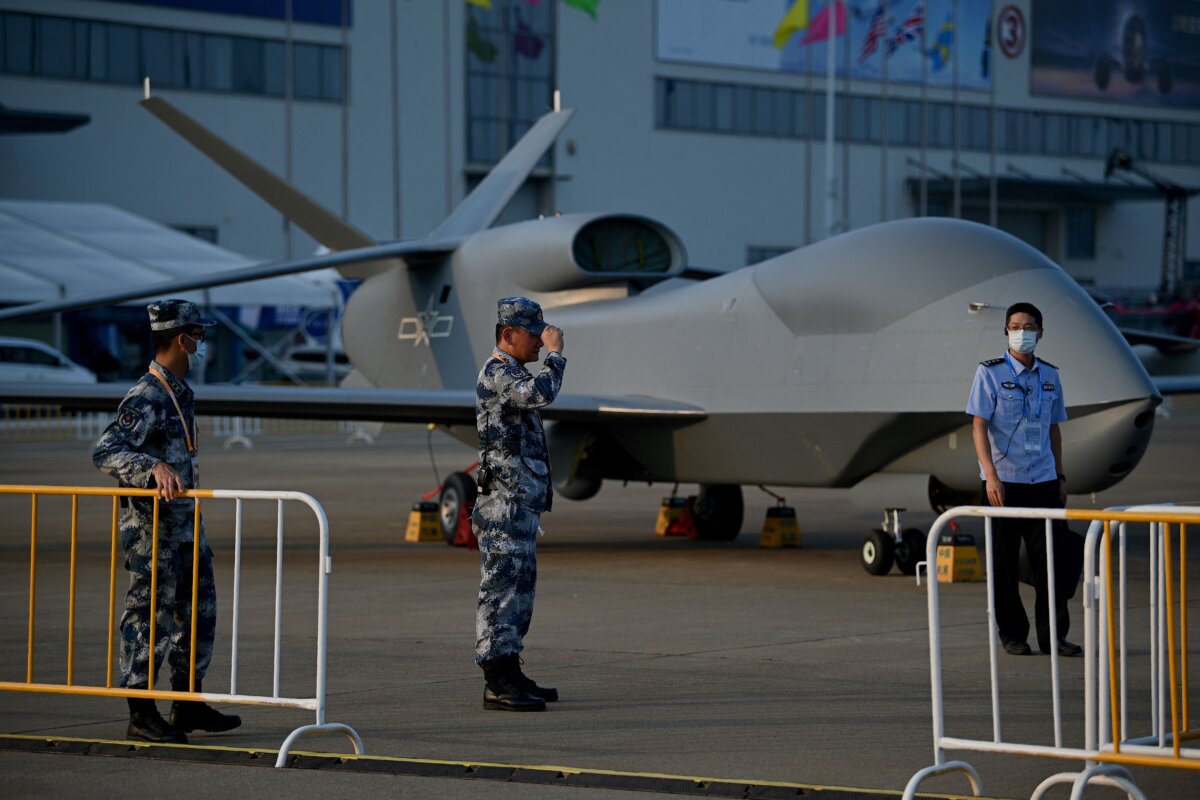
AI-driven autonomous drones represent another major area of investment. Large numbers of relatively inexpensive unmanned systems—working cooperatively with AI—could perform reconnaissance, electronic warfare, decoy missions, or strike operations while reducing risk to personnel.
Integration
Perhaps the most important point is that these technologies reinforce one another. Hypersonic missiles require accurate targeting. Targeting depends upon satellites, drones, sensors, and intelligence. Artificial intelligence helps fuse this information quickly. Quantum communications could help protect command networks transmitting that information.
Together, these technologies form what military analysts increasingly describe as an integrated “kill web” rather than a simple linear kill chain, linking sensors, communications, AI-assisted analysis, and precision weapons into a resilient combat network. That integration may matter more than any single weapon.
China Is Preparing
No one outside China’s senior leadership can state with certainty what Beijing intends to do. However, the capabilities it is building provide important clues about the kinds of conflicts for which it seeks to prepare.
The PLA’s modernization appears focused on competing in highly contested environments where space, cyber, electronic warfare, precision missiles, autonomous systems, and information dominance all play central roles. U.S. defense assessments consistently identify Taiwan and the broader Indo-Pacific as key planning scenarios.
Rather than seeking a prolonged global war, many analysts assess that China aims to deter U.S. intervention. If deterrence fails, Beijing’s strategy may be to rapidly complicate American military operations by threatening forward bases, ships, logistics hubs, and command networks early in a conflict.
This assessment remains an interpretation based on publicly available evidence, not a confirmed statement of Chinese intent.
Could Economic Pressure Increase Military Risk?
The United States has increasingly employed tariffs, export controls, semiconductor restrictions, and investment screening to slow China’s technological rise.
These measures have intensified strategic competition, but they do not necessarily make military conflict more likely by themselves.
Most analysts continue to assess that Beijing prefers to avoid direct war with the United States because of the enormous economic, political, and military costs involved. However, history shows that periods of heightened economic rivalry can coincide with increased military signaling, coercion, and gray-zone activities.
If Beijing believed that its advanced missile forces, AI-enabled command systems, or secure communications provided meaningful regional advantages, those capabilities could strengthen deterrence, support coercive diplomacy, or influence crisis decision-making.
Whether leaders would choose to employ them in a direct conflict would depend on many variables—including political objectives, alliance responses, escalation risks, and assessments of U.S. capabilities.
New Military Paradigm
The strategic competition between the United States and China is no longer defined solely by economic output or the size of their militaries.
It increasingly revolves around who can collect information fastest, secure communications most effectively, process intelligence most intelligently, and deliver precision effects before an adversary can react.
China’s investments in hypersonic weapons, quantum communications, artificial intelligence, autonomous systems, and integrated military networks suggest an emphasis on speed, resilience, and information advantage in future conflict.
These capabilities do not guarantee military success and many remain untested in combat. Nevertheless, together they represent one of the most significant shifts in the global military balance in decades.
One hopes that U.S. defense planners are taking these threats seriously.
Views expressed in this article are the opinions of the author and do not necessarily reflect the views of The Epoch Times.
 Friends Read Free
Copy
Facebook
Tweet
Friends Read Free
Copy
Facebook
Tweet