
Commentary
Two pieces of news collided last week. They speak to a crucial issue in American life today, namely whether and to what extent the household is growing richer.
The first concerns the big annual survey conducted by the Census Bureau. It’s a critical measure that reveals how well the American family is doing. Adjusted for inflation, the bureau clocks a rising household income at 2.6 percent from 2024 to 2025.
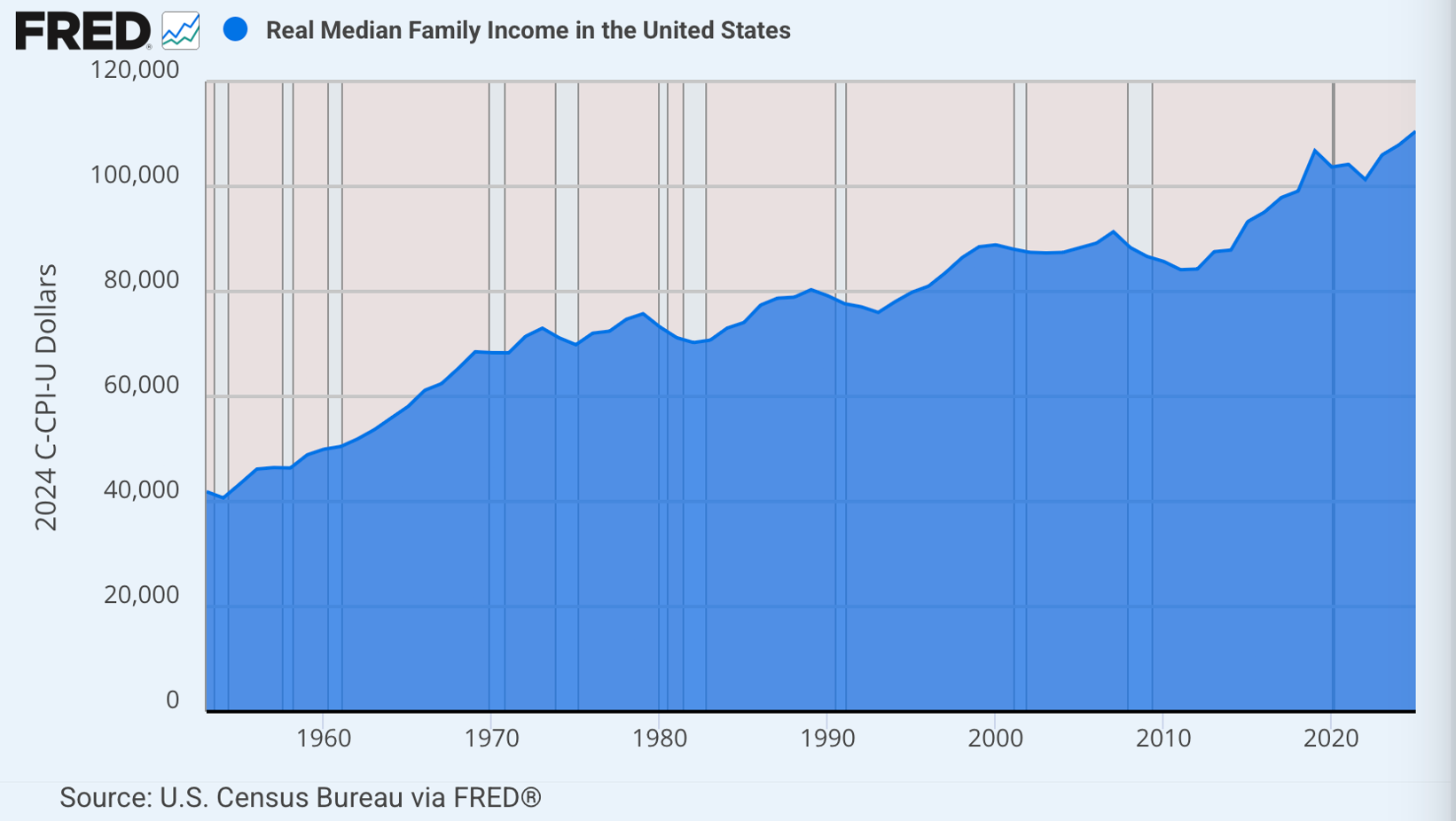
I know what you are thinking: This doesn’t seem quite real. For reasons that are hard to put one’s finger on sometimes, few actually feel richer now than two years ago. As it turns out, there are devils in the details.
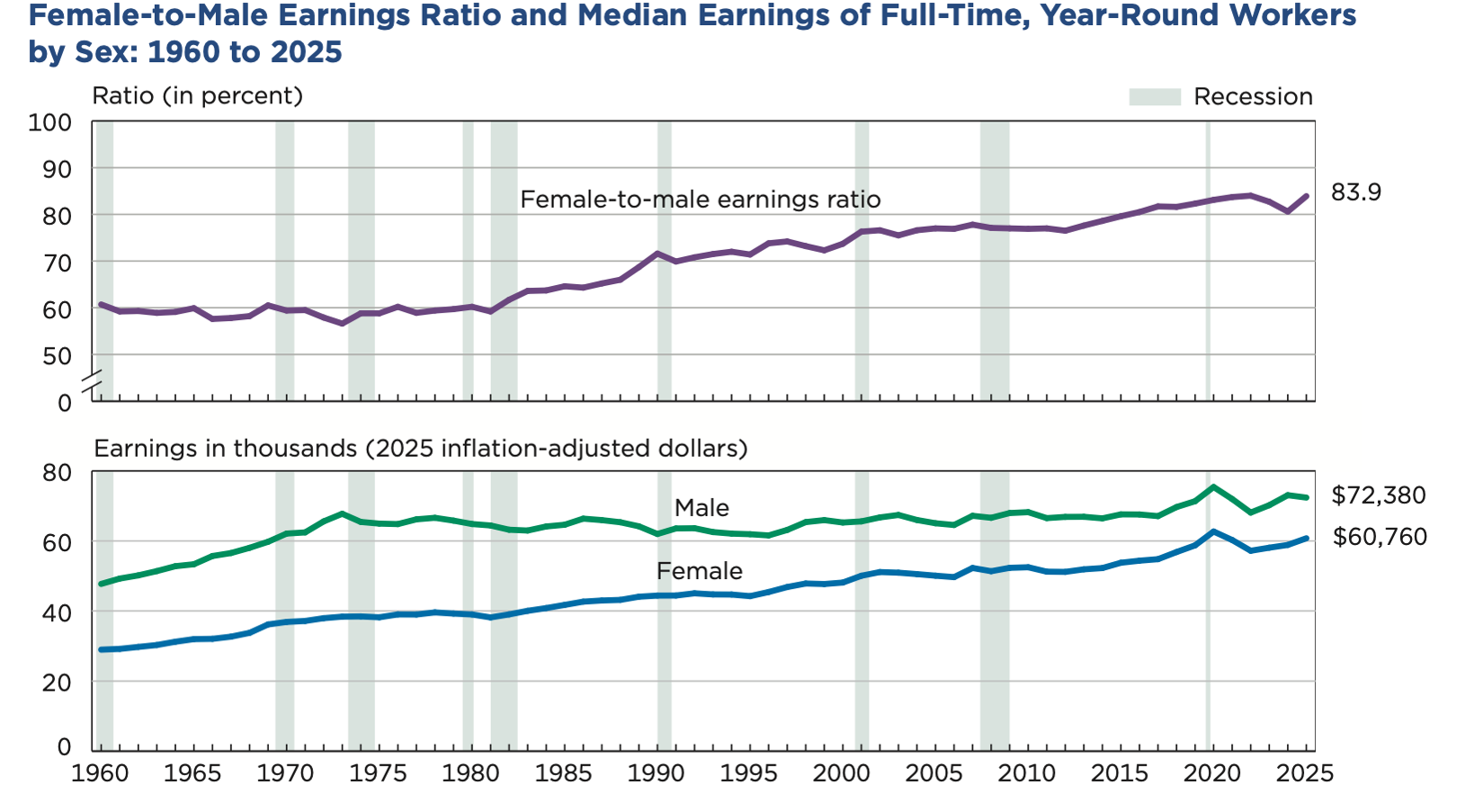
For one thing, Americans worked more. The number of men working full-time grew by 1.3 million and by 800,000 for women, The Wall Street Journal reported. However, the total number of workers increased by much less: 230,000 for men and 130,000 for women. This means that part-time workers increased their hours, perhaps because wages weren’t keeping pace with inflation. Meanwhile, median earnings for full-time male workers fell by $690 while rising by $1,900 for full-time female workers.
In fact, the earnings of men have been sideways since 1974. Using a 2014 dollar anchor, we can find maybe a 5 percent rise, but using a 2026 dollar, all gains in a half-century are gone.
Meanwhile, earnings have risen dramatically for women. The ratio between the two is tightening ever more.
If you are working twice as much or are forced to turn a part-time income into a full-time one just to keep up, a measly 2.5 percent increase might not be enough to make up for the loss in living standards you experience in real life.
I often think of the household in which I grew up when I was a boy. My father, ever the idealist, was assistant principal of an elementary school. His salary alone was enough to support my mother and two kids, as well as own a house and two cars. We spent the summers traveling and fishing. The weekends were for music, sports, and exploring rural areas outside of town. For nearly half of American families in the 1960s, this was the common model.
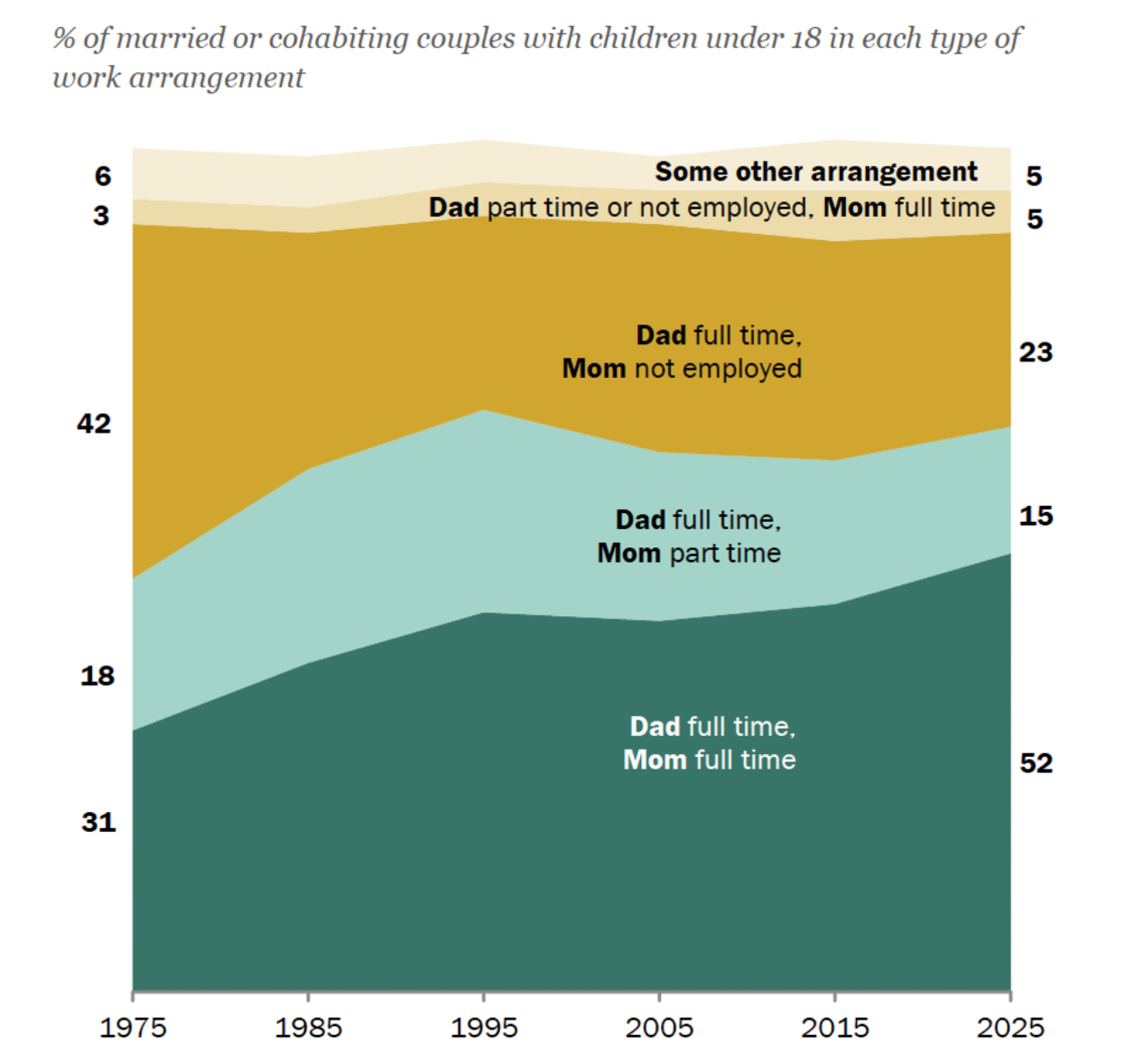
These days, that is considered impossibly idyllic. Indeed, only about 23 percent of American households can come anywhere near this level of domestic tranquility with just one source of income. These are mostly rich people, not middle-class people like we were. For families like mine when I was young, having just one paycheck and owning a home is now utterly impossible.
For the grimmer truth, let’s turn to a survey that barely even made the news but appeared a few months ago by Pew Research: “How family work arrangements have changed over time.” This is what should really draw our attention.
This survey documents the following. Married couples with children younger than 18 in which both parents work full-time rose from 31 percent in 1975 to 46 percent in 2015 to 52 percent in 2025. That is now the most common arrangement—that is to say, more typical than not.
This is the first time in American history in which that critical turning point has been reached. Married couples with children younger than 18 in which the dad works full-time and the mom is not employed fell to 23 percent in 2025 from 42 percent in 1975. It appears that the biggest change is that women working part-time have shifted since the lockdowns to become full-time workers.
The overall picture is one of complete upheaval in homelife, marketed to us as increased income.
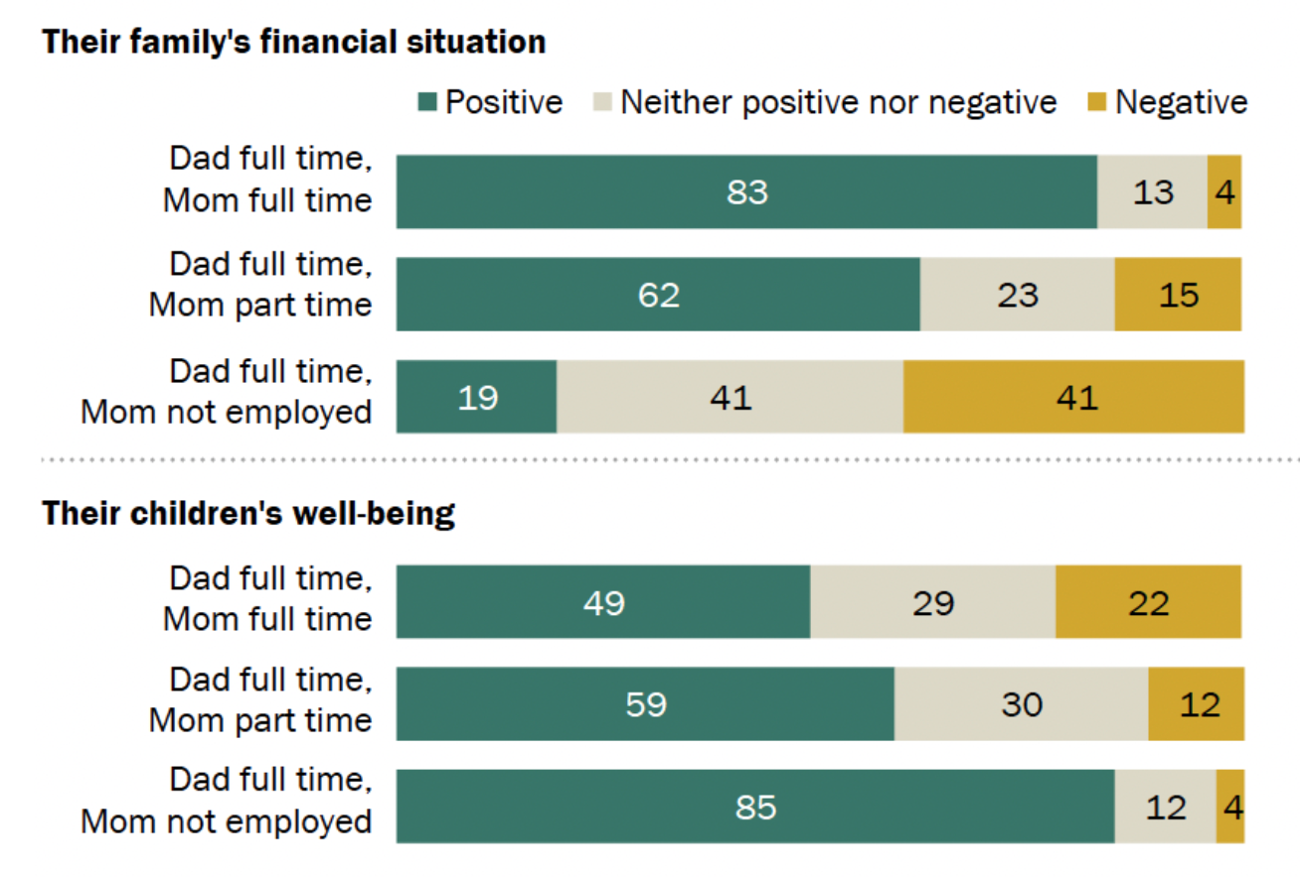
The survey reports that households with two incomes report financial benefits. Obviously. Otherwise, very few families would make this choice. It is different when it comes to children. The survey reads:
“Most in families where the dad works full time and the mom isn’t employed (85 percent, again reflecting dads’ views) say this arrangement has been good for their children. … Parents in families where both work full time are less likely to see a positive impact on their children’s well-being.”
That just about sums it up. We have chosen to maximize overall household income at the expense of domestic bliss and the well-being of children.
The answer came back, but the data are sketchy, to say the least. In 1975, the household worked 2,846 hours per year combined. In 2018, this has gone up by 600 hours to 3,446, while full-time dual-earner couples specifically work 4,000 combined hours per year. That was eight years ago. We can only speculate what the situation is today.
There is another factor at work. All these calculations use mainstream data on inflation, which is likely underreported by a third. Once we add that in, we are looking now not at an increase but a dramatic decrease, especially when considering hours worked. We would likely generate a total trend of flat household living standards since 1975. In short, in half a century, we’ve seen no gains in household prosperity at all. To prove it would require more statistical chops than I have.
My own frustration here traces to the way economists are looking at this data. They are considering only household output without looking at how that output is obtained. This strikes me as professional malfeasance, an actual betrayal of their vocations.
Imagine that you had a job working 40 hours per week and making $100,000 per year. Now the boss comes to you with a requirement that you increase your hours worked by 50 percent, but he gives you only a 25 percent increase to $125,000.
Has your living standard gone up or down? Your effective wage per hour has been cut by 16.7 percent. You are worse off, even if you bring in more income. You no longer have control of 20 hours that you used to use for reading, spending time with kids, gardening, or playing sports.
Your life has been upended.
This is the proper framing for what has been going on for decades. Household earnings as measured by hours worked are down dramatically, even if overall earnings appear to be up. The household in 1973 worked roughly 2,300 hours compared to 4,000 today.
This has worsened since 2020 as economic conditions and inflation drafted more women in particular into full-time work to feed the government’s voracious appetite for revenue. It’s coming at the expense of the single most important unit in any society, the household.
Views expressed in this article are the opinions of the author and do not necessarily reflect the views of The Epoch Times.
 Friends Read Free
Copy
Facebook
Tweet
Friends Read Free
Copy
Facebook
Tweet