
Commentary
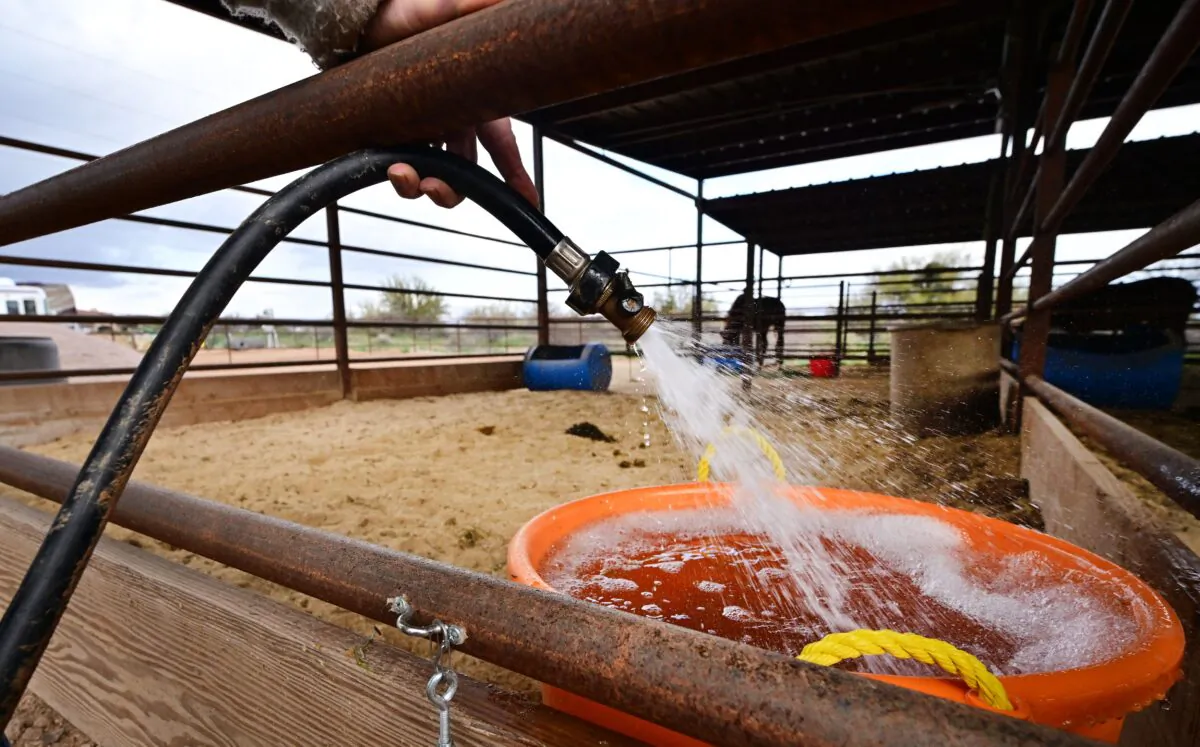
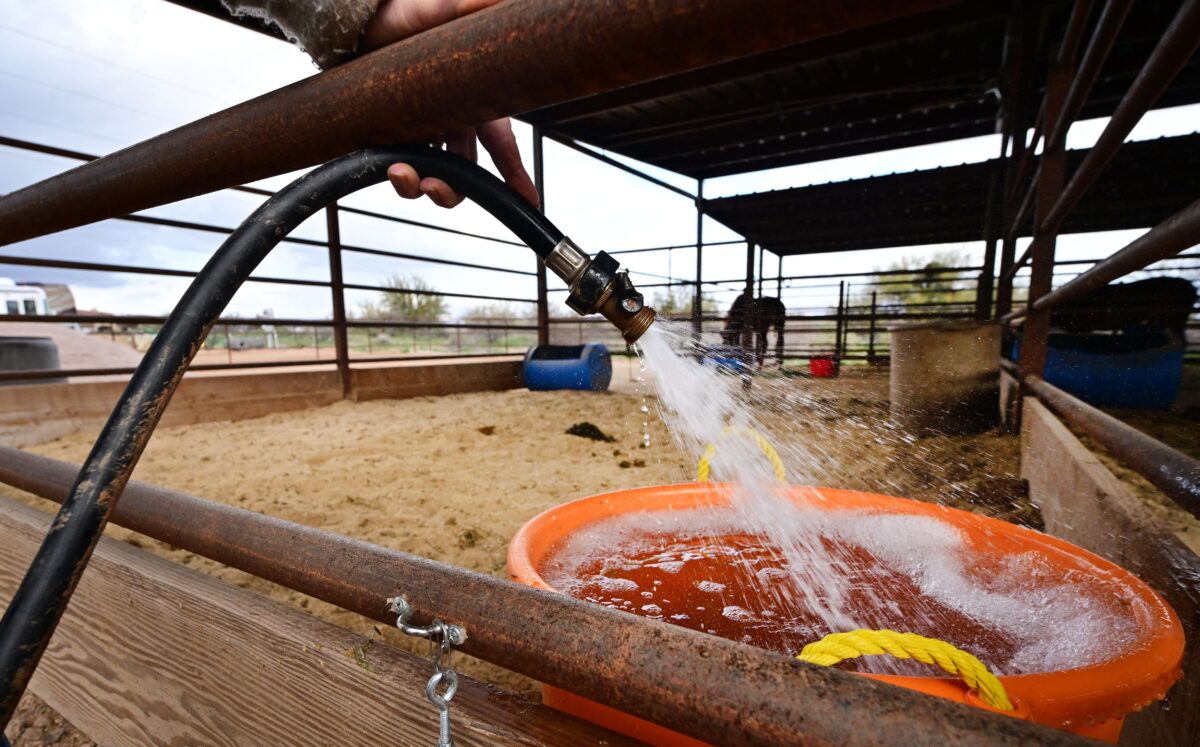
For most Americans, water comes out of a faucet so reliably that it barely enters conscious thought. For farmers, water determines whether the next generation gets to stay on the land.
That is what sits underneath the legal battle surrounding Fode Farms in eastern Washington. Not simply a dispute over permits or paperwork, but a deeper question about what America intends to prioritize as water becomes more scarce.
The Fode family farms in the Odessa region of eastern Washington, where irrigation transformed dry ground into one of the most productive agricultural regions in the country. At its height, Fode Farms stretched across roughly 4,000 acres of owned and leased land in Grant County. Ron and Robin Fode spent nearly four decades building the operation while raising four children there. The farm produced crops, including timothy hay, alfalfa, and potatoes, in a region that now helps feed millions of Americans.
For families like the Fodes, water is not an abstract environmental discussion or a political slogan. Water determines whether fields produce crops, whether equipment payments get made, whether employees can stay working, and whether children have the opportunity to continue farming into the next generation.
Like much of the American West, the Odessa region depends on groundwater systems that have been under pressure for decades. Washington regulators argue that strict enforcement is necessary to protect declining aquifers and existing water rights. Farmers argue they are being crushed under systems so complex and expensive that even longtime agricultural operators can struggle to navigate them without risking financial ruin.
What strikes me most about the Fode Farms case is not simply the question of water rights. It is the growing realization that modern regulatory systems increasingly favor the largest players while slowly squeezing out independent food producers.
Most regulations arrive wrapped in honorable language. Protect the environment. Preserve safety. Manage resources responsibly. Those goals matter. But over time, complexity itself becomes a kind of filter.
Large corporations can hire teams of attorneys, engineers, consultants, compliance officers, and lobbyists to navigate evolving systems. Family farms cannot.
For a major technology company, new regulations become another line item in a budget backed by billions of dollars in capital. They can redesign cooling systems, negotiate infrastructure agreements, purchase offsets, and continuously engineer new efficiencies.
Farmers do not operate that way.
Most farms live much closer to the edge than the public understands. A bad drought, rising fuel prices, a broken tractor, feed inflation, fertilizer costs, processing bottlenecks, labor shortages, or interest rates can wipe out years of work. Farmers are already constantly adapting, improving efficiency, and taking on risk.
Food production, in my mind, should be treated as a national security infrastructure. A nation unable to feed itself is not secure, no matter how advanced its technology becomes.
Yet increasingly, we appear willing to prioritize speculative digital growth over the physical systems that keep human beings alive.
Washington State is simultaneously tightening pressure on farmers while expanding housing developments, municipalities, and energy-intensive industries, including large-scale data centers, throughout parts of the same region. The Columbia Basin has become a major hub for server farms and artificial intelligence infrastructure due to its access to cheap hydropower and land.
The question nobody seems willing to ask plainly is this: Do we value food production in the same way we value data?
The obvious answer appears to be no.
We are willing to strain electrical grids that are already creaking under rising demand. We are willing to devote enormous amounts of water and infrastructure toward speculative future data profits. We are willing to dry out aquifers in some of the driest parts of the country to support industries promising the next technological revolution.
At the same time, we regulate many farmers as though food production itself is the problem.
Washington itself acknowledges that agriculture uses the majority of the state’s water. Critics often stop the conversation there, as though that fact alone ends the debate. But agriculture also feeds people. That distinction matters.
A potato field and a server farm may both consume water and electricity, but only one produces food.
A housing development may permanently remove productive farmland while creating long-term water demand of its own. Yet increasingly it is the farmer who is framed as the primary threat to sustainability rather than the endless expansion of consumption itself.
The deeper tension beneath the Fode Farms case is not simply whether one family followed every step of an extraordinarily complicated regulatory process. It is whether modern America still recognizes food production as essential infrastructure worthy of protection.
Because once independent farms disappear, they rarely come back.
The land gets consolidated. Production gets centralized. Communities hollow out. Families leave. And control over food shifts further away from the people actually producing it.
We often speak about resilience while building systems that are increasingly fragile. We talk about sustainability while making it nearly impossible for smaller producers to survive. We celebrate innovation while forgetting that no technology can replace the foundational necessity of food.
Perhaps the real question underneath all of this is not how much water farming uses, but whether we still believe feeding human beings is a priority worth defending.
Views expressed in this article are the opinions of the author and do not necessarily reflect the views of The Epoch Times.
 Friends Read Free
Copy
Facebook
Tweet
Friends Read Free
Copy
Facebook
Tweet