
Commentary
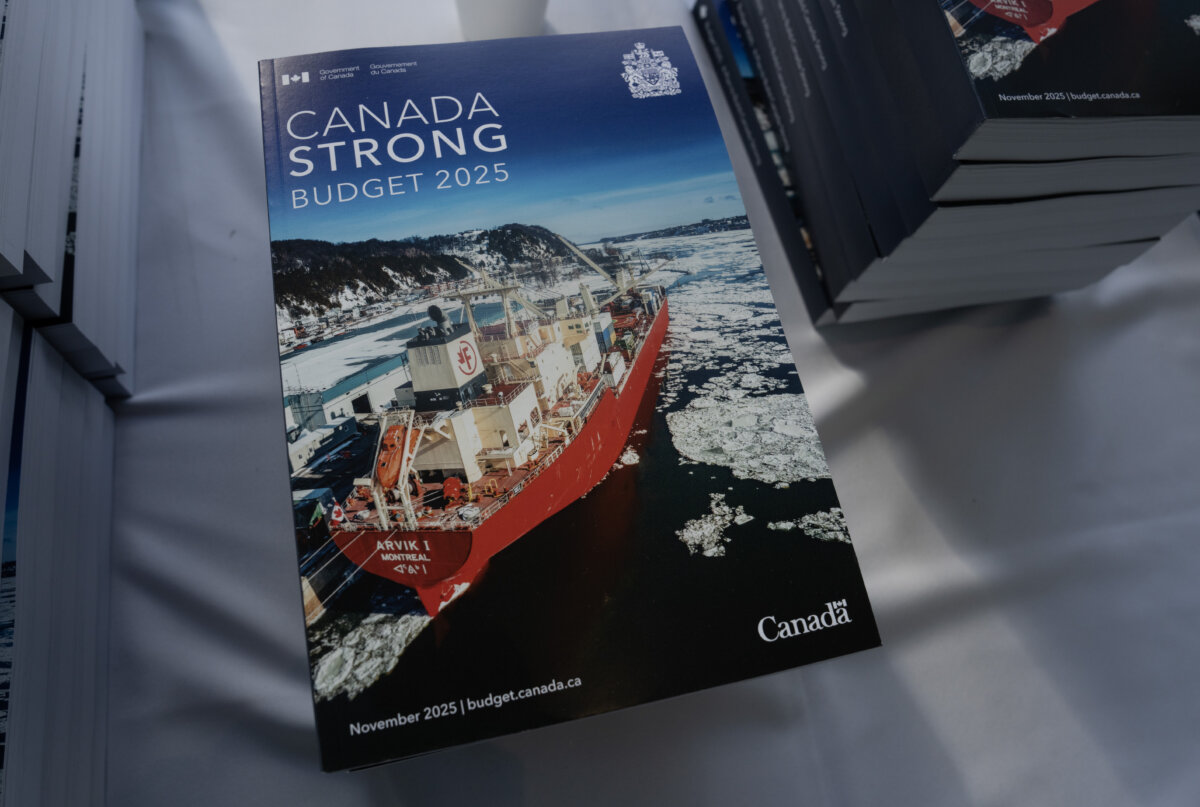
Amidst the fanfare of Tuesday’s dramatic budget announcement, the federal government’s first three-year Immigration Levels Plan has thus far received comparatively little attention—despite being included inside the budget itself (usually, the Levels Plan is released as a stand-alone announcement).
On page 95 of the 406-page budget, we find the 2026-2028 Immigration Levels Plan. It promises that the focus will be on “taking back control over the immigration system and putting Canada on a trajectory to bring immigration back to sustainable levels.”
On temporary admissions—foreign workers, international students, and asylum seekers—the plan appears to accomplish this goal. The plan pledges to “reduce the target for new temporary resident admissions from 673,650 in 2025 to 385,000 in 2026, and 370,000 in 2027 and 2028”—a significant cut of nearly 300,000.
The plan explains that this reduction in temporary resident admissions is part of the federal government’s goal to “reduce the total number of temporary residents to less than five per cent of Canada’s population by the end of 2027.”
Permanent resident admissions, however, are another story. The 2026-2028 Immigration Levels Plan projects 380,000 new permanent residents annually for 2026, 2027, and 2028. By contrast, in the 2025-2027 plan (the last one introduced under the Trudeau government), the intake of new permanent residents was projected to fall to 365,000 by 2027.
In other words, while temporary resident admissions will decline, permanent resident admissions are set to rise beyond the number envisioned by the previous Liberal government.
At a rate of 380,000 per year, there will be slightly over 1.1 million new permanent residents over the three-year period encompassed by this new Immigration Levels Plan.
Some of these new permanent residents will be drawn from the pool of temporary residents already on Canadian soil.
In October 2024, the Trudeau government announced that 40 percent of new permanent residents in 2025 would come from the population of temporary residents already in Canada. The Carney government seems to be following this same approach, with Tuesday’s Immigration Levels Plan promising “a one-time measure to accelerate the transition of up to 33,000 work permit holders to permanent residency in 2026 and 2027.”
While focusing some portion of permanent resident admissions on the temporary resident population already in the country will moderate population growth, a yearly volume of 380,000 is still well beyond Canada’s capacity to integrate and assimilate.
Because immigration levels rose so significantly under the previous government, the current government is able to portray an annual permanent resident admission rate of 380,000 as contributing to an effort to “bring immigration back to sustainable levels.” Zooming out to a longer timeline, this is actually still a dramatically high figure.
In 2010, for instance, Canada under the Harper government welcomed 280,636 new permanent residents—100,000 fewer than the federal government’s new rate announced on Tuesday.
What is really notable is that the rate in 2010 was already the highest in 50 years. Astonishingly, what was a record-setting immigration rate in 2010 is substantially lower than what has become par for the course in 2025.
As a result of high immigration, immigrants accounted for 23 percent of the Canadian population in the 2021 Census—nearly one in four people in the country were born abroad. In the next 2026 Census, this number will be even higher—though the exact percentage is as of yet unknown.
Economically and socially integrating this swelling population of immigrants—our obligation and duty as a host society—is becoming ever more difficult as the volume increases.
Some instances of assimilation not working properly are dramatic, such as last year’s spate of violent clashes between different ethnic groups in Brampton or a shocking brawl in Calgary between rival factions in 2023.
Other instances are less dramatic, but no less troubling. In the Calgary Board of Education’s 2026-2027 Budget Priorities, we learn that 31 percent of students in the city are English language learners. According to the Board, that is one of the factors for why “classrooms are becoming increasingly complex, creating barriers for learning.”
These are the everyday difficulties of integrating a rapidly growing foreign-born population that go underreported, but strain our institutions considerably.
There is a threshold at which assimilating an infusion of newcomers into a society goes from being a possible challenge to an intractable difficulty, or even an impossibility. We are rapidly reaching that point in Canada.
Setting permanent resident admissions at 380,000 a year, or 1.1 million over three years, will take us further towards that point instead of giving our institutions and social structure some much-needed breathing room.
Views expressed in this article are the opinions of the author and do not necessarily reflect the views of The Epoch Times.
 Friends Read Free
Copy
Facebook
Tweet
Friends Read Free
Copy
Facebook
Tweet