
Commentary
Read Part 1 of this article here.
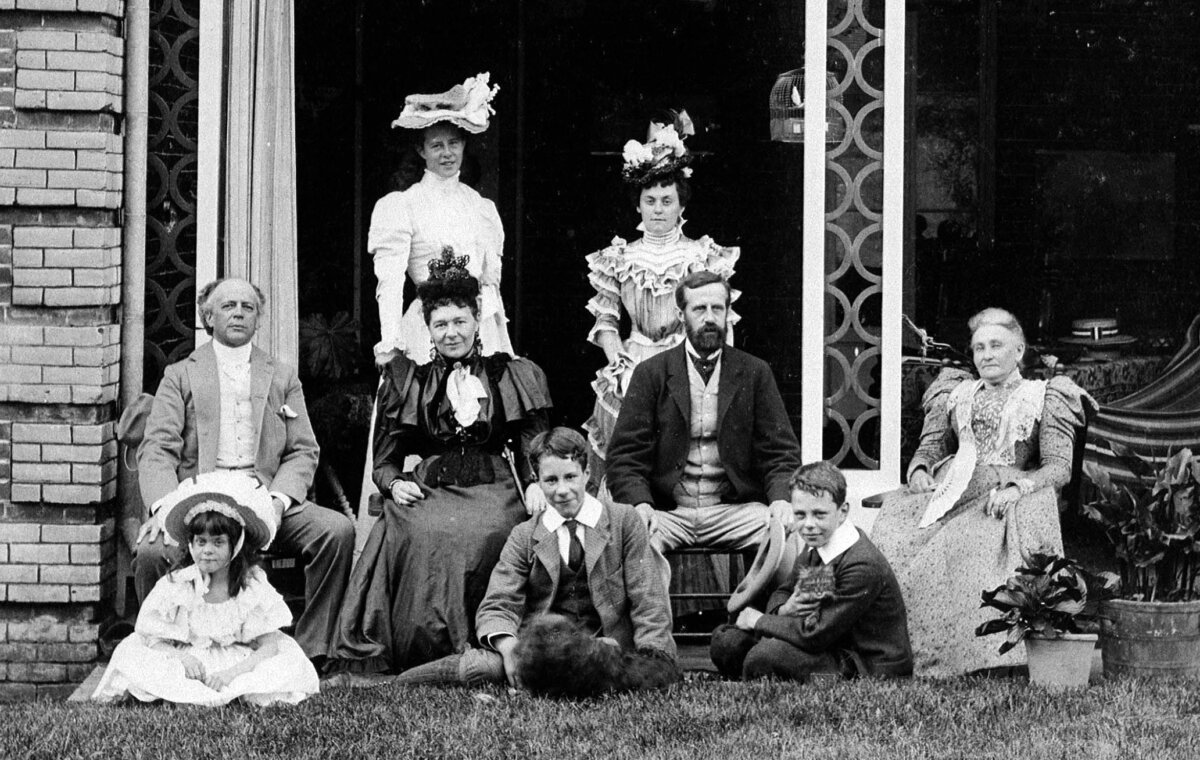
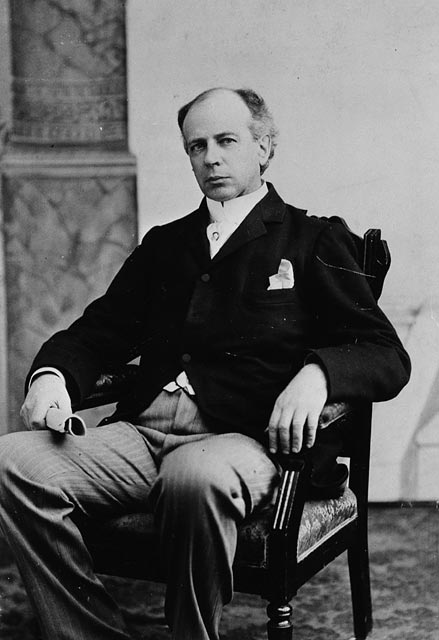
Wilfrid Laurier, 26 years old when Canada was reborn as a federal Dominion in 1867, was a radical Rouge who opposed Confederation. But by 1896 he was prime minister of Canada. Did his victory and ascent to the chief executive office represent a coup d’état by the Rouge element of Quebec liberalism? To some extent it did. In another way, his achievement was to bequeath to his successor, William Lyon Mackenzie King, a durable political party that put victory ahead of anything else. Despite his Rouge Party roots, one thing did temper Laurier—the discipline of power.
The first test came in 1896 with the long-unresolved Manitoba Schools Question. Laurier became prime minister in July of that year after defeating an exhausted Conservative regime. The problem in the West was similar to the problems that the Founding Fathers tackled in the 1860s. Would the rights of minorities be protected? Would an English-speaking Protestant majority impose a universal “neutral” system that was de facto Protestant? Would the government impose conformity and a single standard for all?
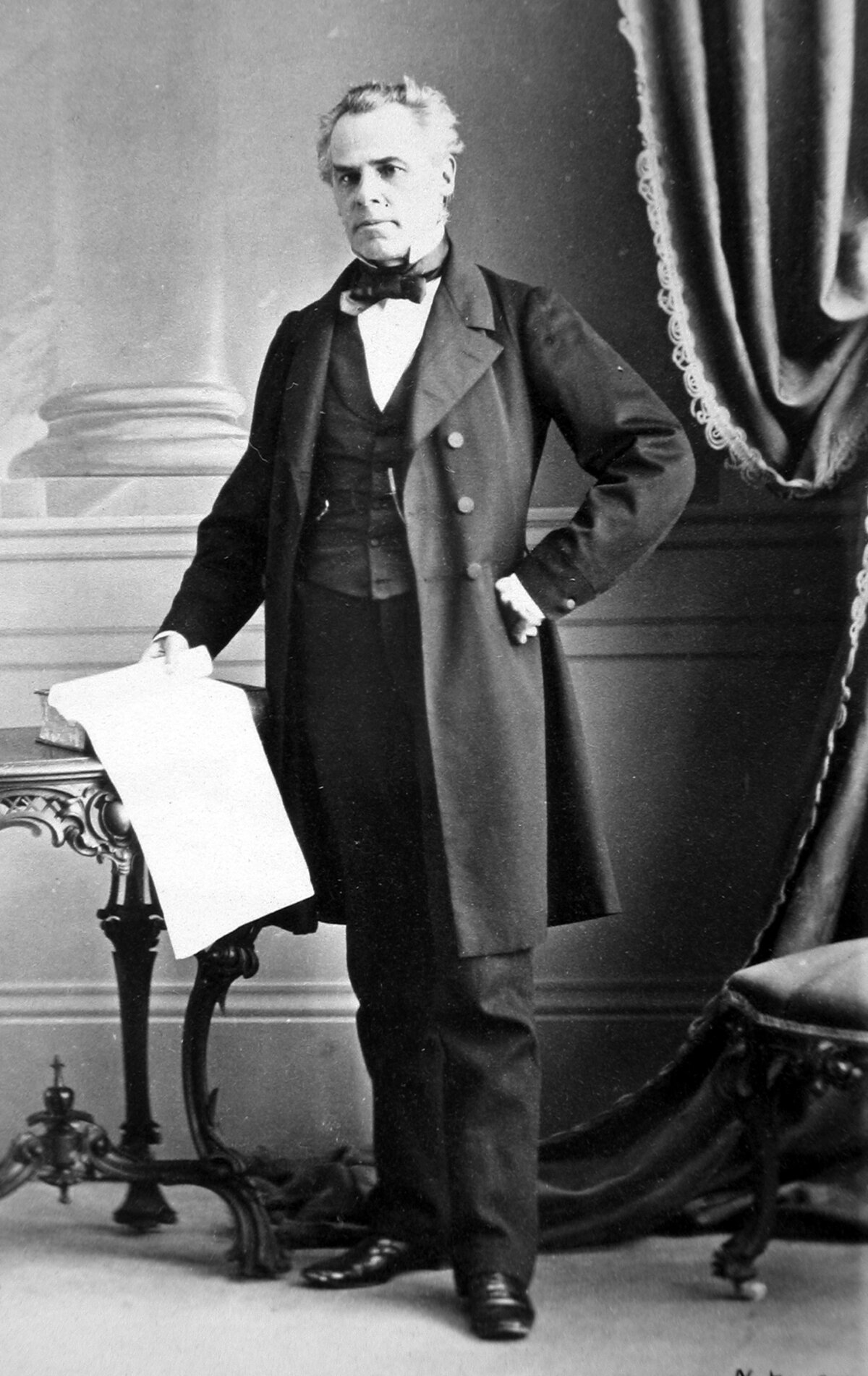
John A. Macdonald is known for favouring a strong central government. But his conservatism, guided by his friend and mentor George-Étienne Cartier, balanced the interests of Protestant and Catholic, English and French, Province versus Dominion—the magic formula of Confederation. Cartier’s vision for Manitoba, before his untimely death in 1873, was that it would be a French and Catholic province in the West to counterbalance the predominant English ones.
Laurier turned Ottawa’s back on the Cartier vision. Through aggressive immigration in the 1870s and ’80s, Manitoba had become majority Protestant: Ontario’s first colony. The Liberal government headed by Thomas Greenaway brought in two bills in 1890, “one abolishing French as an official language and the other setting up a non-denominational school system controlled and financed by the state.”
Conscious of the need to build a new political coalition that could replace the Conservatives, Laurier positioned the federal government against Catholic parents in Manitoba—many of them the original Métis settlers—siding with the Protestant-English majority. This was Canadian realpolitik.
Ironically, the Vatican under Pope Leo XIII, in the person of his emissary, Rafael Cardinal Merry del Val, stood with the Protestant majority. Leo’s policy—after decades of church-state conflict since the French Revolution that saw two counterrevolutionary popes kidnapped by Napoleon—was that Bishops should not antagonize governments. This gave Laurier “cover” from Rome to let pragmatism trump fairness.
All of this was ironic, because a major turning point in the fortunes of the Liberal Party, and thus in Laurier’s ascent to high office, was the Conservative government’s decision to proceed with the execution of Louis Riel, rather than commute the death sentence. Ottawa’s medical review board found Riel not responsible for his actions, but officials redacted and omitted key medical findings by Dr. François-Xavier Valade. Riel was hanged in 1885.
The Laurier Liberals took full political advantage of this, replacing Cartier conservatism in Quebec with Laurier liberalism. Since 1885, the Liberals have for the most part had a lock on Quebec’s federal voters, using divide-and-conquer tactics, for example, by telling French Canadians they were against the British Empire but telling English Canadians they were in favour of it.
Laurier again scuppered a balanced federation in the West. This came about when Westerners proposed forming one large province out of the Prairie districts of the North-West Territories—a Western province strong enough to stand alongside Ontario and Quebec.
The head of the movement for provincial status was Sir Frederick Haultain. Sitting on the territorial executive committee at Regina and later as attorney general, he was de facto premier of the North-West Territories in the 1890s. Born in England with a French Protestant background (Huguenot), when his father (a former British Army officer who became a Clear Grit in Upper Canada) died, young Fred moved West with $40 in his pocket. At the time, publisher Frank Oliver said Westerners lived under a “despotism” like the “serfs of Siberia.” Now a prosecutor, Haultain got into politics and represented Fort MacLeod in the Territorial Council, which Macdonald elevated to a legislature in 1888 when he was the prime minister.
Haultain’s ambition was that the North-West Territories would be established as one big Prairie province, to be called “Buffalo,” with control of its natural resources. It would be “the largest province and the most powerful province in the greatest and most glorious country attached to the mightiest empire the world has ever seen.” Haultain was a proud Canadian—until Wilfrid Laurier was finished with him.
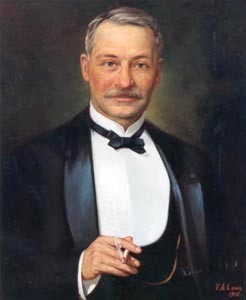
Haultain was a Tory, and Laurier decided instead to divide N.W.T into two smaller dependent provinces, Saskatchewan and Alberta. Spitefully, Laurier next blocked Haultain from becoming premier, choosing a lesser-known Liberal backbencher, Walter Scott. And so, from the very start, Prairie citizens felt lorded over by an Ottawa that practised “divide and conquer.”
In time, Haultain regained his prestige and became Chief Justice of Saskatchewan’s superior court. He was knighted in 1916 under a Conservative federal government, but he remains a neglected figure. A significant example is the failure to produce an official national biography of Haultain. Go to the Dictionary of Canadian Biography, which has fine biographies of many lesser figures, and you find this message with Haultain’s name: “This biography is not yet available–2026 University of Toronto/Université Laval.” When publisher Mel Hurtig brought out the original sets of the Canadian Encyclopedia, Westerners noticed that the editors had conspicuously left out Haultain.
Views expressed in this article are the opinions of the author and do not necessarily reflect the views of The Epoch Times.
 Friends Read Free
Copy
Facebook
Tweet
Friends Read Free
Copy
Facebook
Tweet