
Commentary
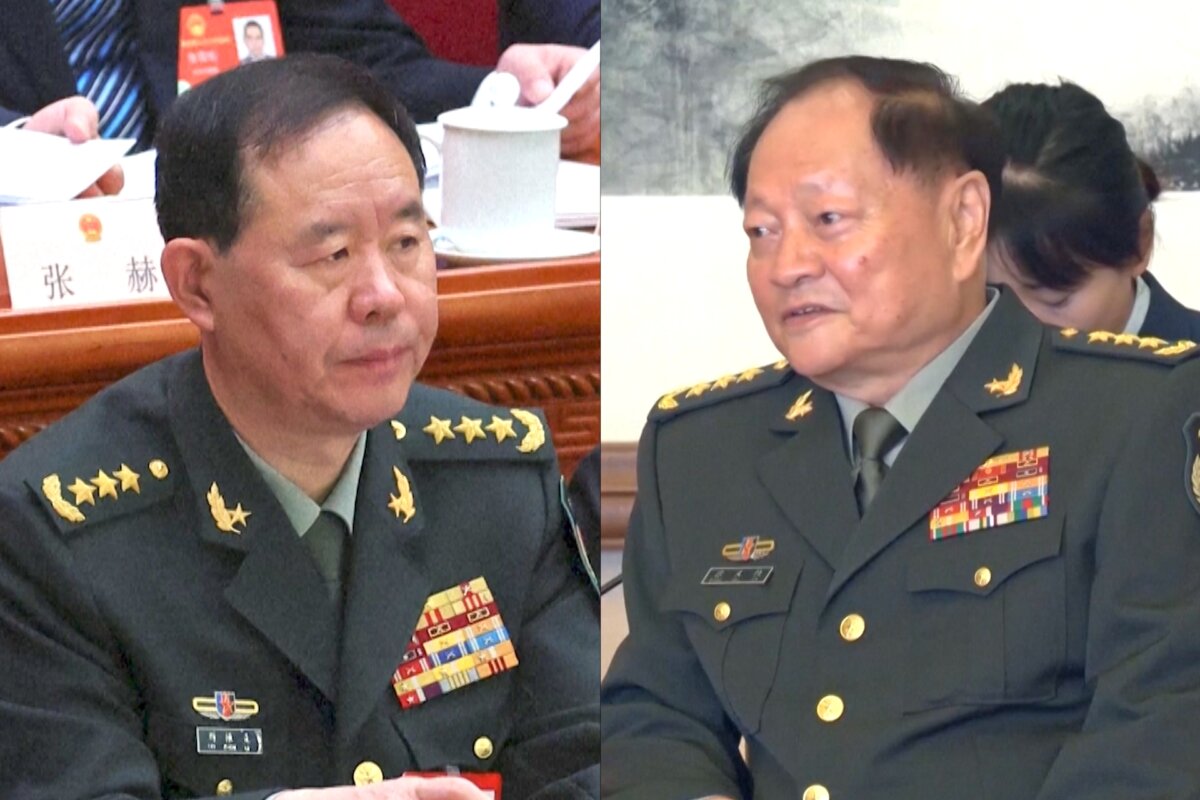
On Jan. 20, Zhang Youxia and Liu Zhenli—two of China’s highest-ranking military leaders—were found absent from the opening of a study session for provincial- and ministerial-level officials of the Chinese Communist Party (CCP).
Zhang is a vice-chairman of the Central Military Commission (CMC) and a member of the CCP’s top decision-making body Politburo. Liu is a member of the CMC and is the chief of staff of the CMC’s Joint Staff Department.
Four days after their absence, the CCP’s Ministry of National Defense announced that both were under investigation for “serious violations of discipline and law.” Such a quick move broke with the CCP’s usual practice of keeping the fate of disappeared senior officials in secrecy for long periods of time. Coming at the start of the new year, it also unexpectedly shattered the political stalemate that Zhongnanhai had been struggling to maintain.
Zhang, believed to be among the very few who are able to challenge CCP leader Xi Jinping, was preparing another push against Xi ahead of the CCP’s “Two Sessions,” its top political meetings, that were to be held on March 5. Instead, they were struck first and brought down.
Intensified Power Struggle Between Xi and His Military Opponents
On Oct. 17, 2025, the Chinese Ministry of National Defense announced the purging of nine senior military figures—including CMC vice chairman He Weidong and former CMC Political Work Department head Miao Hua, who are believed to be Xi’s allies in the military. The announcement came only three days before the fourth plenary session of the CCP’s 20th Central Committee, which was held last year from Oct. 20 to Oct. 23.
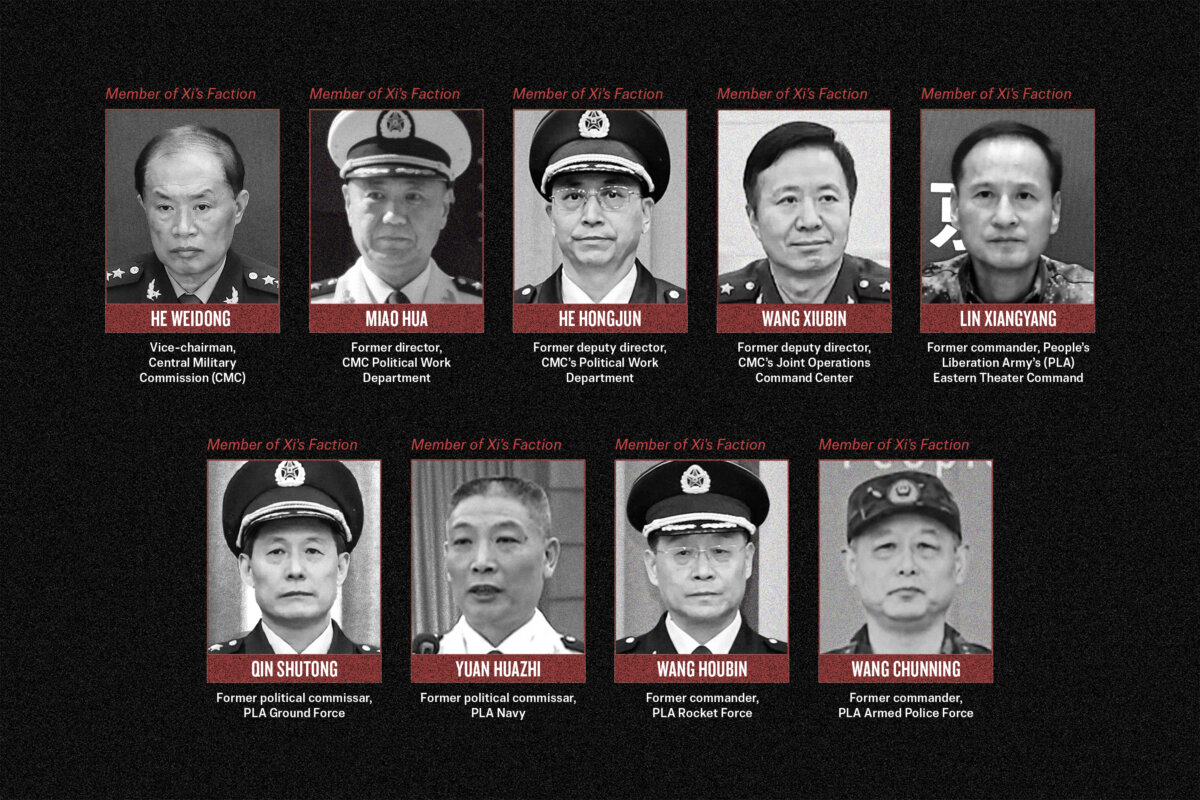
This is a failed challenge by Xi’s opponents in the military, because Xi did not lose any military position or title. After the purging, the originally seven-member CMC has two active members left: Xi as CMC chairman and newly promoted CMC Vice Chairman Zhang Shengmin.
Zhang Shengmin’s promotion to the CMC as a vice chairman is regarded as a temporary win for Xi, as Zhang is considered a member of Xi’s “Shaanxi Gang” and a supporter of Xi in the military. But he didn’t become a member of the CCP’s Politburo like his predecessor, He Weidong.
This political stalemate has suggested an upcoming fierce struggle within the CCP’s party and military factions, which can no longer be concealed.
The public exposure of internal splits signals that the CCP’s effort to maintain its existence is faltering—and that the regime is entering its final phase.
Zhang and Liu: In Whose Hands Now?
A recent report by Vision Times claims that Cai Qi has led the investigation of Zhang Youxia. If true, this would mark a complete breach of CCP internal norms, with non-military factions forcibly intervening in the affairs of the People’s Liberation Army (PLA).
In previous cases involving He Weidong and Miao, announcements explicitly stated investigations were handled by the CMC’s Discipline Inspection Commission—not the civilian Central Commission for Discipline Inspection. This time, however, the Ministry of National Defense’s announcement of the probe against Zhang and Liu made no mention of CMC approval, raising questions about whether the CMC Discipline Inspection Commission is truly in charge.
If the Central Guard Bureau, Ministry of Public Security, Central Commission for Discipline Inspection, or even state security organs took the two senior military officers, handing them over to the CMC Discipline Inspection Commission would be very unlikely, as the two generals have their own supporters in the military.
Should Xi have relied on non-military forces for this aggressive counterstrike to reclaim control of the army, it would amount to an admission that he lacks reliable, trustworthy figures within the PLA itself.
Operationally, it is extremely difficult for outsiders to apprehend senior military leaders like Zhang and Liu, who are heavily guarded. Their personal security details would not surrender easily. However, when attending central meetings or events—such as the Jan. 20 provincial-ministerial study session—they enter the Central Guard Bureau’s domain and could be taken by non-military personnel.
If Zhang Youxia and Liu remain under CMC Discipline Inspection Commission custody, Zhang Shengmin would presumably continue overseeing their cases as internal military matters. The next steps would depend on whether Zhang Shengmin follows only Xi’s orders or receives conflicting instructions.
Another possibility: the disappearance of Zhang Youxia and Liu was not driven by Xi’s camp but by desperate CCP elders. If Zhang and Liu were planning another challenge or showdown at the upcoming Two Sessions and had informed party veterans in advance, the elders—prioritizing regime survival—may have moved to detain them to prevent chaos, avoiding a situation where the military, or “the gun,” controls the party. Such a temporary alliance between the generals, such as Zhang and Liu, and the elders would then collapse. This could explain why the Defense Ministry announcement referred only to “the Party Central Committee” and omitted any mention of the Central Military Commission.
How Will the Endgame Play Out?
The political deadlock at the CCP’s fourth plenum in October 2025 had already locked the regime into a dead end. Three months later, the seven-member CMC has shrunk to just two, turning PLA governance into a shattered battlefield—and potentially the beginning of a terminal phase for the entire regime. The intensity of the power struggle has far exceeded outside expectations.
If this was a counterstrike orchestrated by Xi’s camp, it looks like a desperate, last-ditch effort to save themselves when their position was already crumbling. Whether they can actually regain control of the military remains far from certain. Virtually all the generals Xi personally promoted to upper ranks have been wiped out. Forcing mid-level lieutenant generals upward to fill the vacancies won’t guarantee loyalty—especially when those same men see their predecessors falling one after another. No one is likely to pledge genuine allegiance in such circumstances.
Should Xi’s faction succeed in this pushback and target not only military figures but also party elders—particularly those from Hu Jintao’s Communist Youth League faction—then the real bloodshed may only be starting. Even if Xi’s group did not directly mastermind these investigations, they are almost certain to seize the moment to turn the tables. The elders will have no choice but to respond, and Beijing’s political chaos will be unavoidable. In the end, it is still unclear who will succeed in the fight for power—and that uncertainty points to a chaotic, out-of-control political endgame that no one can contain.
At the start of 2026, with the CCP’s fierce infighting rapidly spilling into the open, it is reasonable to expect that this political wreckage will accelerate the collapse of the red dynasty far sooner than anticipated.
Views expressed in this article are the opinions of the author and do not necessarily reflect the views of The Epoch Times.
 Friends Read Free
Copy
Facebook
Tweet
Friends Read Free
Copy
Facebook
Tweet