
HOUSTON—Artemis II arrived in lunar space shortly after midnight on April 6, marking the start of humanity’s first visit to another celestial body in this millennium.
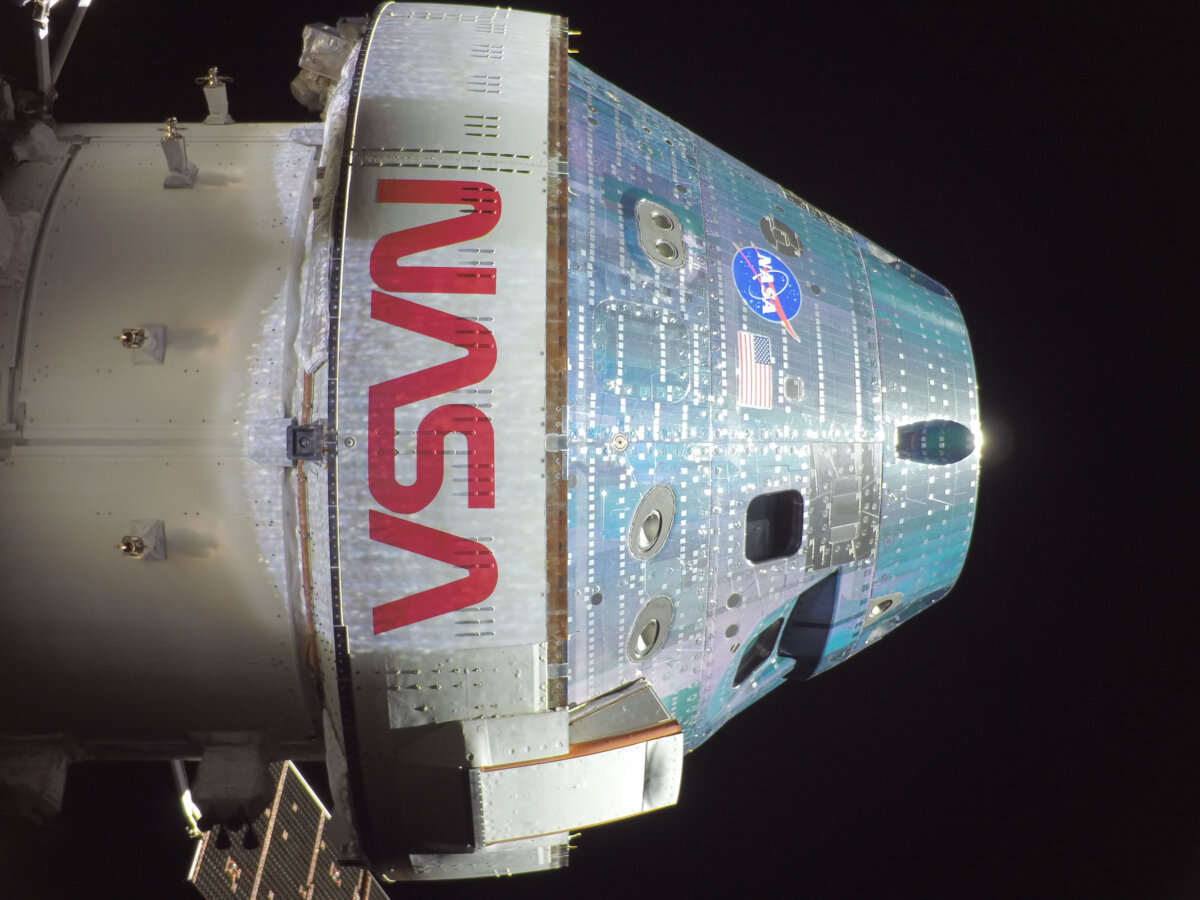
NASA confirmed that the Orion spacecraft, named Integrity, carried NASA astronauts Reid Wiseman, Victor Glover, and Christina Koch, and Canadian Space Agency astronaut Jeremy Hansen across the seminal threshold, where lunar gravity takes control of the ship, around 12:37 a.m. ET.
Artemis II’s 10-day flight plan lacks a surface landing like Apollo 11 and parking in lunar orbit like Apollo 8. But flight director Rick Henfling and Lori Glaze, acting associate administrator of NASA’s Exploration Systems Development Mission Directorate, told The Epoch Times that the moment lunar gravity takes control is the moment Integrity arrives at the moon.
Artemis II’s lunar science lead, Kelsey Young, meanwhile, told The Epoch Times that the arrival point will not come until the crew reaches its closest point to the lunar surface.
That closest approach of just more than 4,000 miles is to come later, around 7 p.m. ET on April 6 after the crew has their sleep period, and begins their historic lunar flyby.
Along with making their closest approach on the mission, the astronauts’ flyby will set a new record for the farthest distance humans have ever traveled from Earth. They will observe areas of the far side of the moon that have never been seen firsthand by human eyes, witness a complete solar eclipse, and see the first Earthrise since the days of Apollo from 1968 to 1972.
As they entered the moon’s gravitational grasp, the four-person Artemis II crew also set a new record for the largest crew to enter lunar space. All of the previous Apollo missions that came more than 50 years before it only had three-person crews.
The crew also includes the first woman and the first black man to reach the moon. Hansen, meanwhile, set three firsts on his own: the first Canadian, and first non-American overall to reach the moon, as well as the first person to speak a language other than English (French) in deep space and lunar space.
The foursome is also the oldest crew to fly to the moon, exceeding Alan Shepard, who was 47 when he walked on the moon on Apollo 14. Wiseman, 50, is now the oldest man to reach lunar space, followed closely by Hansen, who is only about two months younger. Glover is 49, and Koch matches Shepard at 47.
The crew recognized and expressed joy at the potential impact these firsts could have on future generations dreaming of space. But they saw these demographic milestones more as superlatives, and emphasized that they were going on the mission for all.
“I also hope we are pushing the other direction, that one day we don’t have to talk about these firsts,” Glover said in a pre-launch press conference. “That one day … this is human history. It’s about human history. It’s the story, not black history, not women’s history, but that it becomes human history.”
Glover, Wiseman, Koch, and Hansen will remain in lunar space until 1:25 p.m. ET on April 7, when they will begin their return to Earth.
Integrity’s arrival in lunar space capped off the fifth day of the mission, which featured operational checks of the crew’s pressurized suits, more preparations for the upcoming lunar flyby, and the first necessary course correction burn of the mission. It was a successful 17.2-second burn of the service module’s auxiliary thrusters.
It began with more Easter greetings from the crew to Earth, and a message to the crew from Apollo 16 astronaut Charlie Duke.
“John Young and I landed on the Moon in 1972 in a lunar module we named Orion,” Duke said. “I’m glad to see a different kind of Orion helping return humans to the Moon as America charts the course to the lunar surface.”
 Friends Read Free
Copy
Facebook
Tweet
Friends Read Free
Copy
Facebook
Tweet