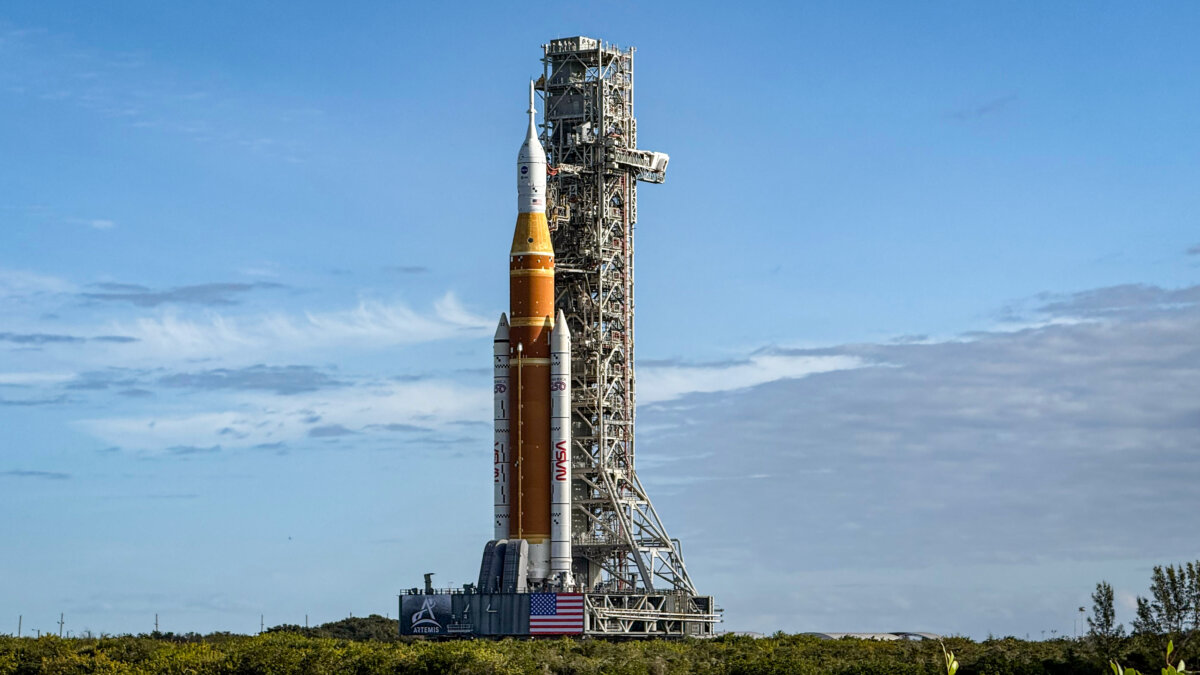

NASA began moving its moon rocket off the launch pad and back to the Vehicle Assembly Building (VAB) at the Kennedy Space Center on Feb. 25, the latest in a series of delays for Artemis II’s upcoming lunar mission.
The rocket’s 12-hour crawl back served as a visual confirmation that the launch could no longer take place in early March.
It also put the next available launch window, the first week of April, into question.
“The quick work to begin preparations for rolling the rocket and spacecraft back to the VAB potentially preserves the April launch window, pending the outcome of data findings, repair efforts, and how the schedule comes to fruition in the coming days and weeks,” NASA stated in its mission updates.
“Once it arrives, technicians will establish platforms to diagnose the helium flow issue to the rocket’s upper stage and fix it,” the agency added.
The latest malfunction appeared to be an inability to flow helium through the rocket’s upper stage.
This is a smaller rocket engine that will put the Artemis II crew in the correct orbit around Earth and set future missions on their course from the Earth to the Moon.
NASA Administrator Jared Isaacman explained that helium is a necessary element that ensures fuel tanks are properly pressurized, among other things.
Unlike the fuel leak, the helium flow cannot be fixed on the launch pad.
Artemis II is slated to be the first manned flight around the Moon in more than 50 years.
Originally anticipated for Feb. 6 and then Feb. 8, the launch of the manned test flight of the new Orion spacecraft was pushed back to no earlier than March 6.
That first delay was caused by a fuel leak, which ground teams repaired at the launch pad.
Mission leaders’ hopes for a March launch were high as recently as Feb. 20, after initial analysis showed that the 50-hour mandatory launch dress rehearsal was a success, and they were looking ahead to the multi-day launch readiness review.
However, less than 24 hours later, the helium malfunction was discovered, despite having worked properly through the dress rehearsal.
Isaacman said the issue appeared similar to one confronted on the unmanned Artemis I mission nearly four years ago.
As of Feb. 25, NASA has not released a timeline projecting how long the repair will take and when teams can expect the rocket to return to Launch Complex 39B.
The space agency is expected to hold a press conference in the coming days on the rollback and the Artemis II mission.
“I understand people are disappointed by this development,” Isaacman said in a post on X.
“That disappointment is felt most by the team at NASA, who have been working tirelessly to prepare for this great endeavor.”
“The president created Artemis as a program that will far surpass what America achieved during Apollo,” he added.
“We will return in the years ahead, we will build a moon base, and undertake what should be continuous missions to and from the lunar environment.
“Where we begin with this architecture and flight rate is not where it will end.”
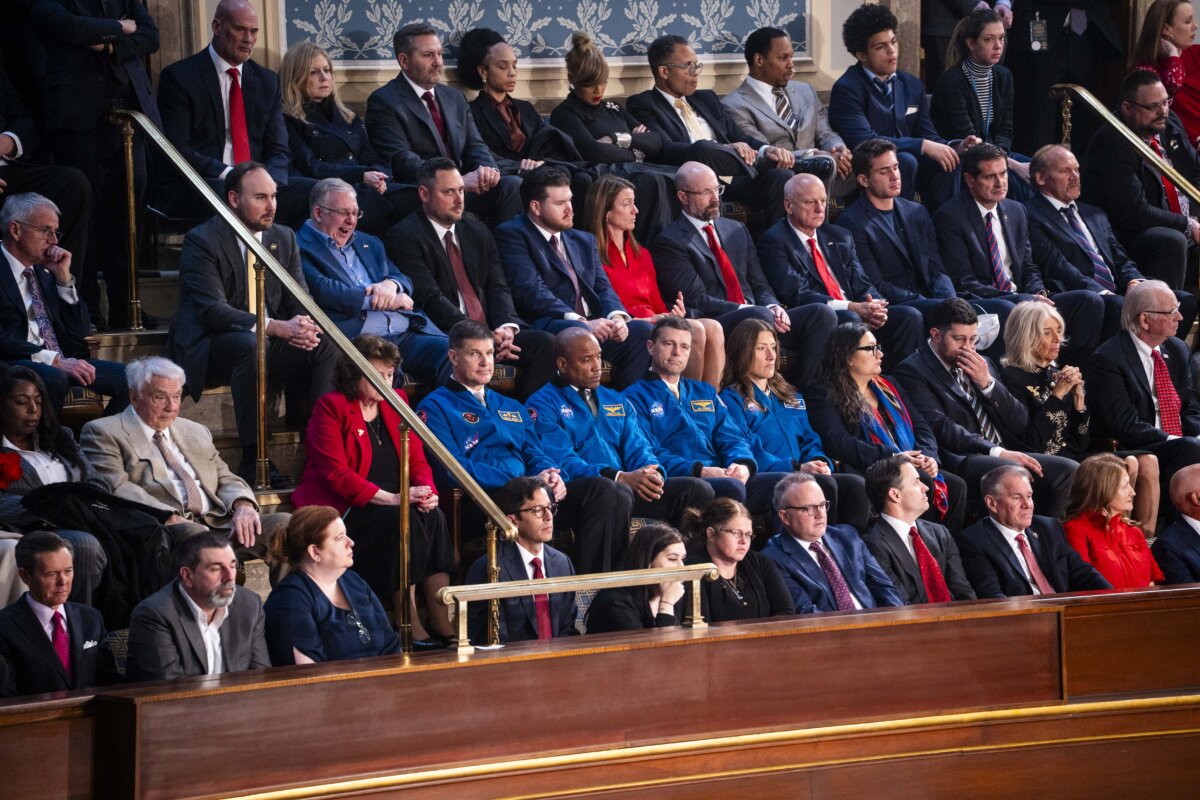 NASA Artemis II crew attends President Donald Trump’s first State of the Union address during his second presidential term, in the House Chamber on Capitol Hill in Washington on Feb. 24, 2026. (Madalina Kilroy/The Epoch Times)
In the meantime, the Artemis II crew—NASA astronauts Reid Wiseman, Victor Glover, and Christina Koch, as well as Canadian Space Agency astronaut Jeremy Hansen—were released from their pre-flight quarantine on Feb. 21, and will continue training.
They attended the State of the Union address on Feb. 24 as guests of House Speaker Mike Johnson (R-La.).
Isaacman was also in attendance.
 Friends Read Free
Copy
Facebook
Tweet
Friends Read Free
Copy
Facebook
Tweet