
The federal government’s bail and sentencing reform bill has become law, bringing more than 80 changes to the Criminal Code in a bid to address organized crime and violent and repeat offending.
The Bail and Sentencing Reform Act, previously known as Bill C-14, received royal assent on June 15. The legislation amends the Criminal Code, the Youth Criminal Justice Act, and the National Defence Act, aiming to make bail laws stricter and toughen sentencing laws for repeat and violent offenders.
The law creates new reverse onuses for major crimes such as auto theft, breaking and entering, human smuggling, and sexual assault. This means the accused would need to show why they should be released on bail, instead of prosecutors needing to prove the accused should be detained.
It also requires courts to consider additional factors at bail hearings, such as whether the alleged violence was random or unprovoked, and whether the accused has numerous or serious outstanding charges.
The law also introduces tougher sentencing laws for repeat and violent crime, such as car theft, break and enter, extortion, and arson. Consecutive sentences will be imposed for those found guilty of such offences, meaning they will serve one sentence after another instead of serving for multiple offences at the same time.
New aggravating factors will also apply to crimes against first responders, public transit workers, retail theft, and theft or mischief that damages essential infrastructure.
The law also ends house arrest for certain sexual assault and child sexual offences, restores driving bans for manslaughter and criminal negligence causing bodily harm or death, and strengthens fine enforcement.
The justice department says the changes on bail and sentencing will come into force on July 15, while some changes to the Youth Criminal Justice Act will come into force later by order in council.
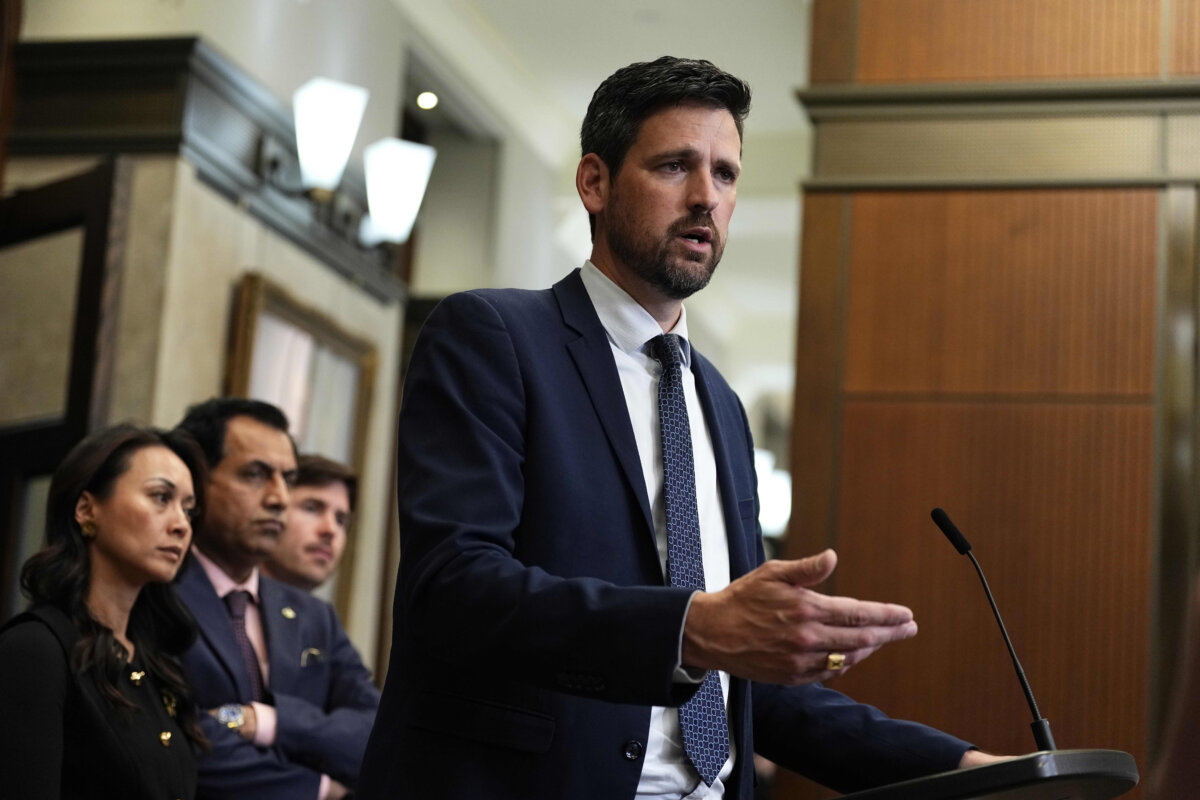
Justice Minister Sean Fraser told reporters on June 16 that the legislation targets some of the “most frequent” causes of concern the government has heard in its engagement with communities across the country.
“This is a piece of legislation that is part of the government’s public safety strategy, designed to make communities across this country safer,” he said.
Fraser added that direct financial support will be provided to provincial governments to “help better collect data in a standardized way when it comes to bail systems in this country.”
He also said he is engaged with provinces on filling two dozen job vacancies for judges, which he noted he expects to be reduced in the “next number of weeks.”
Fraser sent a letter to provincial and territorial governments after the Bail and Sentencing Reform Act became law, noting that provinces and territories are responsible for administering and resourcing key parts of the justice system, including policing, prosecution services, bail courts, bail supervision programs, provincial and territorial courts, jails, and victim services.
“As provincial and territorial governments administer and resource key parts of the justice system, Canadians will now be looking to all orders of government to ensure these new laws are implemented effectively and deliver their intended impact,” he wrote.
Rising Violent Crime
The government introduced Bill C-14 last October under pressure from provinces, law enforcement, and Conservatives to enact reform amid rising violent crime.
The Conservatives have pushed for the government to take further action and remove the principle of restraint, which requires judges to release arrested individuals at the earliest opportunity and under the least onerous conditions.
Tories have also called for reforms to prevent non-citizen criminals from receiving lighter sentences. In several recent cases, judges have given offenders lighter sentences to avoid negatively impacting their immigration status in Canada.
Conservative MP and public safety critic Frank Caputo told reporters that there’s “always more work to be done.”
“Yes, C-14 did something—it may have taken a small step. We don’t want to take a small step—we want to solve the problem,” Caputo said on June 16.
Matthew Horwood and Noé Chartier contributed to this report.
 Friends Read Free
Copy
Facebook
Tweet
Friends Read Free
Copy
Facebook
Tweet