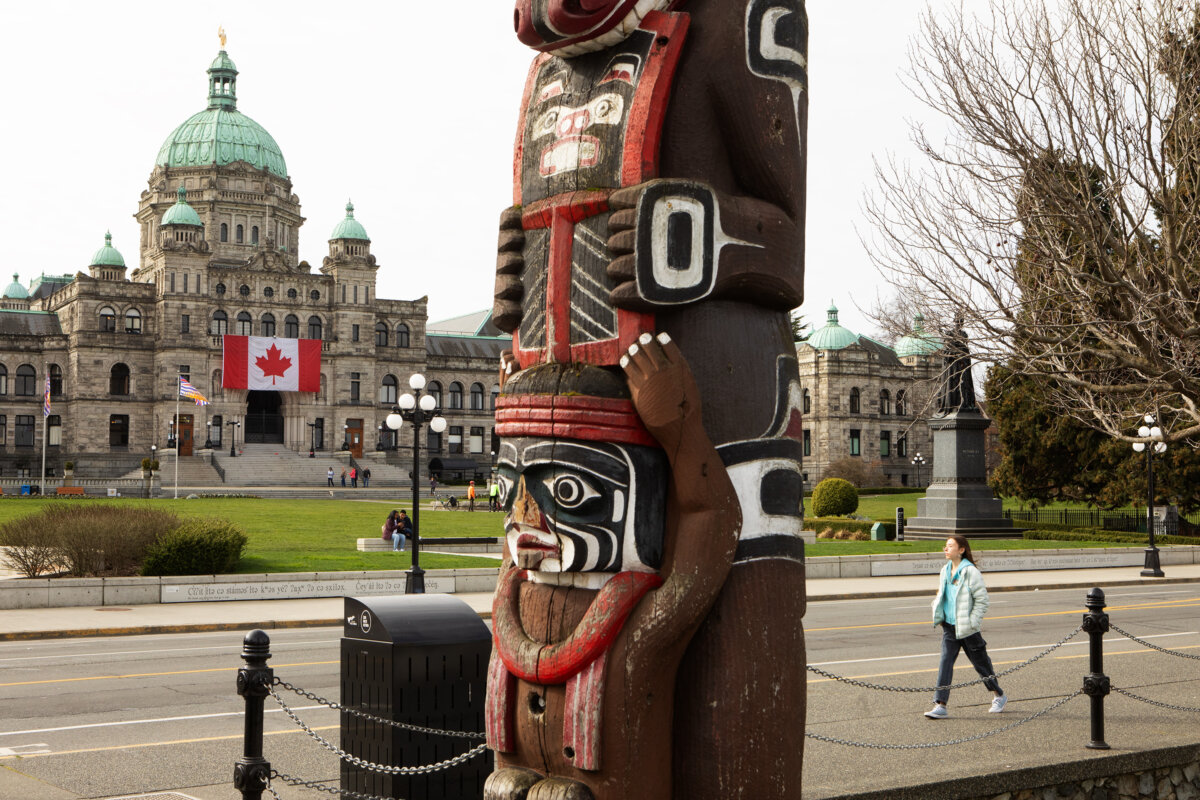

First Nations in British Columbia received more than $27 billion from the federal government over a 23-year period, a new report finds.
The report from the Aristotle Foundation published on June 16 highlights the scale of government financial transfers to indigenous communities in B.C. between fiscal years 2001-2002 and 2024-2025. It determined that, after adjusting for inflation, the average annual amount equalled $1.2 billion annually for a total of $27.2 billion.
The largest transfers were from the departments of Crown-Indigenous Relations and Indigenous Services Canada, which totalled $24.6 billion, according to the report. Next was the department of health at $1.3 billion, followed by the department of Employment and Social Development Canada at $746.3 million. The smallest transfer was reported by the ministry of justice, which contributed $11.4 million during the entire reporting period.
The figures used in the report were compiled using federal data from Indigenous Services Canada and its predecessor departments.
The data also showed that federal funding for B.C. First Nations experienced distinct phases of growth, dropping in 2004-2005, just prior to the Liberal Party losing the 2006 federal election to the Conservatives, before rebounding to $917 million.
Transfers averaged just over $1 billion annually from 2006 to 2015 under Stephen Harper’s Tory government but saw a substantial increase after Justin Trudeau’s Liberals assumed office, the report found. The transfers averaged more than $1.4 billion over nine years under the Trudeau Liberals, but reached a peak of $2.74 billion in the 2022-2023 fiscal year, representing a 240 percent increase compared to the average annual transfer over the previous 20 years.
Separate from federal transfers, the Harper government implemented the Indian Residential Schools Settlement Agreement in 2006, which included a $1.9 billion Common Experience Payment. This initiative provided financial compensation to approximately 86,000 Indigenous people who attended federally run residential schools.
Funding Outpacing Population
The federal government allocated 54 percent more funds to B.C. First Nations between 2016 and 2021 alone, while the province’s indigenous population grew by 7 percent during that timeframe, the report authors said.
They also noted that as little as 18 percent of the self-identified indigenous population lives on-reserve in British Columbia. The remaining 82 percent live in urban centres, rural off-reserve areas, or on modern treaty lands.
“If federal transfers are primarily intended to support people living on reserves, then the communities on reserves are receiving significant funding from the federal government,” the report authors wrote.
“But reporting it this way is, no doubt, misleading because some of the federal money supports programs that are off reserve. Yet even if only a portion of the $1.2 billion transferred goes to reserves, this would still be a significant wealth transfer from Canadian taxpayers to a relatively small population of B.C.’s indigenous people.”
Federal transfers support housing, health and social services, and other programs, the report said, noting that these monies are over and above funding received from the province.
The budget allocated to B.C.’s Ministry of Indigenous Relations and Reconciliation was $178 million in 2021, reflecting an increase of $60 million compared to the base funding.
The supplementary funding was designated specifically to assist First Nations in executing the Declaration of the Rights of Indigenous Peoples Act. The total funding allocated to the department has risen to $186 million, according to the budget estimates for 2026.
B.C. also announced a plan in 2020 to share 7 percent of gaming revenue with First Nations, estimated to be worth $3 billion over a 25-year period and has also allocated roughly $1.7 billion to build 3,500 homes both on reserve and off reserve since 2018, the authors said.
Community Well-Being
The Community Well-Being index serves as a method for the federal government to assess the well-being of indigenous peoples over time through various indicators. It evaluates these values in relation to the Canadian average and highlights the “gap” that exists between the two populations with the end goal of the gap narrowing until it disappears.
The Community Well-Being score for British Columbia’s First Nations in 2021 was 67, ranking it among the top-performing regions in Canada and exceeding the overall average of 62.4.
It ranked above Ontario, which received a score of 62.3, and significantly higher than Manitoba at 54.5, Saskatchewan at 56.5, and Alberta at 56.5. It was on par with Quebec, which scored 66.9, and the Territories at 67.2, but fell short of the Atlantic region, which achieved the highest score at 69.4.
The report authors noted that there appears to be a discrepancy between the amount of taxpayer money going to First Nations and their subsequent well-being.
“If the purpose of federal support is to close the well-being gap, then the fact it persists despite fiscal transfers totalling $27 billion over the last 23 years certainly raises questions about the effectiveness of these transfers,” the authors wrote. “Taxpayers who sincerely desire to see improvement in the well-being of indigenous Canadians would be right to wonder why greater progress has not been made.”
The Assembly of First Nations (AFN) says federal transfers go hand-in-hand with reconciliation. The organization argues true economic reconciliation and nation-to-nation partnerships are not possible without closing long-standing socioeconomic gaps through sustained generational funding.
The AFN advocates during federal budgets for robust, long-term investments to “reflect true economic reconciliation,” according to the group’s 2025 budget submission. The group described federal transfers as an obligation, pointing to severe infrastructure, housing, and educational deficits.
 Friends Read Free
Copy
Facebook
Tweet
Friends Read Free
Copy
Facebook
Tweet