
Novak Djokovic fell short of going over the top Down Under.
The grizzled veteran, who dropped a four-setter to Carlos Alcaraz in the final of the Australian Open on Sunday, was as smooth and precise as ever during his march to the championship match.
He’s tied with Margaret Court at 24 Grand Slam championships, the most in the sport’s history. He had never lost at Melbourne Park in 10 previous finals, so he also had a lot of history riding on the result.
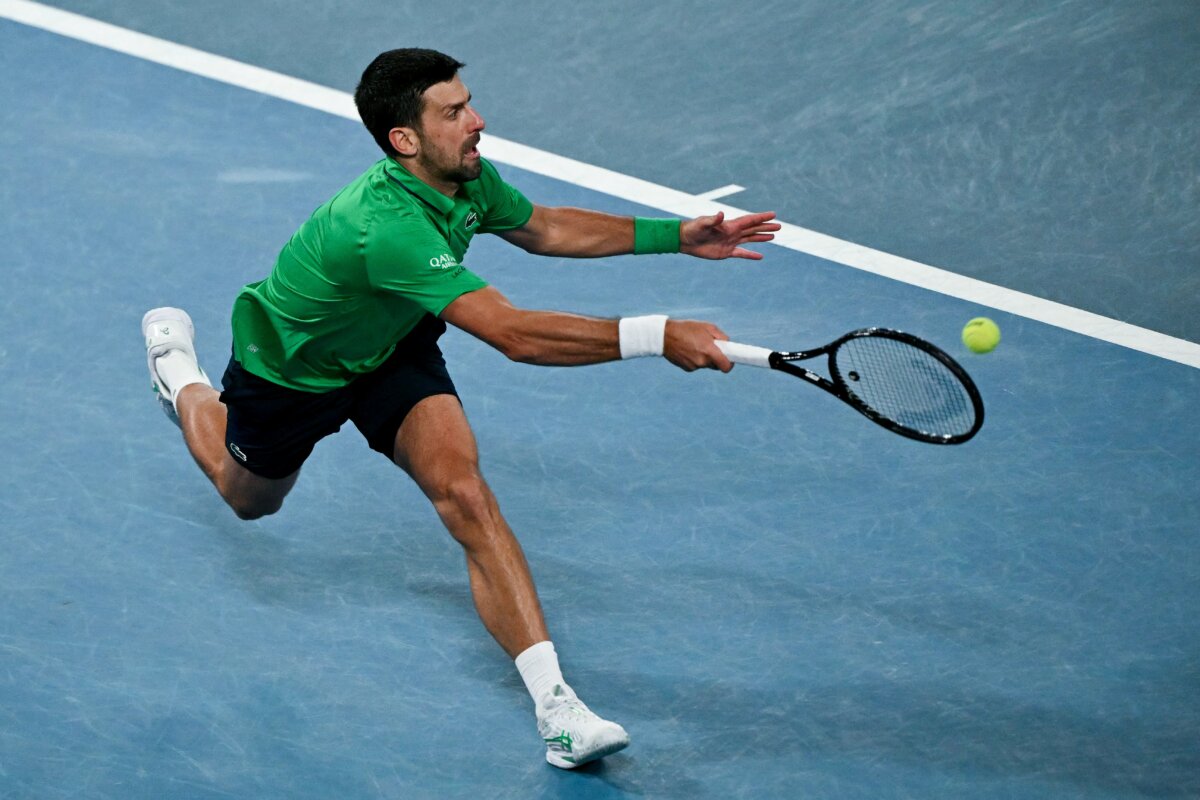
And Djokovic’s strokes stand out with textbook form. His serve also continues to torment opponents searching for openings to scratch out a break here and there. Combined with his dogged determination and never-say-die fight, it’s a challenging time on the court across from him.
The only thing that’s slowing the sharp-hitting Djokovic is his aging 38-year-old body.
World No. 1 Alcaraz won 2–6, 6–2, 6–3, 7–5 to set the record as the youngest male to collect a career Grand Slam—winning all four major tournaments—at 22 years, 272 days. But it was obvious during the loss that Djokovic couldn’t dig any deeper. He was stretching and sometimes massaging his right hip at moments between games.
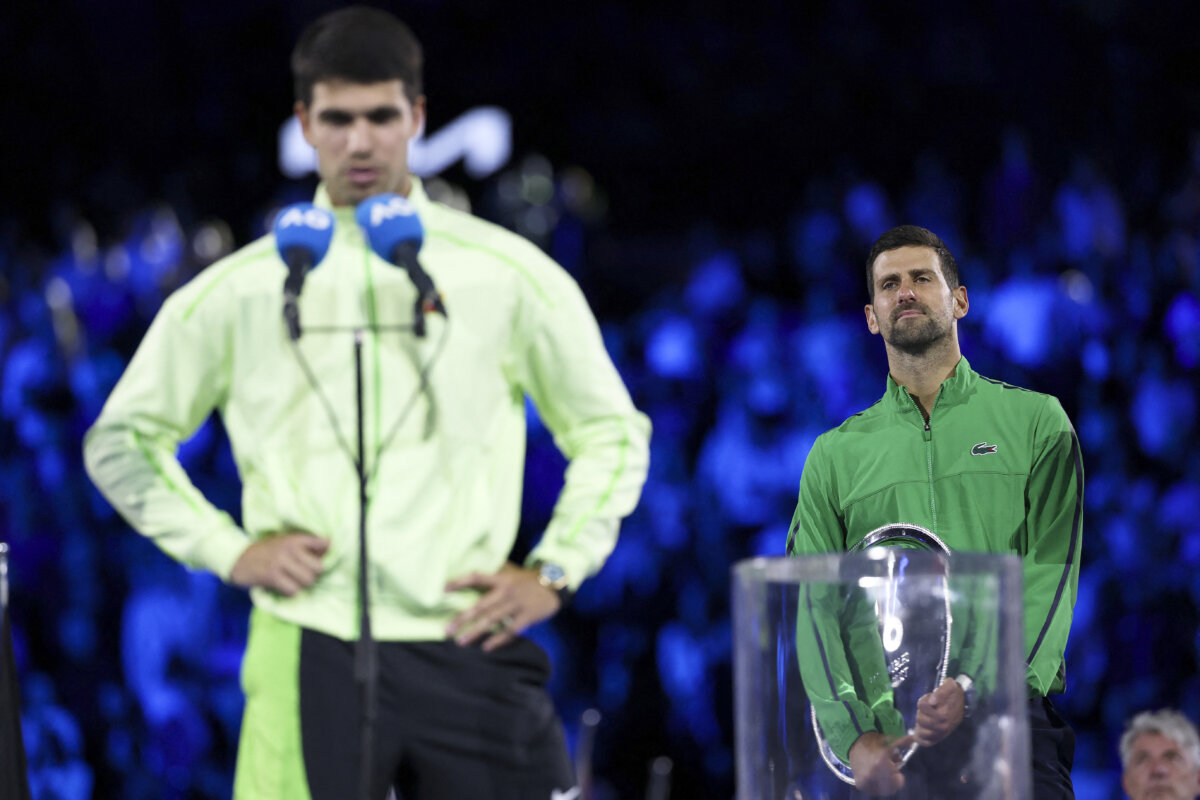
Djokovic made no excuses during the on-court trophy ceremony after the final, also taking time to acknowledge Alcaraz’s accomplishment. He even delivered a quip about playing into the future.
“First and foremost, of course, congratulations to Carlos. An amazing tournament—and amazing couple of weeks. To your coach, to your family, to your team, what you’ve been doing, I think the best word to describe it is historic, legendary,” Djokovic said.
“So I wish you the best of luck for the rest of your career. I mean, you’re so young, you have a lot of time, like myself, so I’m sure we’ll be seeing each other many more times over the next 10 years.”
Djokovic added a “not,” moments later, but it’s obvious his age adds to the things he had to battle during the match.
This run to the final proves he is still part of the Grand Slam landscape and conversation when the majors come up on the calendar.
Djokovic didn’t use the post-tournament press conference to shed light on the physical hardships that slowed him in the showdown.
“I knew what I needed to do, but some things changed and my energy level went completely down, like from north to south, in two games,” Djokovic said. “I managed to recuperate and kind of feel reenergized, as I said, mid-fourth [set]. I was close, but it wasn’t meant to be.”
When asked exactly what happened, Djokovic wouldn’t divulge the nature of his struggles.
“Look, I never like to talk about things I go through physically or health-wise because it’s going to come across as [though] I’m looking for excuses and taking away the credit of the winner. So it’s not going to change, I’m just going to congratulate Carlos. He was the deserved winner on the court today.”
Djokovic reflected on his play, including a missed forehand and the limited number of opportunities in which players can turn the tide in championship matches.
“My forehand broke down in important moments and that’s what happens—one or two shots can change the momentum of the match and switch things around, which happened,” he said.
He also wasn’t ready to put his tournament run into perspective.
“It’s hard just right after the match to be all positive and smiling because you’re a competitor and you don’t want to lose, and you don’t like to lose. So that’s the kind of feeling, but overall, for sure, it’s been a fantastic tournament.”
Djokovic said he figured he’d have to knock off the world’s top two players to win the title, and in the semifinal he outlasted world No. 2 Jannik Sinner 3–6, 6–3, 4–6, 6–4, 6–4 in five sets.
“[It was] very nice, encouraging, but not good enough for me,” he said. “And I’m going to keep pushing and see if I get another chance.”
Djokovic eased his way through the early rounds, winning his first three matches without dropping a set. His fourth-round clash ended when world No. 17 Jakub Mensik had to retire from the match because of an injury.
The Serb needed 5 1/2 hours to win the semifinal, his work as a technician on the court helping him rally from the brink to top the Italian by winning the final two sets.
And in the final, when Djokovic seemed to lack the kind of energy that he needed to lift his game, he called upon the Melbourne crowd to fuel his fire. The crowd got him going, but Alcaraz put up a gauntlet.
However, on sheer guts and savvy, Djokovic is likely to be back on the big stage this year, standing front and center in the all-time Grand Slam spotlight.
 Friends Read Free
Copy
Facebook
Tweet
Friends Read Free
Copy
Facebook
Tweet