
Michael Makowsky has been an avid Chicago White Sox fan since the MLB team won the 2005 World Series. Since then, the White Sox have endured far more losing than winning. But all of that changed with the 2026 season.
The White Sox lost more than 100 games each season between 2023 and 2025. In 2024, the team posted the worst MLB record in a 162-game season, winning only 41 games.
“I did lose hope, but I knew that brighter days were on the horizon,” Makowsky, who lives in Chicago, told The Epoch Times in a phone interview on Oct. 1.
Indeed, they were.
In 2026, the White Sox had a magical season, exceeding expectations with a remarkable turnaround.
The South Siders, a nickname derived from the part of Chicago where they play, swept the Houston Astros in the Wild Card round of the playoffs this month. They were eliminated from the playoffs by the Cleveland Guardians in the divisional round.
The White Sox entered the 2026 season as extreme long-shots to make the playoffs.
But the White Sox defied the odds as they posted an 84–78 record, the most wins in MLB history by a team following three consecutive 100-loss seasons.
The White Sox offense led the American League in runs, runs batted in, and walks. It also ranked second in on-base percentage and third in home runs, slugging percentage, and on-base plus slugging.
From Laughingstock to Winner
The transformation from perennial loser to winner began in the front office.
During the 2023 season, the White Sox dismissed general manager Rick Hahn and replaced him with Chris Getz. Getz, a former White Sox player, would become the architect of the team’s rebuild.
The following season, Getz fired manager Pedro Grifol and later hired Will Venable, who had coached the Texas Rangers and played eight MLB seasons.
“Well, it’s obvious now that the proof is in the pudding … Chris Getz has made moves to identify weaknesses and things on his team that weren’t conducive to winning,” Greg Pryor, who played for the White Sox between 1978 and 1981, told The Epoch Times in a phone interview on Aug. 20.
The White Sox did not respond to The Epoch Times’ request to interview Getz and Venable.
Following the 2024 and 2025 seasons, Getz overhauled the roster through trades, drafting, and signings—leading to constant turnover season after season in building a young team.
Of the 54 players who appeared for the White Sox in 2025, only 11 had been with the team in 2024. Of the 26 players on the active roster at the start of 2025, only seven players remained on the 2026 Opening Day active roster. Just six players appeared on both the 2024 and 2026 rosters.
The White Sox began assembling their roster in 2024, trading ace Garrett Crochet to the Boston Red Sox for infielder Chase Meidroth, catcher Kyle Teel, and outfielder Braden Montgomery. They also acquired Miguel Vargas from the Los Angeles Dodgers in a three-team deal.
Both Vargas and Meidroth played crucial roles in the White Sox’s winning season.
Vargas, 26, made the greatest impact among the 2024 acquisitions with 106 runs, 93 runs batted in, and 33 home runs in 159 games.
It was also helpful that Meidroth, 25, emerged as a productive hitter with 16 home runs and 63 runs batted in in 154 games. Meidroth hit a critical three-run home run in Game Two of the Wild Card series to sweep the Astros.
Braden Montgomery hit a crucial double, bringing in two runs in the White Sox’s Game Two win over the Guardians.
Signings and Draft Picks Shine
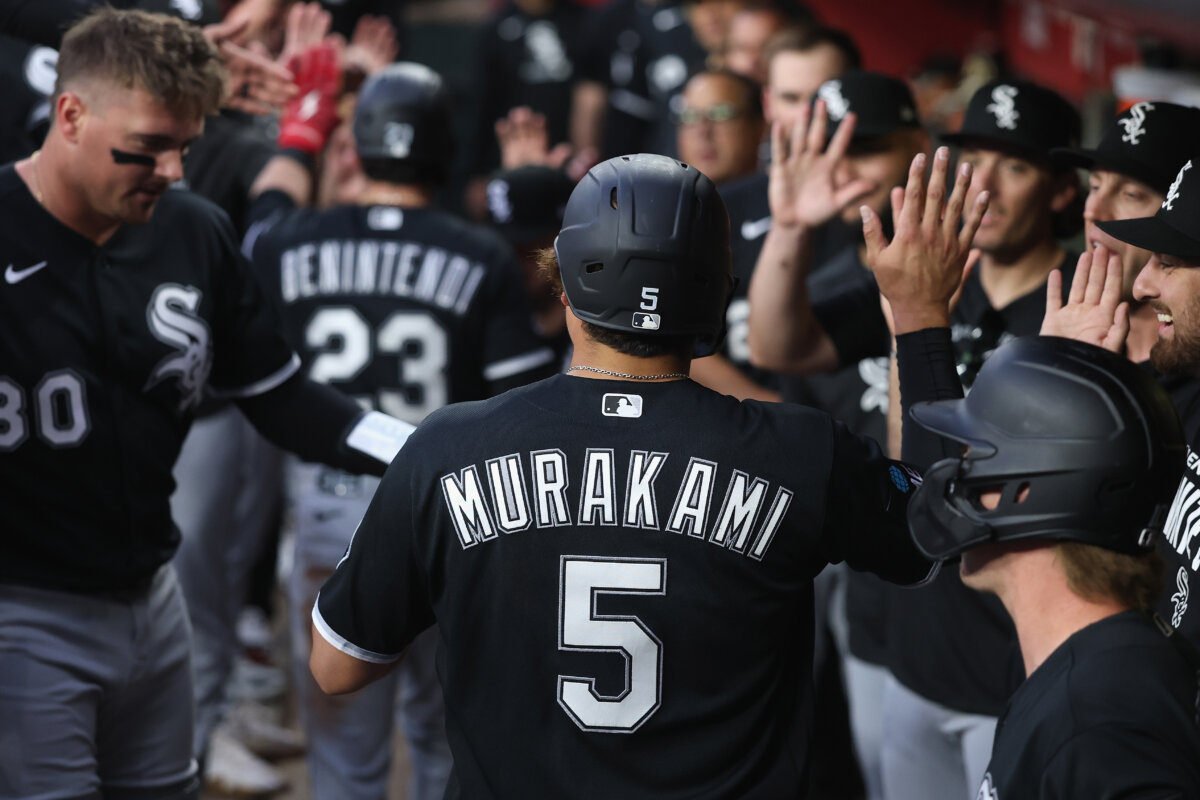
The biggest move came after the 2025 season when the White Sox signed Japanese star player Munetaka Murakami to a two-year, $34 million contract.
The 26-year-old made his impact felt on the South Side, posting 82 runs, 94 hits, 35 home runs, and 77 runs batted in despite a .207 batting average over 127 games. He was an All-Star.
Makowsky called Murakami a “spark plug,” saying the slugger’s production energized the clubhouse.
“Murakami, when he’s hitting home runs, everybody feeds off of him,” he said.
The White Sox also acquired outfielder Tristan Peters from the Tampa Bay Rays during the 2025 offseason. Peters, 26, hit 12 home runs and drove in 56 runs in 156 games.
Before being drafted by the Milwaukee Brewers in 2021, Peters played for the Savannah Bananas, then a primarily college summer team in the Coastal Plain League, before they became a famous barnstorming professional exhibition team. He was one of the three players on the American League All-Star team this year.
Promoted from the minors in April, 23-year-old outfielder Sam Antonacci quickly became a catalyst, batting .277 and stealing 20 bases in 140 games.
Additionally, the White Sox’s draft picks also left quite an imprint on the season.
Infielder Colson Montgomery, whom the team selected in the first round of the 2021 MLB Draft, posted solid numbers despite a few glaring weaknesses. Colson Montgomery, 24, who has no relation to Braden Montgomery, had 71 runs, 112 hits, 87 runs batted in, and 31 home runs in 153 games despite having a .197 batting average and striking out 227 times—an MLB record.
Unexpected contributors also gave the White Sox valuable depth.
The team added outfielder Randal Grichuk in May of this year after the New York Yankees designated him for assignment. He played in 101 games for the White Sox and had 70 hits, 33 runs, and 15 home runs with a batting average of .299.
“Chris Getz, in my opinion, along with Will, I imagine, have collected players that not only get along good in the clubhouse, but are gaining confidence as major league players that nobody’s ever heard of, and that is a wonderful testimony to baseball,” Pryor said.
A Spiritual Force
But the White Sox’s turnaround cannot be explained entirely by statistics.
“When guys are with each other for as long as they’ve been together, you get a camaraderie, and you play sometimes with a subconscious mind that your fellow teammate is going to succeed and help you,” Pryor said.
“If you fail, the next guy will come through and do it,” he continued. “It’s that combination.”
Pryor and Makowsky both said the players appeared to be playing for something bigger than themselves.
“They’re not playing for the name on the back of their jersey,” Makowsky said. “They’re playing for the name on the front of their jersey.”
It doesn’t hurt that the White Sox have Pope Leo XIV as a fan. The franchise even gave out papal hats with a team logo during their game on Aug. 11 against the Cincinnati Reds, which the White Sox won. He was later given one of the hats by Tom McCarthy, a priest.
Pope Leo, born Robert Francis Prevost on the South Side of Chicago, wrote a letter to majority team owner Jerry Reinsdorf, expressing “hope that the White Sox will continue to foster bonds of friendship and solidarity among people, and thus bear hopeful witness to the possibility of living and working together in peace.”
He also invoked “the Almighty’s abundant blessings upon you and your loved ones.”
So is a Vatican force also behind the turnaround?
“No comment,” the pope said with a smile aboard the papal plane in September. “Great things happen in Chicago.”
 Friends Read Free
Copy
Facebook
Tweet
Friends Read Free
Copy
Facebook
Tweet