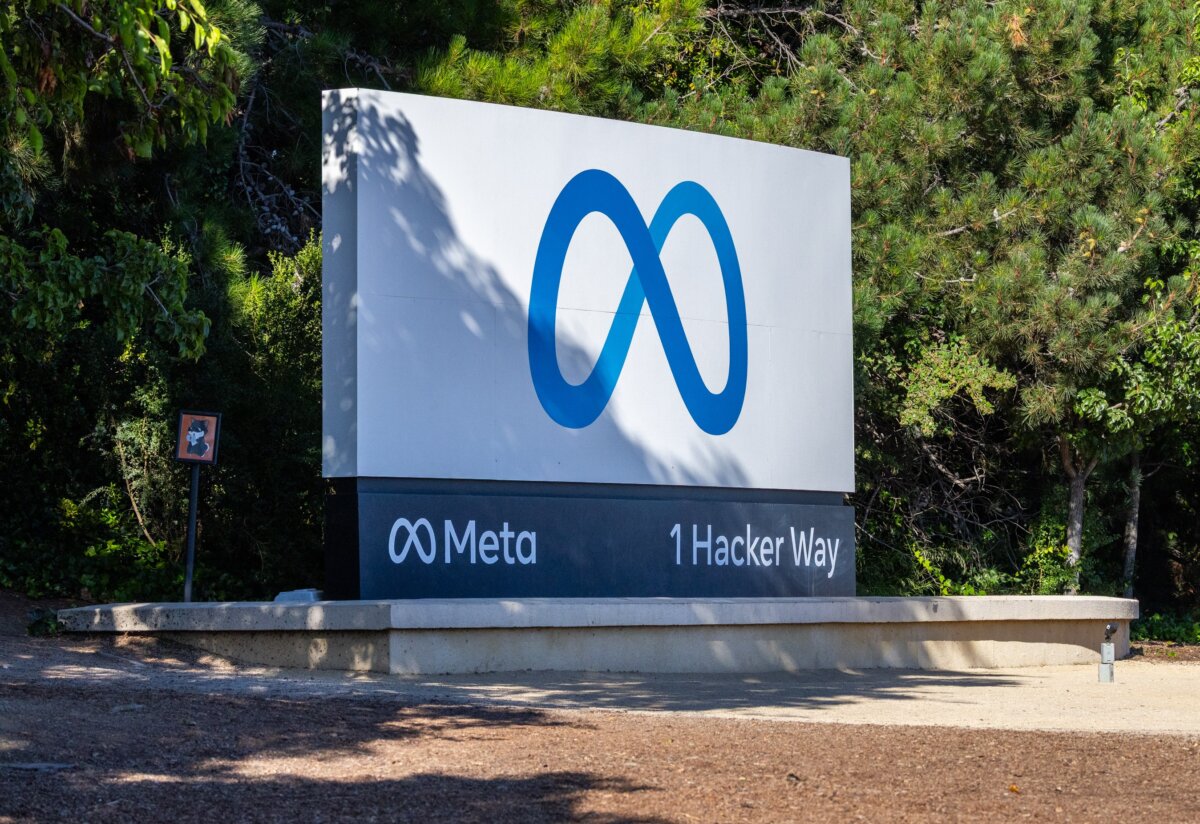

In a move that may send ripples through the tech industry for years to come, Meta Platforms reached a historic multibillion-dollar settlement with 47 U.S. states, territories, and the District of Columbia, agreeing to overhaul its services after accusations of endangering and addicting children.
The landmark Aug. 26 agreement settles a series of lawsuits brought against the Facebook and Instagram parent company, accusing it of intentionally designing its platforms to be addictive, knowingly exposing children to mental harms, and deliberately misleading the public about the safety of its products.
Meta will pay $17.1 billion to settle the lawsuits brought by the states and territories, as well as $1 billion to settle a separate lawsuit brought by Texas.
Beyond the financial payout, Meta has agreed to implement strict time limits for children, including “nighttime blocks,” as well as robust age-verification protocols, content controls, and limits on features such as beauty filters and visible “like” tallies, among other changes.
Colorado Attorney General Phil Weiser said the agreement goes “well beyond what any court has ordered or is likely to order.”
“The focus of this case was to protect our kids—stopping notifications and alerts at night and when they are in school, encouraging them to take breaks from social media, protecting them against harmful features, implementing age assurance technology, and more,” he said in a statement.
Multiple Lawsuits Settled
The multi-state and jurisdiction agreement settles a federal lawsuit in California where 29 states accused Meta of violating the Children’s Online Privacy Protection Act by amassing personal information from minors under 13 without seeking parental consent.
The agreement also settles another set of claims brought by Colorado, California, Kentucky, and New Jersey, alleging Meta violated consumer protection laws by making deceptive statements that would likely mislead users about the safety of its platforms.
There are also a series of state-court lawsuits covered in the wider settlement agreement.
In 2023, 42 states and the District of Columbia sued in their respective courts in a coordinated bipartisan, multi-state investigation into Meta’s conduct.
Texas, which is scheduled to go to trial against TikTok later this year, had also sued Meta and will receive a $1 billion settlement.
The $17.1 billion will be paid out to the other states over 10 years, if the court approves the settlement. California is poised to receive $1.5 billion to $2.1 billion.
Meta will pay New Jersey between $525 million and $752 million, and Colorado nearly $615 million.
New York is set to receive up to $1.15 billion in the multi-state settlement agreement.
District of Columbia Attorney General Brian L. Schwalb’s office called it the largest state consumer protection settlement in U.S. history outside of the 1990s-era Big Tobacco settlements.
“Meta’s decision to settle the lawsuits … is a watershed moment in holding the tech giant accountable for designing products it knew were harming children and fueling a nationwide youth mental health crisis,” Matthew Bergman, the founder of the Social Media Victims Law Center, said in a statement to The Epoch Times.
Meta Agrees to Major Changes
The agreements also include sweeping changes to Instagram and Facebook.
The company will implement a combined two-hour daily time limit for children with mandatory pauses after 15 minutes of continuous use. Pauses will also occur at 60 and 90 minutes of continuous use to disrupt endless scrolling of the platform’s feeds.
These “productive pauses” will stay in effect for five years.
Meta will also restrict children’s access to Facebook and Instagram from 12 a.m. to 6 a.m., while silencing notifications between 10 p.m. and 7 a.m. in what it calls “nighttime blocks.”
Push notifications for children will also be eliminated on weekdays between 8 a.m. and 3 p.m. during the school year to curb school-time access.
Another change will see Meta implementing more robust age verification methods for younger users, while simultaneously enacting age-based content controls to prevent bullying and limit access to content that promotes eating disorders, suicide, and self-harm.
Meta will also hide the number of “likes” and reactions to posts for minors, and disable beauty filters.
The company is letting minors choose by default a “non-algorithmic feed” that won’t be personalized by Meta’s recommendations, and is strengthening its parent controls.
“The framework we’ve negotiated will empower parents to easily manage how their children access our platforms,” Meta’s chief legal officer C.J. Mahoney said in a statement.
Meta also agrees to regular assessments by an independent auditor to ensure the implementation and effectiveness of the new safety features, giving oversight authority to the states that joined in the settlement.
Will Other Companies Join Meta?
The full $17.1 billion payout is contingent on whether other social media companies like Snapchat, TikTok, and YouTube will also settle with the states suing and agree to both platform changes and monetary penalties.
If the companies decline, Meta will pay $12.1 billion.
“The physical, mental, and emotional harms that intentionally addictive social media platforms inflict on youth—and particularly teenage girls—are widespread across the tech industry, and this successful, coordinated multistate litigation has resulted in Meta being the first platform to come to the table and agree to such comprehensive reforms,” Schwalb said in a statement.
“It will not be the last.”
Additionally, if the other social media companies sign onto the agreement, the daily limit for children’s use on each platform will drop to 60 minutes for the next 10 years.
Meta has also prepared an open letter to TikTok and YouTube, asking the platforms to join in implementing the child safety features.
“We want to ensure teens benefit from this new industry standard, but we cannot do it alone. These protections will only be truly effective if we work with our peers—TikTok and YouTube—to put the same measures in place,” Meta wrote.
Matthew Vadum contributed to this report.
 Friends Read Free
Copy
Facebook
Tweet
Friends Read Free
Copy
Facebook
Tweet