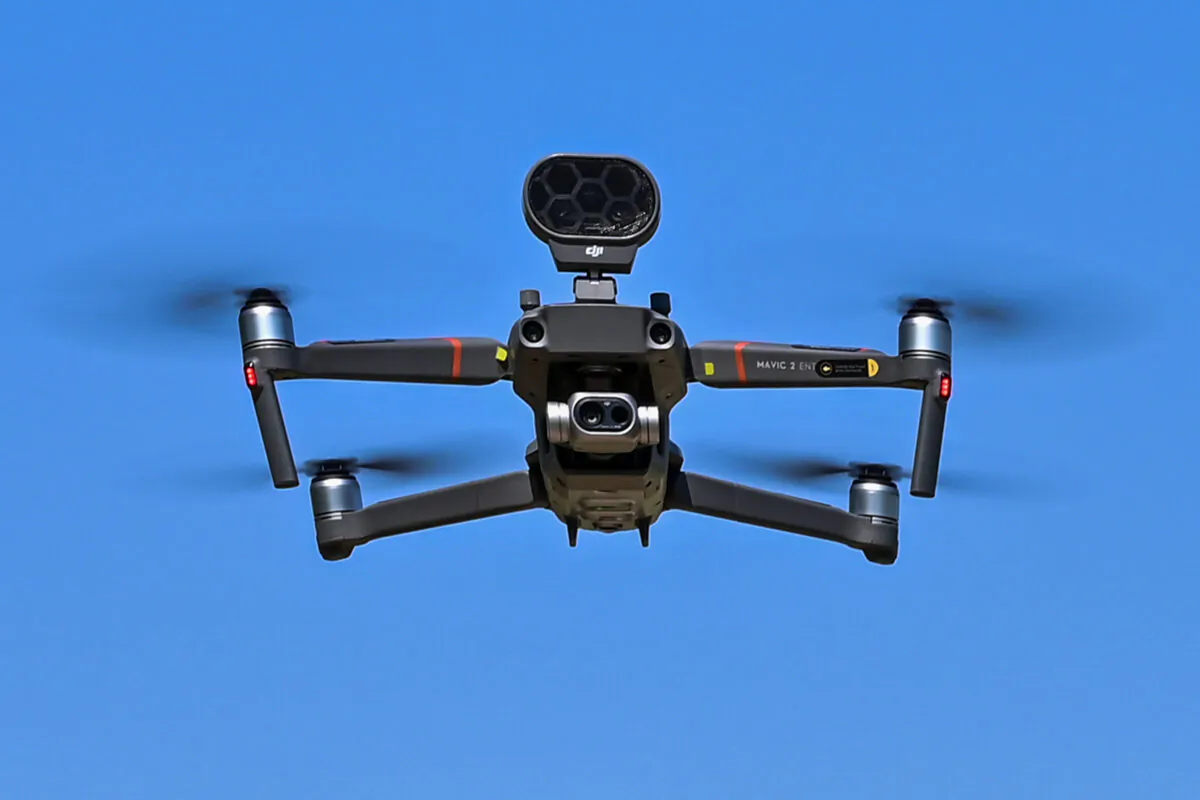

U.S. Customs began collecting new Section 232 tariffs of up to 100 percent on imported thermal drones and automated docking systems on Sept. 3.
The duties apply to equipment made by Shenzhen-based DJI that is already used by U.S. police and public safety agencies, while government records show some agencies are still planning or carrying out purchases of the Chinese company’s systems.
Thermal drones use heat-sensing cameras to locate people, fires, or other heat sources. Docking stations allow compatible drones to launch, land, recharge, and operate remotely.
Agencies Still Buying DJI Systems
One of the clearest current examples is in South Carolina.
The South Carolina Department of Natural Resources recently awarded a contract for DJI Matrice 4TD thermal drones and related equipment.
Bidding closed Aug. 31. The state procurement system lists Airworx Unmanned Solutions as the vendor under contract No. 4400040920, running from Sept. 14 through Nov. 30.
The public record does not disclose whether the drones were imported into the United States before Sept. 3.
The Epoch Times asked the state Department of Natural Resources and Airworx whether the new duty would affect the contract price, availability, or delivery schedule. Neither had responded by publication time.
Fairfield Police Department in California also documented plans this year to expand its DJI Matrice 4TD fleet.
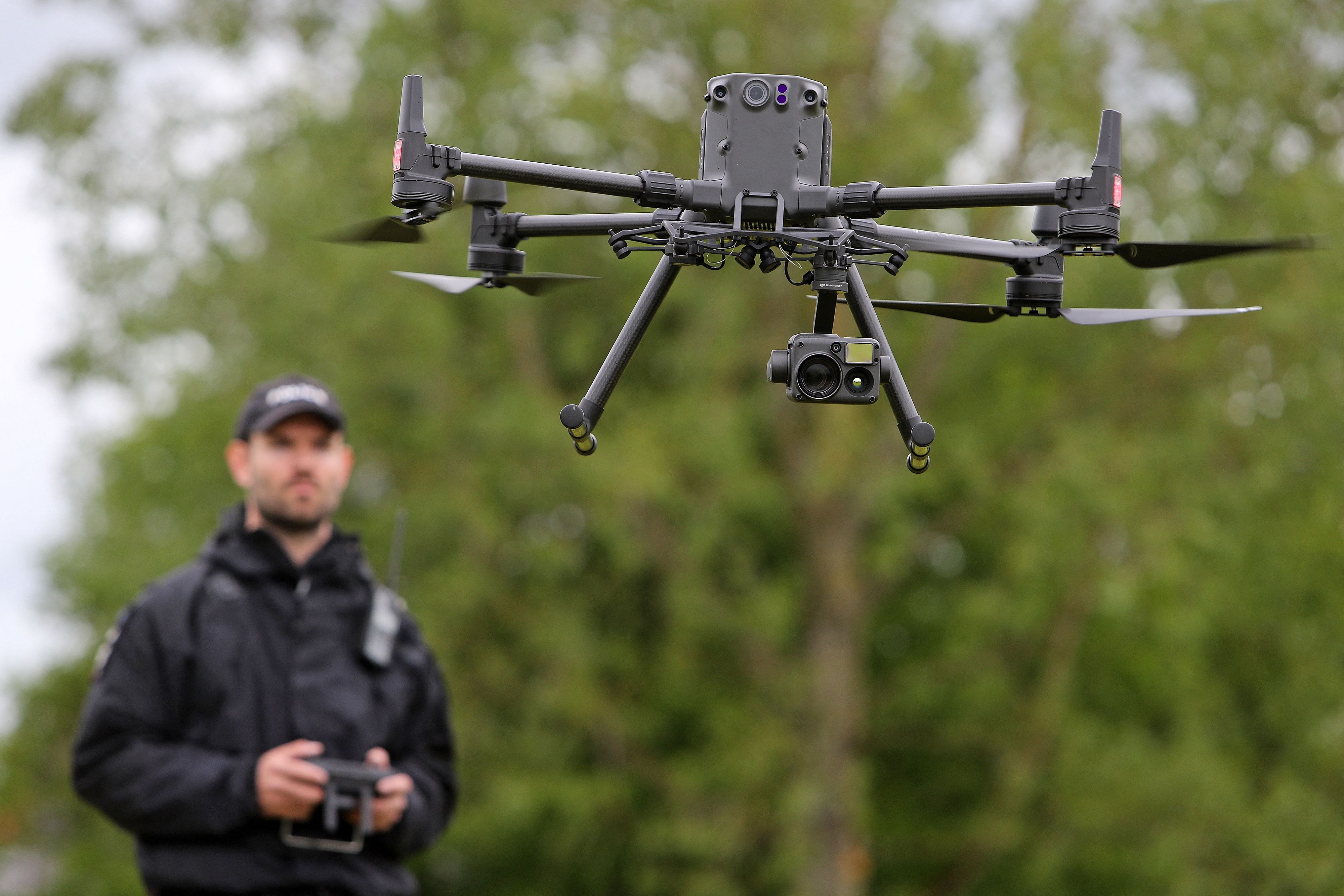 Acting Police Sergeant Chris Linzey pilots a DJI Matrice M300 drone (UAV) during a demonstration for media ahead of the upcoming in-person G7 Summit to be held in Cornwall, at the Police headquarters in Exeter, southwest England, on May 25, 2021. (Geoff Caddick/AFP via Getty Images)
Four of the seven additional units were to be purchased and owned by private businesses but operated by Fairfield police.
The available records do not establish how many of the seven additional aircraft have since been ordered or delivered.
Fairfield Police didn’t respond to a request for more information by publication time.
DJI Systems Already in Police Fleets
Other departments completed major purchases before the tariff took effect.
Torrance Police acquired eight DJI Dock 3/Matrice 4TD systems in 2025, Capt. Fareed Ahmad told The Epoch Times.
The department has not sought updated pricing, availability, or delivery information since the tariff took effect, Ahmad said.
Asked how Torrance would respond if replacement systems become substantially more expensive, Ahmad said the department would compare available options when new purchases become necessary.
“When the time comes to acquire replacement/new drones, the department will have to assess and compare all options,” Ahmad told The Epoch Times. “Cost, safety, reliability, and capability are all aspects to consider when choosing a drone platform for use in a public safety application.”
DJI’s Matrice 4TD carries an infrared thermal camera and is designed to operate with the company’s Dock 3 automated docking station.
Why Thermal Systems Face the Highest Rate
President Donald Trump imposed the tariffs in an Aug. 13 proclamation following a Commerce Department national security investigation.
Drones that integrate thermal imagers, drones weighing more than 25 kilograms, and docking stations face an additional 100 percent tariff. Smaller covered drones generally face a 25 percent tariff, subject to country-of-origin rules and other exceptions.
The Commerce Department found that U.S. drone production remained dependent on foreign suppliers for equipment, including motors, electronic speed controllers, batteries, and docking stations, according to the proclamation. The administration also cited cybersecurity and supply chain risks.
The tariff is not limited to China. The proclamation applies by product category and country of origin, with different treatment for some qualifying products from U.S. allies and certain federally approved systems.
The duties apply to covered goods entered for consumption, or withdrawn from warehouse for consumption, on or after Sept. 3. They do not apply retroactively to equipment already imported and entered for consumption before that date.
The new tariffs also come on top of separate Federal Communications Commission restrictions affecting authorization of certain foreign-made drones and critical drone components. Those restrictions are distinct from the import duties.
The Epoch Times sought comment from DJI on how the new tariffs would affect U.S. pricing and availability but had not received a response by publication time.
 Friends Read Free
Copy
Facebook
Tweet
Friends Read Free
Copy
Facebook
Tweet