
Before it can decide whether a 2021 anti-riot law in Florida violates the U.S. Constitution, the 11th U.S. Circuit Court of Appeals is asking the Florida Supreme Court to define “public disturbance.”
The “Combatting Violence, Disorder, and Looting, and Law Enforcement Protection Act” (pdf), also known as HB 1, was signed into law by Florida Gov. Ron DeSantis on April 19, 2021. The measure was drafted in response to the riots that erupted in 140 cities across 20 states following the death of George Floyd in police custody in Minneapolis in 2020.
Property Claim Services, a company that calculates property losses caused by catastrophes in the United States, estimated the damage from the riots at $1 billion to $2 billion between April and July 2020, making it the most expensive insurance payout in U.S. history, Axios reported.
DeSantis introduced the legislation on Sept. 21, 2020.
“Our right to peacefully assemble is one of our most cherished as Americans, but throughout the country, we’ve seen that right being taken advantage of by professional agitators, bent on sowing disorder and causing mayhem in our cities,” DeSantis said.
“I will not allow this kind of violence to occur here in Florida,” DeSantis asserted. “The legislation announced today will not only combat rioting and looting but also protect the men and women in law enforcement that wake up every day to keep us safe. I look forward to working with the Florida Legislature next session to sign this proposal into law.”
What the Law Means for Floridians
Among other things, the law makes it a third-degree felony to cause physical harm to others and “to obstruct traffic during an unpermitted protest, demonstration, or violent or disorderly assembly” that consists of seven or more people, and provides civil immunity from liability for drivers who cause injury or death in an effort to flee for safety from a mob, according to a fact sheet released by the governor’s office.
Under the new law, harassing or intimidating people in public places, like restaurants, carries a first-degree misdemeanor charge. Those who destroy public property or monuments will be charged with a second-degree felony. Those found guilty of striking a police officer, either physically or with a projectile, will serve a mandatory minimum sentence of six months in jail.
The law also dictates that people arrested for such violations must “be held in custody” until their first court appearance.
On Sept. 9, 2021, the U.S. District Court for the Northern District of Florida issued a preliminary injunction against the law (pdf).
Now the 11th Circuit is asking the Florida Supreme Court to interpret the new meaning of “public disturbance” as amended in the state law.
In her Jan. 10 opinion (pdf), Circuit Judge Jill Pryor said “the proper interpretation of the statutory definition is a novel issue of state law that the Florida Supreme Court has yet to address. After careful consideration, we exercise our discretion to certify a question to that court to determine precisely what conduct the definition prohibits.”
The 11th Circuit in Atlanta is therefore asking the Florida Supreme Court to clarify the meaning of “willfully participate in a violent public disturbance involving an assembly of three or more persons.”
“Is it something more than ‘three or more persons acting with a common intent to assist each other in violent and disorderly conduct resulting in injury to another person, damage to property, or imminent danger of injury to another person or damage to property’?” Pryor asked.
Pryor also wants to know “what conduct is required for a person to ‘willfully participate in a violent public disturbance.'”
“Can a person ‘willfully participate in a violent public disturbance’ without personally engaging in violence and disorderly conduct or advocating for violence and disorderly conduct?” she asked. “If so, what level of ‘participat[ion]’ is required?”
“To obtain a conviction, does the State have to prove beyond a reasonable doubt that the defendant intended to engage or assist two or more other persons in violent and disorderly conduct?” Pryor asked additionally. “If not, what must the State prove regarding intent?”
Lastly, Pryor wants Florida’s high court to clarify whether a person can be “guilty of the crime of riot if the person attends a protest” that eventually turns into “a violent public disturbance in which three or more people” assist each other in the destruction of property.
Stopping Traffic, Beating Bystanders
During the 2020 riots, people blocked traffic and threatened drivers, including a disabled man in Kentucky.
After forcing a man to crash his truck in Oregon, rioters from Black Lives Matter (BLM) and Antifa, a far-left extremist group, dragged him from his vehicle to beat him unconscious. In Minneapolis, a truck driver who was trying to escape a violent mob drove his rig through the crowd in an effort to escape. They surrounded his rig, dragged him out, and beat him. He was arrested and charged with felony threats of violence and given a gross misdemeanor charge for criminal vehicular operation. The charges were eventually dropped.
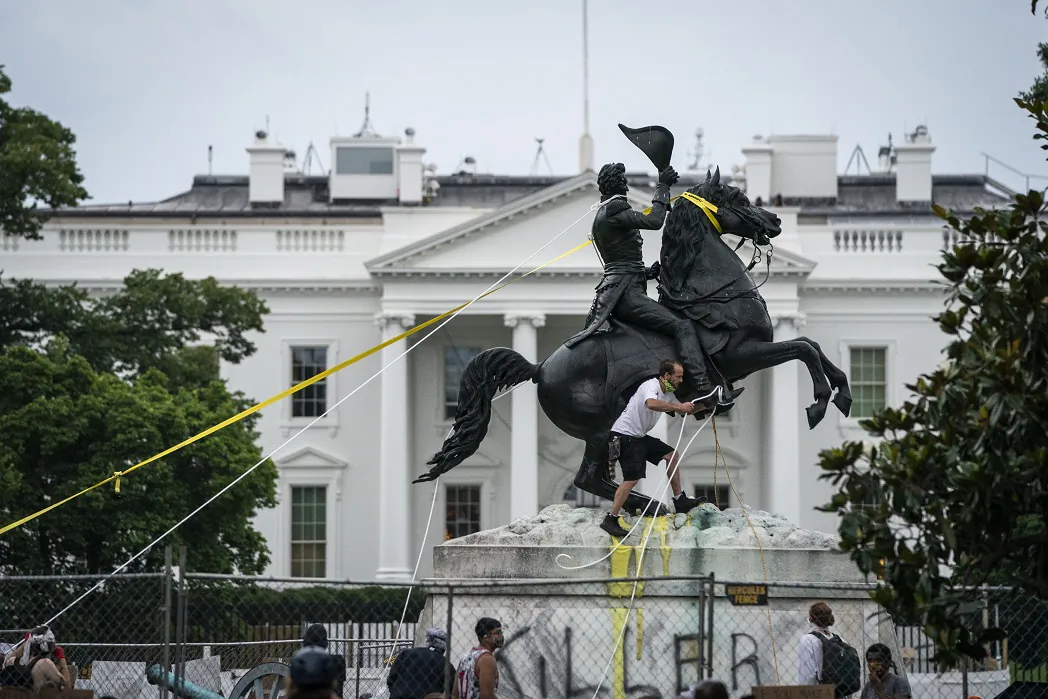
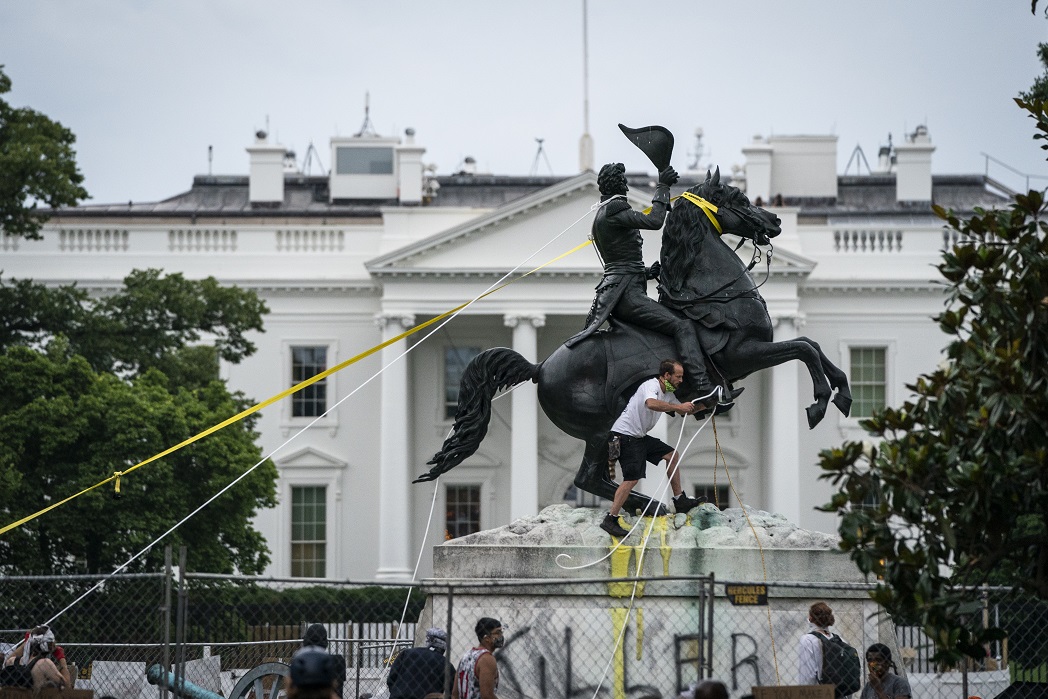
There have been several instances of BLM protesters surrounding and threatening people sitting in outdoor dining areas in Florida, New York, and Texas, and historic monuments and statues across the nation were defaced, toppled, and destroyed.
Over 2,000 police officers were injured during the protests and riots in 2020, according to the Major Cities Chiefs Association.
Hundreds of rioters were released or had their charges dismissed.
Citizen and Taxpayer Protection
The new law contains measures that ensure the protection of Florida’s citizens and their tax dollars.
The law’s prohibition of “Defund the Police” efforts forbids any local government bodies from receiving state grants or aid if they strip law enforcement services from their budgets.
The law waives “sovereign immunity,” allowing the victims of a crime related to a violent protest to sue the local government for damages in cases where that local government is found to be grossly negligent in protecting citizens and property.
It also terminates the state benefits of anyone convicted of participating in a violent protest as well as making them ineligible to hold state or local government jobs, and prohibits bond or bail until their first appearance in court.
 Friends Read Free
Copy
Facebook
Tweet
Friends Read Free
Copy
Facebook
Tweet