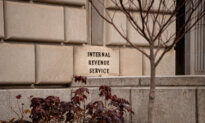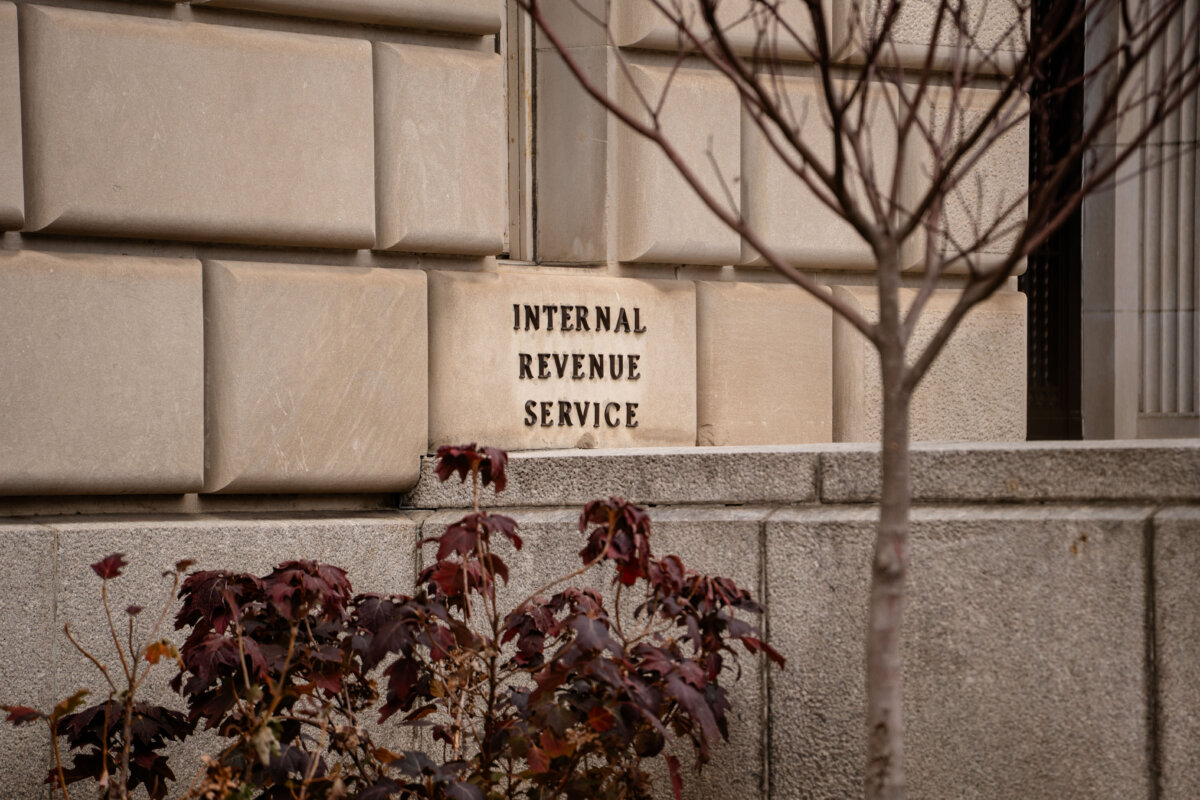

The IRS announced on Monday that 27 states have formally opted to take part in the Federal Scholarship Tax Credit (FSTC) program enacted under the One Big Beautiful Bill.
FSTC allows eligible individual taxpayers to claim tax credits for up to $1,700 in certain cash contributions they make to Scholarship Granting Organizations (SGO). SGO charities grant scholarships to help students pay for elementary and secondary education expenses.
“For taxpayers to claim the tax credit of up to $1,700, they must contribute to an SGO located in a state that elects to participate in the FSTC program and submits a list of qualified SGOs,” the IRS said in a statement.
State participation in the program, signed into law by President Donald Trump last year, is voluntary, the tax agency said.
The tax credit is nonrefundable, the IRS said in a May 28 update. As such, while it can reduce the federal tax bill, it cannot generate a refund if the tax credit is higher than taxes owed to the federal government. Excess credit can generally be carried forward for up to five years.
Taxpayers may be able to claim credits under FSTC beginning Jan. 1, 2027. All states participating in the program must annually provide the IRS with a list of qualifying SGOs. This must be done by Jan. 1 of a calendar year.
The 27 states are Alabama, Alaska, Arkansas, Colorado, Florida, Georgia, Idaho, Indiana, Iowa, Louisiana, Mississippi, Missouri, Montana, Nebraska, Nevada, New Hampshire, North Dakota, Ohio, Oklahoma, South Carolina, South Dakota, Tennessee, Texas, Utah, Virginia, West Virginia, and Wyoming.
“It’s encouraging to see that 27 states have already signed up to participate in this program that promotes and supports elementary and secondary education,” said IRS Chief Executive Officer Frank J. Bisignano. “We are hopeful that additional states will decide to participate.”
In a Jan. 14 letter to the IRS, Rep. Robert C. Scott (D-Va.) raised concerns about the potential of waste, fraud, and abuse in the FSTC program.
Scott said program regulations concerning SGO-collected scholarship funds must be clarified.
Taxpayers “will fully subsidize every dollar donated for scholarships under this program,” the lawmaker said. “The agencies have a duty to ensure that taxpayer-leveraged scholarships go to eligible students and are spent on defined educational expenses consistent with the statute.”
According to a Feb. 25 post by the Commonwealth Foundation, a Pennsylvania-based nonprofit, FSTC does not use any public money. The program neither takes a single dollar from public schools nor affects their funding in any way, the nonprofit said, adding that it does not cost states anything to opt in.
The FSTC-eligible donations collected by SGOs can be granted only to students whose family income is less than 300 percent of the median income of their area of residence.
Recipients of the scholarship can use the funds only for certain qualified expenses such as tuition, books, supplies, fees, academic tutoring, room and board, transportation, uniforms, computer technology, and internet access.
States are required to ensure that SGOs meet the various requirements, including structuring themselves as 501(c)(3) nonprofits.
“The SGOs must prioritize scholarships first for students who have received scholarships in previous years and then for siblings of such students, after which they may grant scholarships to other qualifying students,” the foundation said.
 Friends Read Free
Copy
Facebook
Tweet
Friends Read Free
Copy
Facebook
Tweet