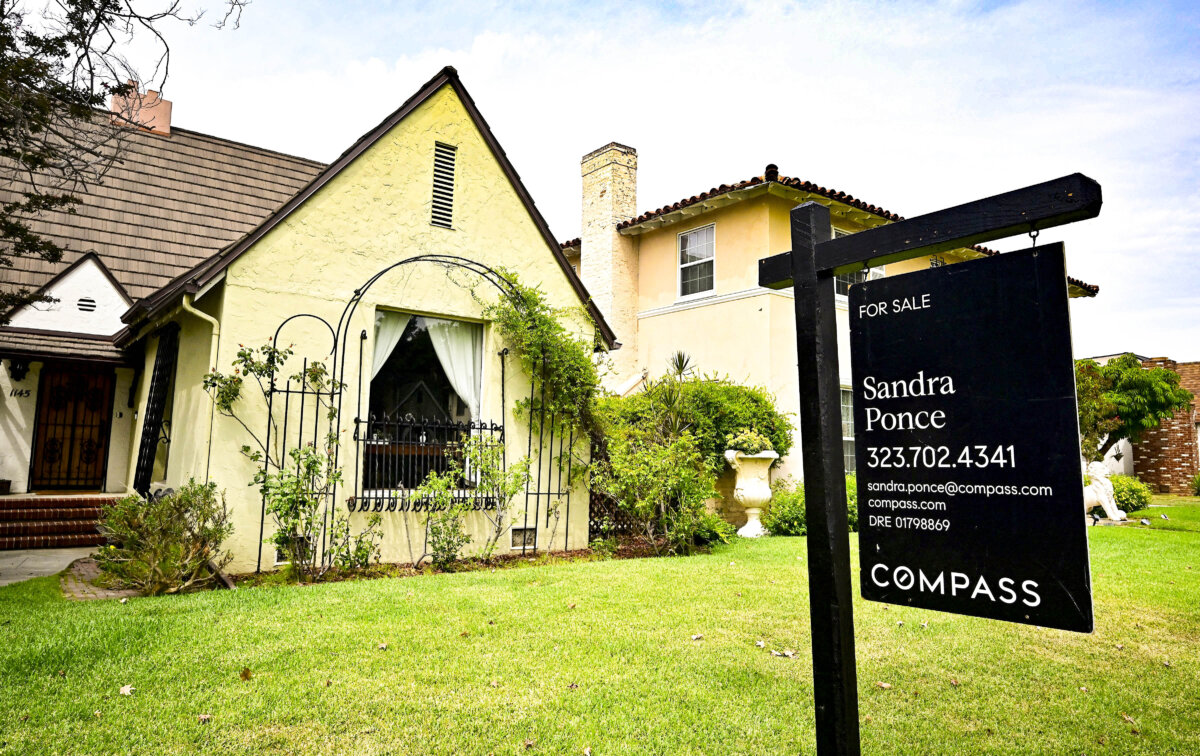

The average weekly rate of a 30-year fixed-rate mortgage rose in the most recent week to its highest level in more than a year.
The rate was 6.71 percent for the week ending Sept. 2, according to Freddie Mac data. The last time rates were higher was for the week ending July 30, 2025. The mortgage rate dipped below 6 percent in late February but has risen since the start of the U.S.–Iran conflict.
Amid elevated rates, the demand for purchasing homes has remained “relatively stable,” Sam Khater, Freddie Mac’s chief economist, said in a Sept. 3 statement. This suggests a steady interest from prospective buyers, who are now adapting to evolving market conditions, Khater said.
Mortgage applications had risen by 0.8 percent for the week ending Aug. 28 from a week ago, the Mortgage Bankers Association (MBA) said in a Sept. 2 statement.
Meanwhile, the 12-month inflation rate for July was 3.4 percent, down from 4.2 percent in May, according to data from the Bureau of Labor Statistics.
Despite the drop, inflation rates remain high compared to February, when they were 2.4 percent. A high inflation rate can put pressure on the Federal Reserve to raise its benchmark interest rate in order to keep inflation under control. Higher interest rates could push up mortgage rates as well.
In the most recent meeting of the Federal Open Market Committee in July, members decided to keep the interest rate unchanged for the fifth straight time at 3.5–3.75 percent. The next meeting is scheduled for Sept. 15–16.
According to data from the CME’s FedWatch Tool, as of 5:15 a.m. ET on Friday, interest rate traders are seeing a roughly 50 percent chance of the Fed raising rates to a range of 3.75–4 percent in the upcoming meeting.
If the meeting results in a decision to raise interest rates, especially by an unexpected magnitude, mortgage rates may also rise.
Rates and Housing
Elevated mortgage rates are affecting home demand, according to an Aug. 26 report from real estate marketplace Zillow.
At the beginning of the year, modest sales growth, amid gradually improving inventory and stabilizing home values, was the general expectation.
However, “that picture has evolved over the course of the year,” the report said. “Mortgage rates returned to an elevated level, providing little support for a demand-led sales recovery.”
In July, pending home sales declined by 2.3 percent from the previous month, according to an Aug. 18 statement from the National Association of Realtors (NAR). Pending sales are home purchase contracts that have been signed but have not yet closed.
NAR chief economist Dr. Lawrence Yun said in the statement that elevated mortgage rates in the middle of summer have pulled back housing contract signings.
“Job gains should bring more buyers into the market, especially if mortgage rates stabilize or decline, though that impact takes time to show up,” Yun said.
Moreover, home prices are also at “record highs,” leading to properties sitting in the market for a longer period, according to Yun.
However, the situation could benefit some prospective buyers. Many buyers are sitting on the sidelines due to high housing costs while new listings for homes for sale are rising, real estate brokerage Redfin said in an Aug. 27 report.
This situation of declining demand and rising inventory offers homebuyers still in the market a chance to get good deals, according to the brokerage.
“House hunters should consider homes that have been listed for several weeks; sellers of those homes may be willing to accept an offer under asking price, provide concessions like a mortgage-rate buydown or make repairs based on an inspection,” Chen Zhao, Redfin’s head of economics research, said in the statement.
 Friends Read Free
Copy
Facebook
Tweet
Friends Read Free
Copy
Facebook
Tweet