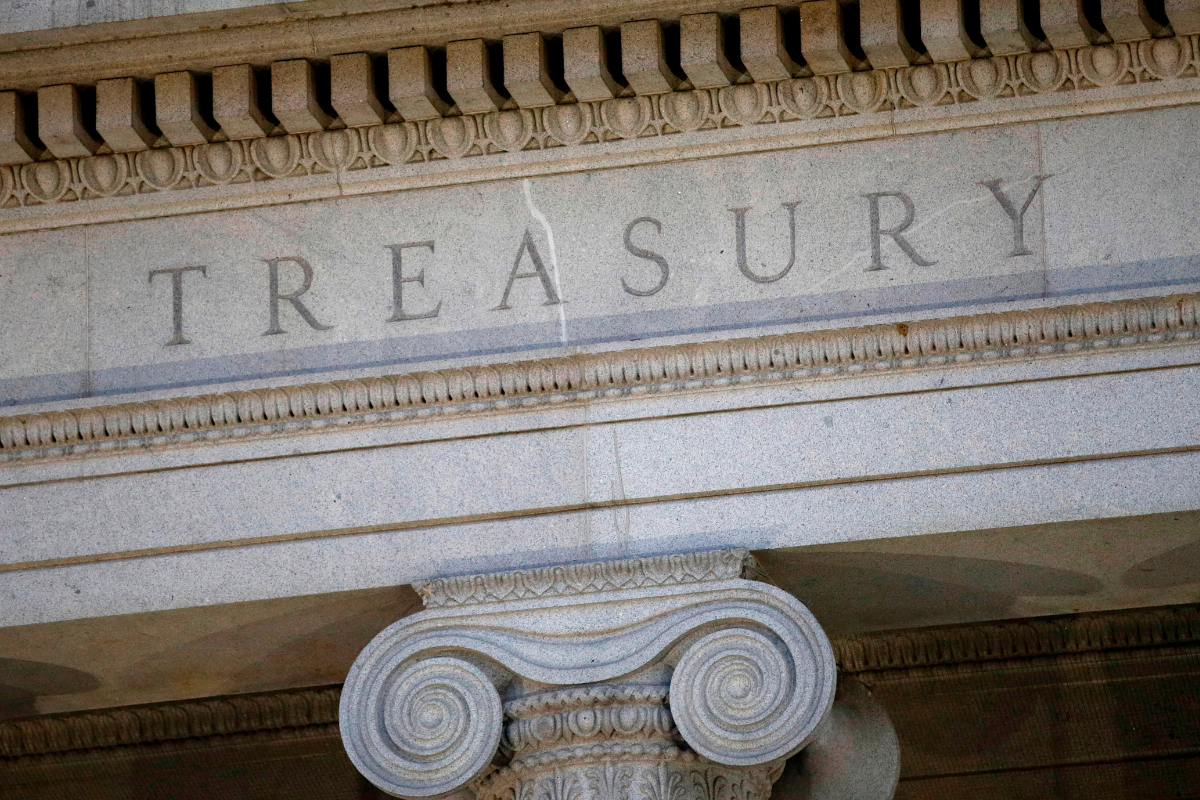

The U.S. government will attempt to redirect Iranian assets under its control to Gulf states to cover damages sustained during the three-month war, a Treasury Department official confirmed on June 6 following another round of attacks by Iran against Kuwait and Bahrain.
The official also confirmed to The Epoch Times that U.S. Treasury Secretary Scott Bessent has assigned a team to look into the costs of the damages inflicted by the Iranian regime on Gulf neighbors during the war. The plan was first reported by Reuters.
The official added that the department will also look at a mechanism to redirect money from Iranian assets to pay for any future damage caused by Iran amid ongoing negotiations to end the conflict, as the United States demands that Iran hand over its nuclear materials as part of the peace deal.
Earlier on June 5, Mohsen Rezaei, an adviser to Iran’s supreme leader, told CNN that, on the Iran side, the peace deal hinges on the release of $24 billion in Iranian assets frozen by the United States. Concrete details of the negotiations and their success remain scarce.
Iran’s semi-official ISNA news agency reported on June 6 that a Pakistani minister traveled to Tehran that day with a letter for Iranian Supreme Leader Mojtaba Khamenei. Pakistan has been mediating talks between Tehran and Washington.
Despite the tentative ceasefire announced in April, Iran has continued to target the U.S. forces enforcing a blockade of Iranian ports as well as commercial vessels trying to pass through the Strait of Hormuz.
Early Saturday, in response to what U.S. Central Command said posed a threat to maritime traffic, U.S. forces struck four Iranian drones and surveillance radar sites in Goruk and Qeshm Island in the Strait of Hormuz.
Iran’s Revolutionary Guard also fired missiles and drones at Kuwait and Bahrain, saying it was targeting U.S. bases.
Kuwait’s army reported intercepting seven ballistic missiles that passed over residential areas. In Bahrain, sirens sounded and residents were urged to seek shelter as forces intercepted three missiles and several drones. Kuwait and Bahrain condemned the strikes.
Earlier on June 3, the Kuwaiti Defense Ministry reported intercepting 13 ballistic missiles and 17 drones, but two Iranian missiles hit Kuwait International Airport. One person was killed and at least 63 others injured, with significant damage reported. U.S. and Bahraini air defenses also intercepted three ballistic missiles.
Iranian state outlet Press TV claimed the Iranian attacks had sent a message to Gulf nations that their “territory is not safe” if they continue to host U.S. forces. The Iranian regime has long been intent on pushing the United States out of the Middle East.
Kuwait said it reserves the right to retaliate, denouncing the “sinful and repeated Iranian aggressions.”
Emel Akan and Tom Ozimek contributed to this report.
 Friends Read Free
Copy
Facebook
Tweet
Friends Read Free
Copy
Facebook
Tweet