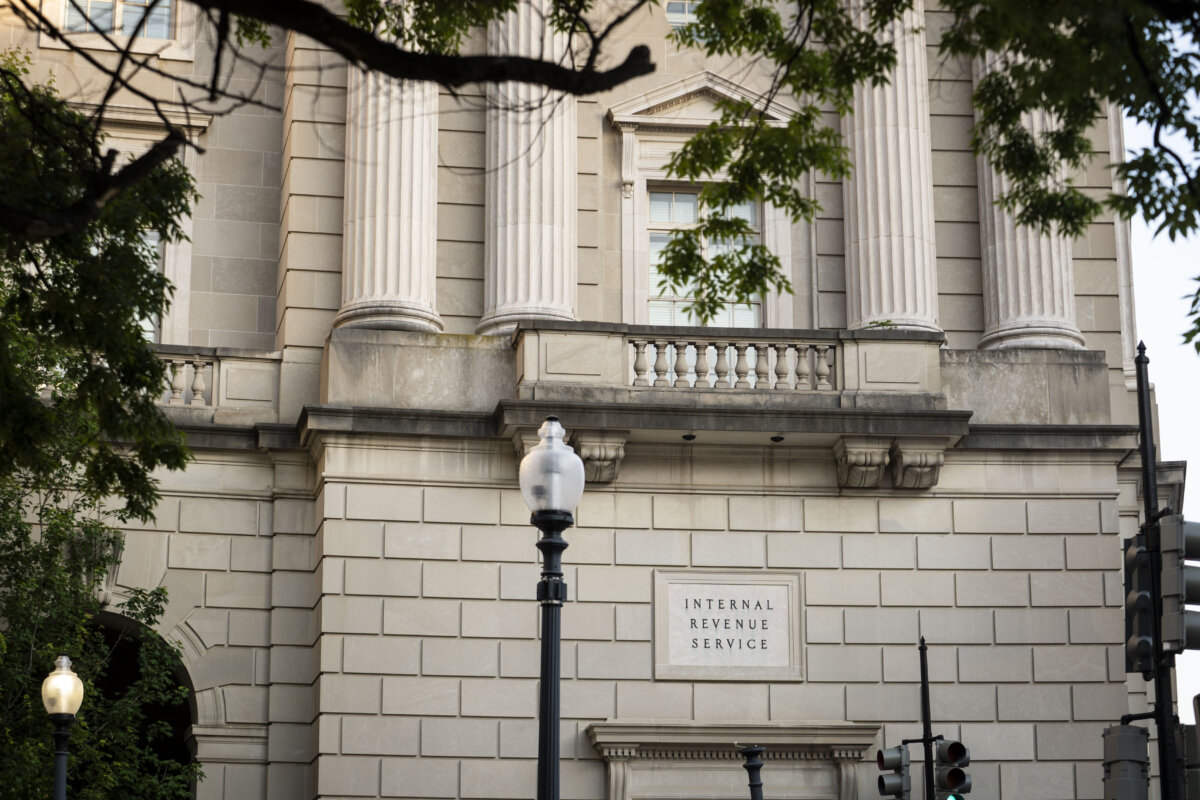

The IRS may not disclose the addresses of illegal immigrants to immigration officials, a U.S. appeals court said on Sept. 8.
A three-judge panel of the U.S. Court of Appeals for the District of Columbia Circuit upheld a February ruling from a district court that deemed an IRS policy to share the addresses of tens of thousands of people with Immigration and Customs Enforcement (ICE) illegal in part because the policy failed to meet requirements in the law.
The unanimous panel agreed, rejecting arguments from the government to the contrary.
The policy “indisputably contravenes the requirements of section 6103,” a law that governs when the IRS can share taxpayer information, Circuit Judge Cornelia Pillard wrote for the panel.
The law allows the IRS to disclose certain tax return information to other federal agencies for use in criminal investigations. To make a request, the head of the agency needs to identify the taxpayer by name and address, specify the relevant tax period, and explain why the information may be relevant to the probe.
Under a memorandum of understanding signed in April 2025 between the IRS and ICE, the latter asked for the last known address for more than 1 million people believed to be illegally present in the United States. ICE did not provide an address for some of the people on the list. Under the agreement, IRS workers sent 47,289 records to ICE before the district court stayed the process.
IRS officials requested the appeals court overturn the ruling. Government lawyers said that the groups that sued did not have standing, that the IRS did not have to follow procedures in the Administrative Procedure Act because the agreement was not a final agency action, and that the practice did not violate federal law.
Pillard wrote that at least one of the plaintiff organizations was sufficiently injured by the policy that it could bring suit, that the IRS did have to follow the procedures because the policy was a final action, and that the action violated federal law because ICE in some cases did not supply an address, as required by the law.
The law provides that the IRS can disclose information about a taxpayer to officials “personally and directly engaged” in criminal proceedings or investigations concerning that taxpayer, allowing disclosure as long as the field for the ICE point of contact is filled in, even if it said “unknown” or “to be determined.”
ICE ended up putting the same person as the point of contact for each of the 1.28 million listed taxpayers for whom it requested information.
The judicial panel found that the government’s practice “entirely fails to ensure that ICE lists a federal employee, let alone one ‘personally and directly engaged’ in a qualifying investigation of a particular taxpayer.”
The Department of Homeland Security, ICE’s parent agency; the IRS; and the groups that sued did not respond to requests for comment by publication time.
 Friends Read Free
Copy
Facebook
Tweet
Friends Read Free
Copy
Facebook
Tweet