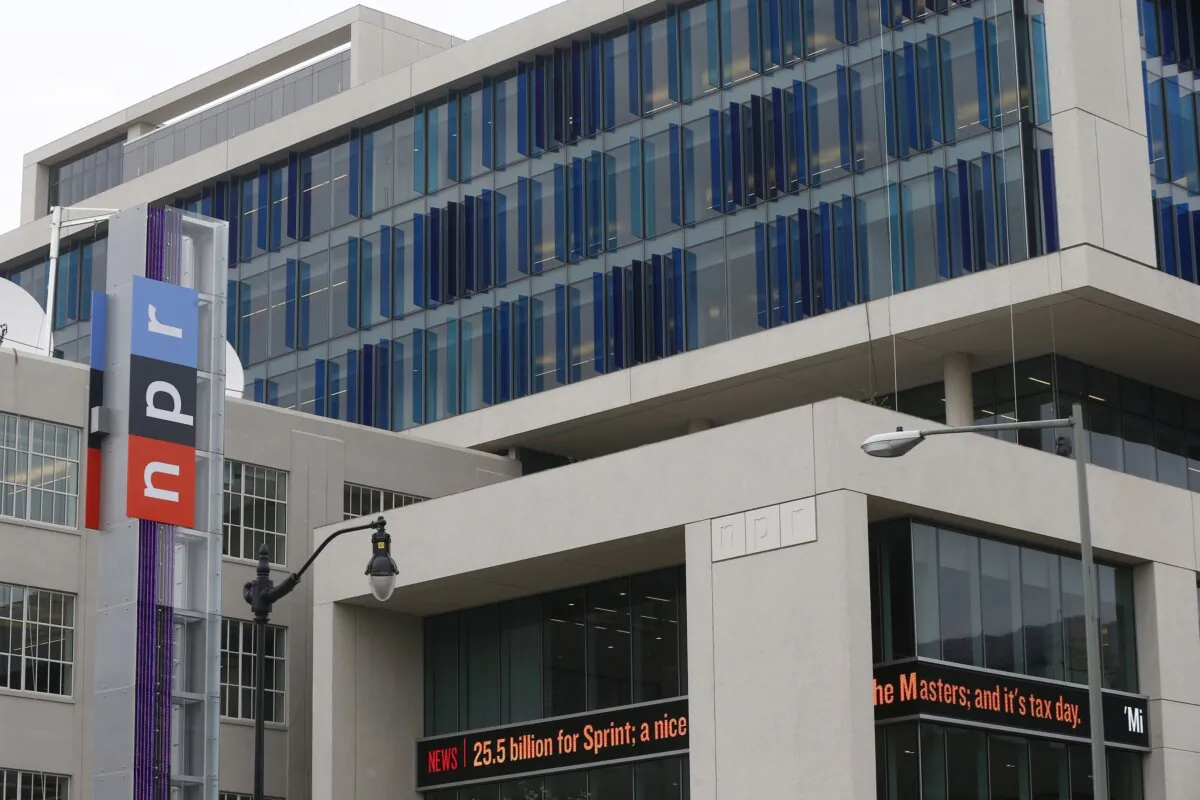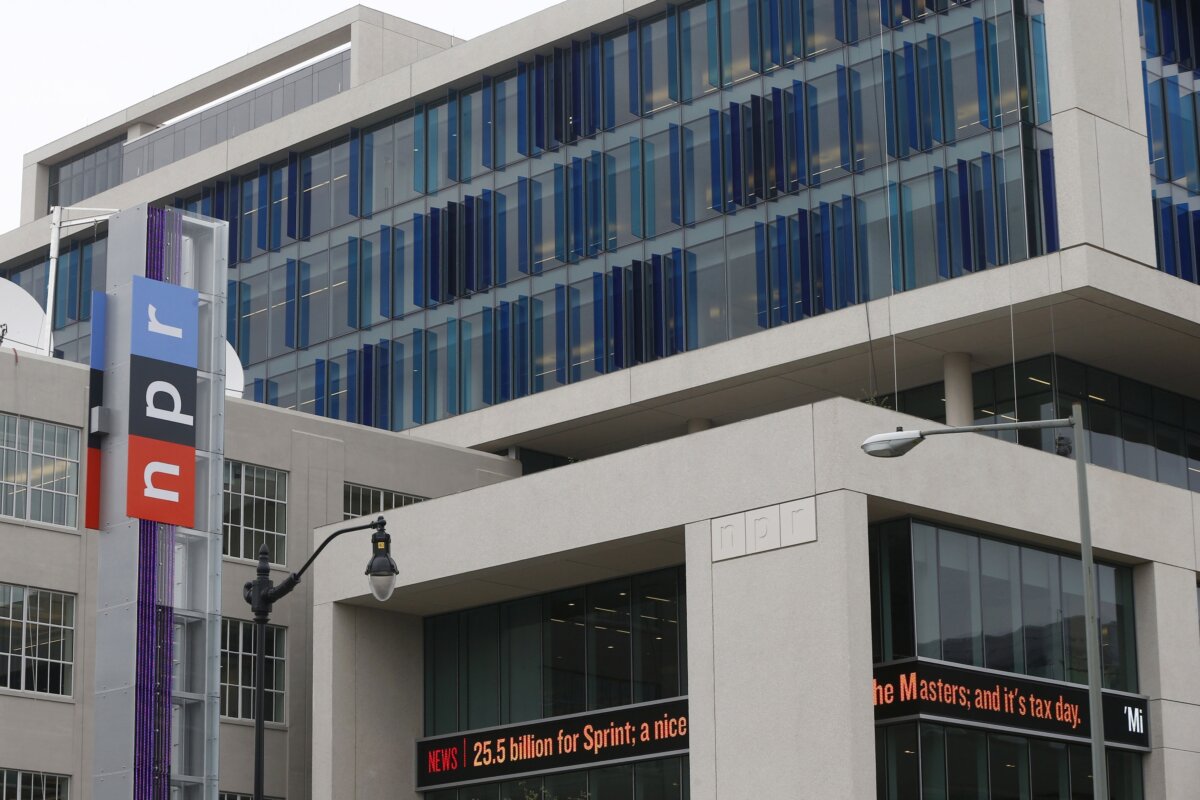

A major part of the $9 billion rescissions package Congress passed this week is cutting $1.1 billion for the Corporation for Public Broadcasting, which supports NPR and PBS.
Although the cuts will have an effect, critics disagree on whether the two-year funding is necessary for the stations, which have been accused by conservatives of liberal bias.
Judy Muller, a journalism professor emerita at the University of Southern California who reported for PBS and NPR, told The Epoch Times that the smaller NPR affiliates will be affected most by the cuts as their listeners rely on the outlet for national news and natural-disaster updates.
She called the accusations of liberal bias at NPR and PBS “a fallacy” and “absurd.”
“I can’t think of two more even-handed, fair news organizations,” she said.
“The Corporation for Public Broadcasting can survive without government funding, as can NPR [National]. It’s their smaller stations that will take a hard, possibly fatal, hit.”
Less than 2 percent of NPR’s funding comes from the federal government, and 15 percent of PBS’s funding does.
Joel Kaplan, director of the Goldring Arts, Style & Culture Journalism Program at Syracuse University, told The Epoch Times that although those numbers are just a small fraction of the revenue of those stations, that funding makes a huge difference.
“What [critics] won’t realize is that the vast majority of those funds go to member stations throughout the country, and they use those funds to pay for getting the NPR and PBS feeds. Without those funds, NPR and PBS won’t be able to collect from their member stations, which will force considerable cutbacks,” he said.
“There’s much talk about news deserts in the country because of the lack of news organizations. Public broadcasting made up for that in many rural areas.”
In a statement, NPR President and CEO Katherine Maher called the defunding “an unwarranted dismantling of beloved local civic institutions, and an act of Congress that disregards the public will.”
“Public funding has enabled the flourishing of a uniquely American system of unparalleled cultural, informational, and educational programming, and ensured access to vital emergency alerting and reporting in times of crisis—all for about $1.60 per American, every year,” she said. “Parents and children, senior citizens and students, tribal and rural communities—all will bear the harm of this vote.”
In a statement on July 17, PBS said: “These cuts will significantly impact all of our stations, but will be especially devastating to smaller stations and those serving large rural areas. Many of our stations, which provide access to free unique local programming and emergency alerts, will now be forced to make hard decisions in the weeks and months ahead.”
Tim Graham of the Media Research Center, which documents liberal media bias, told The Epoch Times that the funding cut does not mean the end for PBS or NPR and that they will instead need to make business decisions.
“Any business or nonprofit operation is going to struggle with that kind of revenue cut,” he said. “It’s by no means a fatal blow, not even to the small local stations that the public-media lobbyists drag out. They’ll have to be leaner, and they might be even meaner to Republicans.”
The White House posted on X examples of bias at NPR and PBS.
Examples cited of alleged bias at PBS include a 2017 documentary titled “Real Boy” about the journey of a female who identifies as a male and is navigating “adolescence, sobriety, and physical and emotional ramifications of his changing gender identity.”
Another is a 2017 panel about what it means to be “woke,” “what is white privilege,” and whether “it is good to be colorblind.”
A third example, cited by the Media Research Center, shows that between June 2023 and November 2024, PBS NewsHour used the term “extreme right” 162 times, while it used the label “extreme left” just six times.
Other alleged instances of liberal bias at NPR include one in which the outlet apologized for calling illegal immigrants “illegal” and another in which it said that the Declaration of Independence has “flaws and deeply ingrained hypocrisies” and that it “contains offensive language about Native Americans, including a racial slur.”
Graham said he doesn’t expect the alleged bias to change.
“Some conservatives have been nervous that if they have to go to leftist billionaires like George and Alex Soros, the bias would be worse,” he said. “It’s still better than making conservatives pay for their own destructive bias.”
Kaplan said that a problem with the Corporation for Public Broadcasting (CPB) is that it got rid of its ombudsman.
“When I was CPB ombudsman, my charge was to examine objectivity and balance in public broadcasting, so I was able to examine specific examples of liberal bias,” he said.
 Friends Read Free
Copy
Facebook
Tweet
Friends Read Free
Copy
Facebook
Tweet